Li Zehuan, Zheng Jianghua, Xia Qianlin, He Xiaomeng, Bao Juan, Chen Zhanghan, Katayama Hiroshi, Yu Die, Zhang Xiaoyan, Xu Jianqing, Zhu Tongyu, Wang Jin
Scientific Research Center, Shanghai Public Health Clinical Center, Fudan University, Shanghai, China.
Department of General Surgery, Zhongshan Hospital, Fudan University, Shanghai, China.
Front Genet. 2020 Feb 14;11:62. doi: 10.3389/fgene.2020.00062. eCollection 2020.
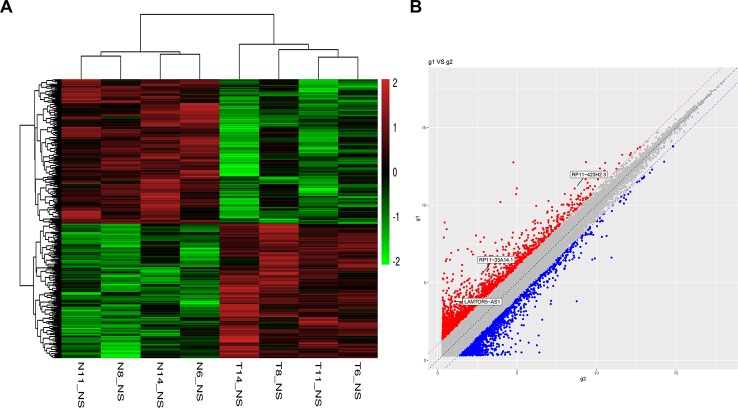
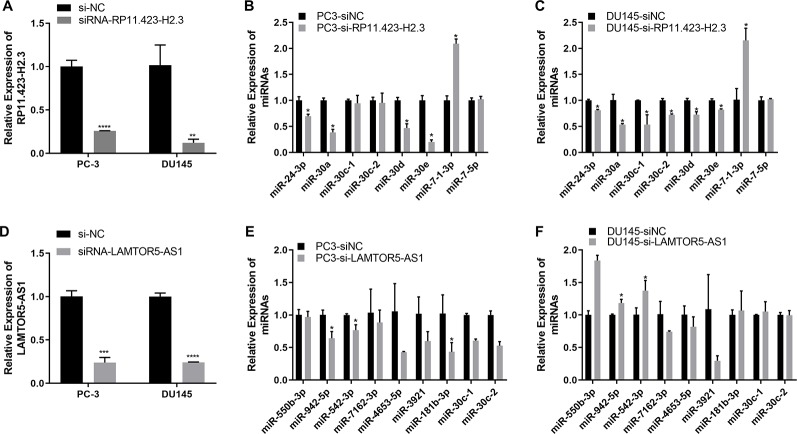
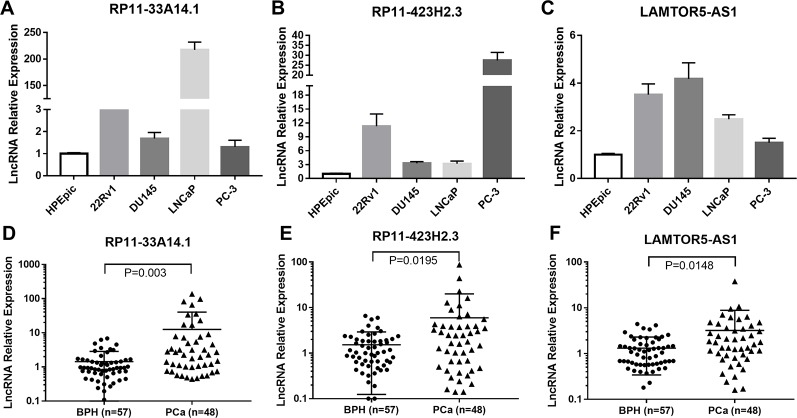
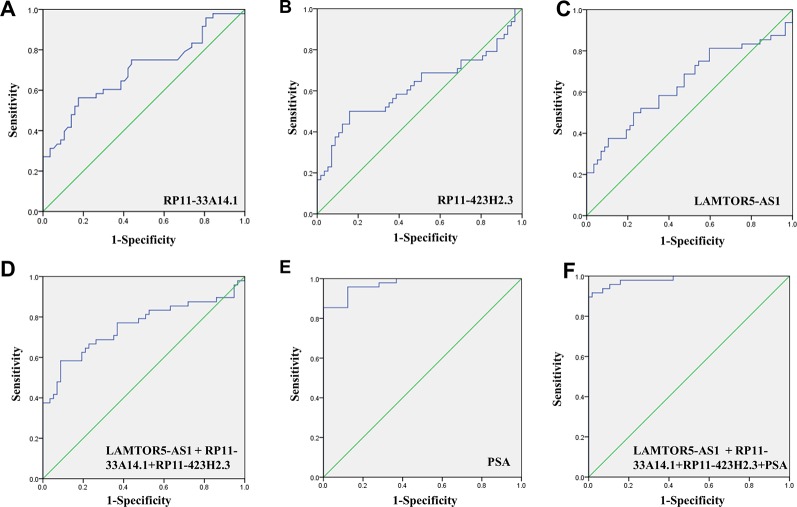
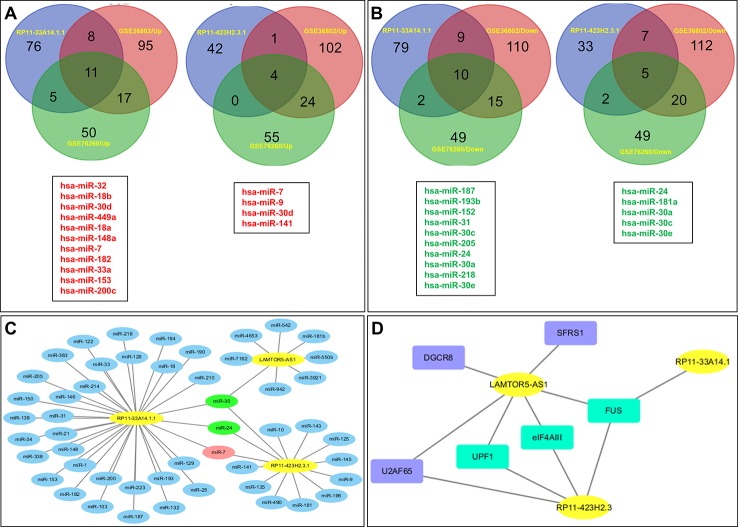
Prostate cancer (PCa) is one of the most common tumors in men and can be lethal, especially if left untreated. A substantial majority of PCa patients not only are diagnosed based on fine needle aspiration (FNA) biopsies, but their treatment choices are also largely driven by the pathological findings obtained with these FNA specimens. It is widely believed that lncRNAs have strong biological significance, but their specific functions and regulatory networks have not been elucidated. LncRNAs may serve as key players and regulators of PCa carcinogenesis and could be novel biomarkers of this cancer. To identify potential markers for early detection of PCa, in this study, we employed a competing endogenous RNA (ceRNA) microarray to identify differentially expressed lncRNAs (DelncRNAs) in PCa tissue and quantitative real-time PCR (qRT-PCR) analysis to validate these DelncRNAs in FNA biopsies. We demonstrated that a total of 451 lncRNAs were differentially expressed in four pairs of PCa/adjacent tissues, and upregulation of the lncRNAs RP11-33A14.1, RP11-423H2.3, and LAMTOR5-AS1 was confirmed in FNA biopsies of PCa by qRT-PCR and was consistent with the ceRNA array data. The association between the expression of the lncRNA LAMTOR5-AS1 and aggressive cancer was also investigated. Regulatory network analysis of DelncRNAs showed that the lncRNAs RP11-33A14.1 and RP11-423H2.3 targeted miR-7, miR-24-3p, and miR-30 and interacted with the RNA binding protein FUS. Knockdown of these DelncRNAs in PCa cells also demonstrated the effects of RP11-423H2.3 on miR-7/miR-24/miR-30 or LAMTOR5-AS1 on miR-942-5p/miR-542-3p direct interaction. The results of these studies indicate that these three specific lncRNA signatures and regulatory networks might serve as risk prediction and diagnostic biomarkers for prostate cancer, even in biopsies obtained by FNA.
前列腺癌(PCa)是男性最常见的肿瘤之一,可能会致命,尤其是在未接受治疗的情况下。绝大多数PCa患者不仅通过细针穿刺抽吸(FNA)活检进行诊断,而且他们的治疗选择在很大程度上也由这些FNA标本的病理结果决定。人们普遍认为长链非编码RNA(lncRNAs)具有重要的生物学意义,但其具体功能和调控网络尚未阐明。LncRNAs可能是PCa致癌作用的关键参与者和调节因子,并且可能是这种癌症的新型生物标志物。为了鉴定PCa早期检测的潜在标志物,在本研究中,我们采用竞争性内源RNA(ceRNA)微阵列来鉴定PCa组织中差异表达的lncRNAs(DelncRNAs),并通过定量实时PCR(qRT-PCR)分析来验证FNA活检中的这些DelncRNAs。我们证明,在四对PCa/相邻组织中共有451个lncRNAs差异表达,并且通过qRT-PCR在PCa的FNA活检中证实了lncRNAs RP11-33A14.1、RP11-423H2.3和LAMTOR5-AS1的上调,这与ceRNA阵列数据一致。还研究了lncRNA LAMTOR5-AS1的表达与侵袭性癌症之间的关联。对DelncRNAs的调控网络分析表明,lncRNAs RP11-33A14.1和RP11-423H2.3靶向miR-7、miR-24-3p和miR-30,并与RNA结合蛋白FUS相互作用。在PCa细胞中敲低这些DelncRNAs也证明了RP11-423H2.3对miR-7/miR-24/miR-30或LAMTOR5-AS1对miR-942-5p/miR-542-3p的直接相互作用。这些研究结果表明,这三种特定的lncRNA特征和调控网络可能作为前列腺癌的风险预测和诊断生物标志物,即使在通过FNA获得的活检中也是如此。