Yamaguchi Kyoko, Ito Mamoru, Ohmura Hirofumi, Hanamura Fumiyasu, Nakano Michitaka, Tsuchihashi Kenji, Nagai Shuntaro, Ariyama Hiroshi, Kusaba Hitoshi, Yamamoto Hidetaka, Oda Yoshinao, Nakamura Masafumi, Akashi Koichi, Baba Eishi
Department of Medicine and Biosystemic Sciences, Graduate School of Medical Sciences, Kyushu University, Fukuoka, Japan.
Department of Surgery and Oncology, Graduate School of Medical Sciences, Kyushu University, Fukuoka, Japan.
Oncoimmunology. 2020 Feb 17;9(1):1724763. doi: 10.1080/2162402X.2020.1724763. eCollection 2020.
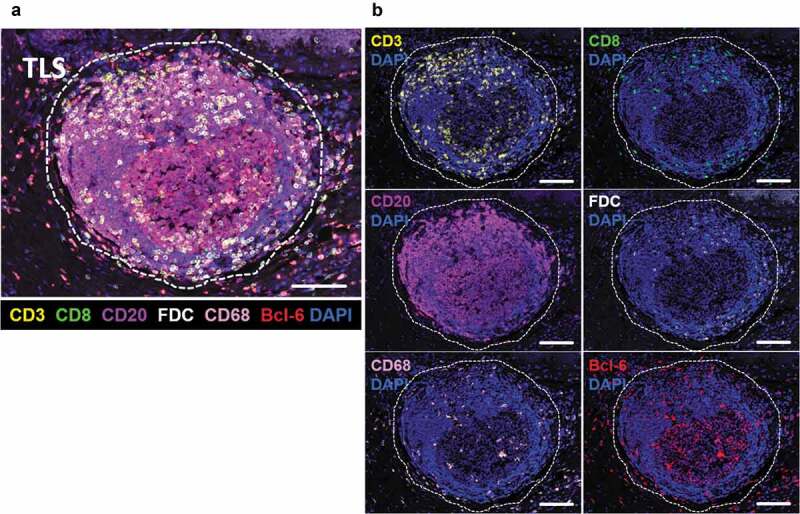
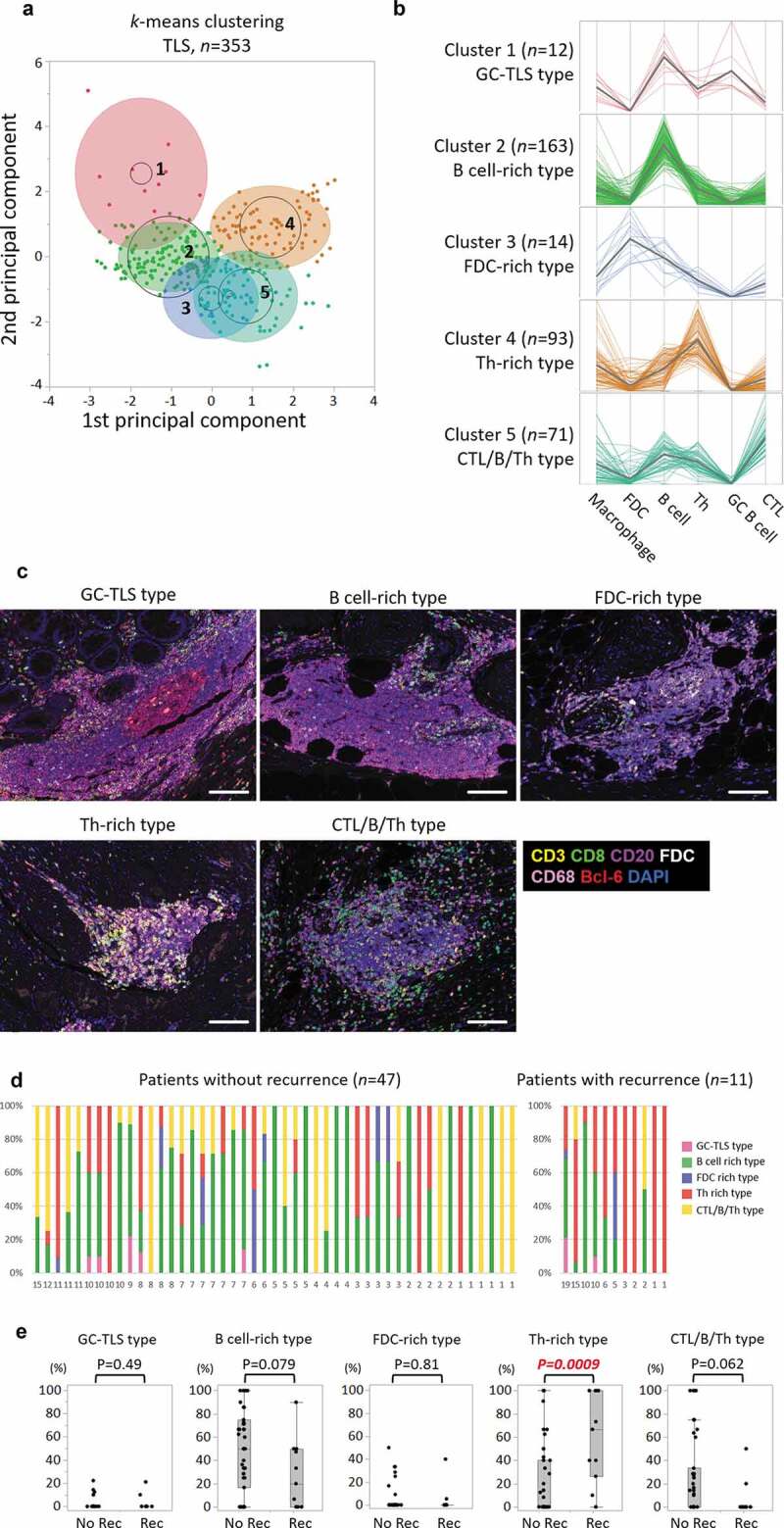
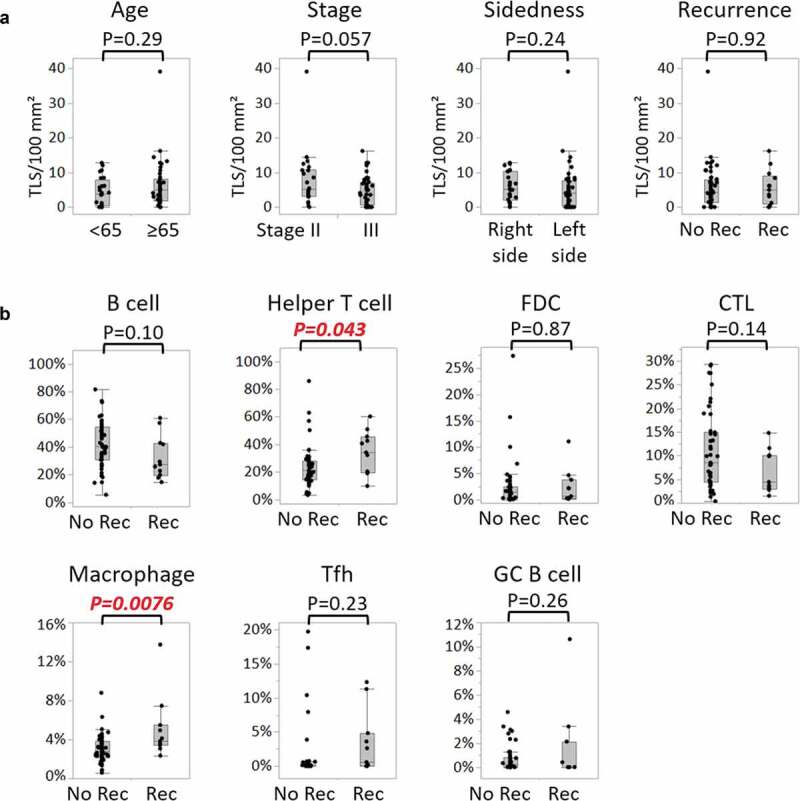
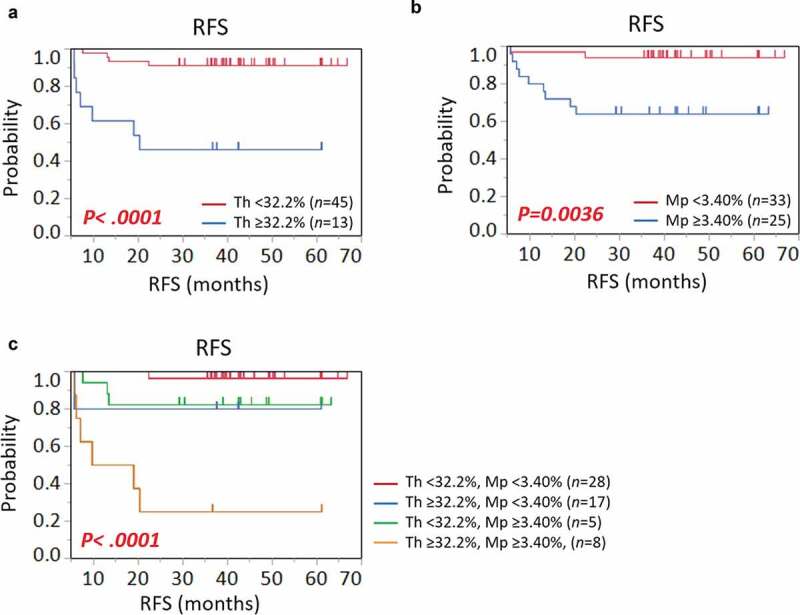
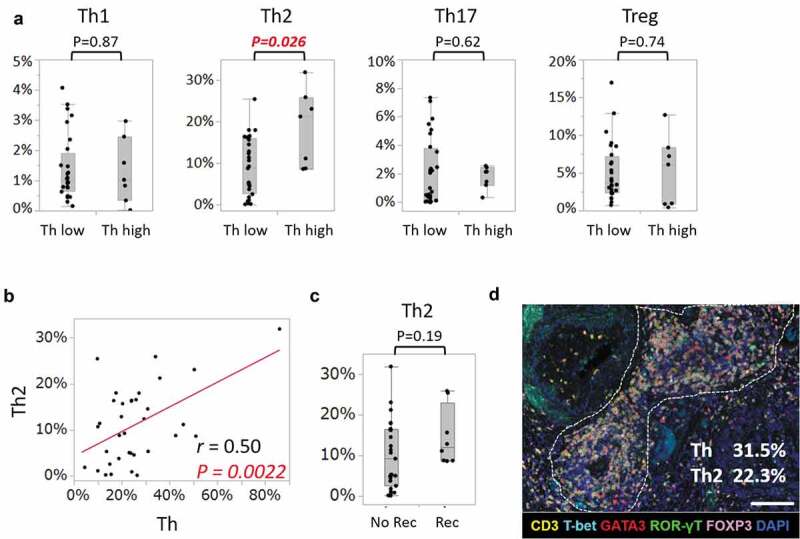
Tertiary lymphoid structures (TLSs), clusters of immune cells found around tumor tissue, have been shown to be associated with anti-tumor immunity, but the cellular composition within each TLS and whether the cellular composition of a TLS affects a patient's prognosis are poorly understood. In the present study, each TLS was categorized according to its cellular composition determined by a system of multiplex immunohistochemical staining and quantitative analysis, and the correlation between the category and prognosis was examined. Sixty-seven patients with curatively resected stage II/III colorectal cancer (CRC) were enrolled. A TLS, consisting of germinal center B cells, follicular dendritic cells, T helper (Th) cells, B cells, cytotoxic T cells, and macrophages, was confirmed in the tumor tissue of 58 patients (87%). The densities of Th cells and macrophages were significantly higher in relapsed patients than in not-relapsed patients ( = .043 and = .0076). A higher ratio of Th cells was the most significant independent risk factor for disease relapse on multivariate analysis. The subset increasing in Th cells was GATA3 Th2. A total of 353 TLSs was divided into five clusters according to immune cell composition. Among them, the Th-rich type TLS was significantly increased ( = .0009) in relapsed patients. These data suggest the possibility that Th cell-dominant composition might disturb the anti-tumor immune response, and the function of each TLS might differ depending on its composition.
三级淋巴结构(TLSs)是在肿瘤组织周围发现的免疫细胞簇,已被证明与抗肿瘤免疫相关,但每个TLS内的细胞组成以及TLS的细胞组成是否会影响患者的预后仍知之甚少。在本研究中,根据多重免疫组织化学染色和定量分析系统确定的细胞组成对每个TLS进行分类,并检查分类与预后之间的相关性。纳入了67例接受根治性切除的II/III期结直肠癌(CRC)患者。在58例患者(87%)的肿瘤组织中证实了由生发中心B细胞、滤泡树突状细胞、辅助性T(Th)细胞、B细胞、细胞毒性T细胞和巨噬细胞组成的TLS。复发患者中Th细胞和巨噬细胞的密度显著高于未复发患者(P = 0.043和P = 0.0076)。多因素分析显示,Th细胞比例较高是疾病复发最显著的独立危险因素。Th细胞中增加的亚群是GATA3 Th2。根据免疫细胞组成,共353个TLS被分为五个簇。其中,富含Th细胞型TLS在复发患者中显著增加(P = 0.0009)。这些数据表明,Th细胞主导的组成可能会干扰抗肿瘤免疫反应,并且每个TLS的功能可能因其组成而异。