Bonte Sarah, De Munter Stijn, Goetgeluk Glenn, Ingels Joline, Pille Melissa, Billiet Lore, Taghon Tom, Leclercq Georges, Vandekerckhove Bart, Kerre Tessa
Department of Internal Medicine and Pediatrics, Ghent University, Ghent, Belgium.
Cancer Research Institute Ghent (CRIG), Ghent, Belgium.
Oncoimmunology. 2020 Feb 17;9(1):1727078. doi: 10.1080/2162402X.2020.1727078. eCollection 2020.
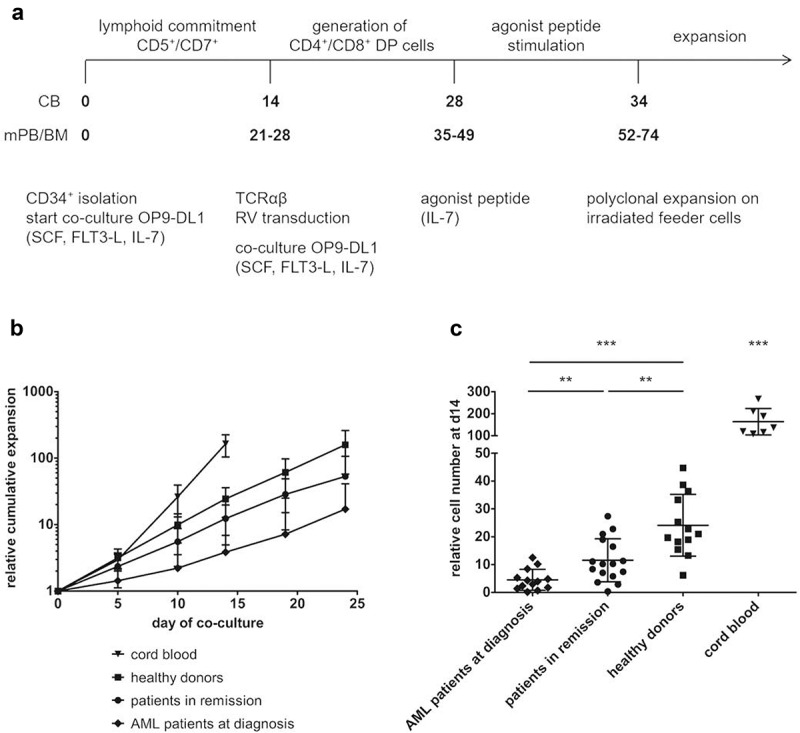
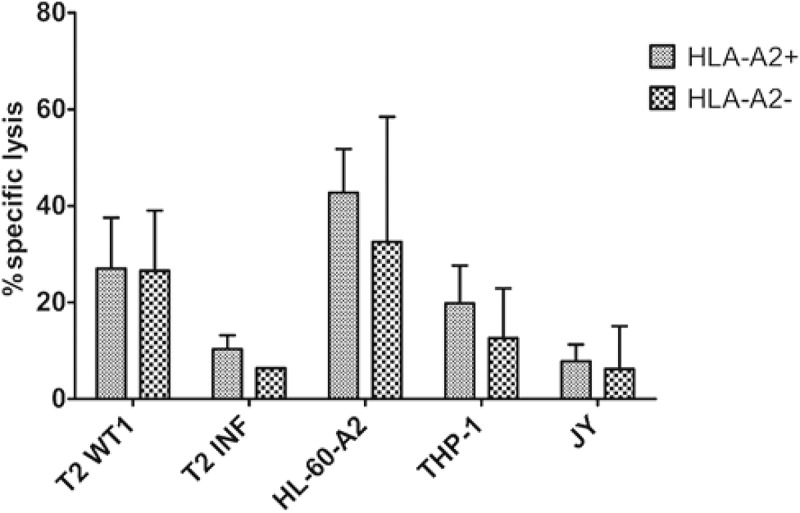
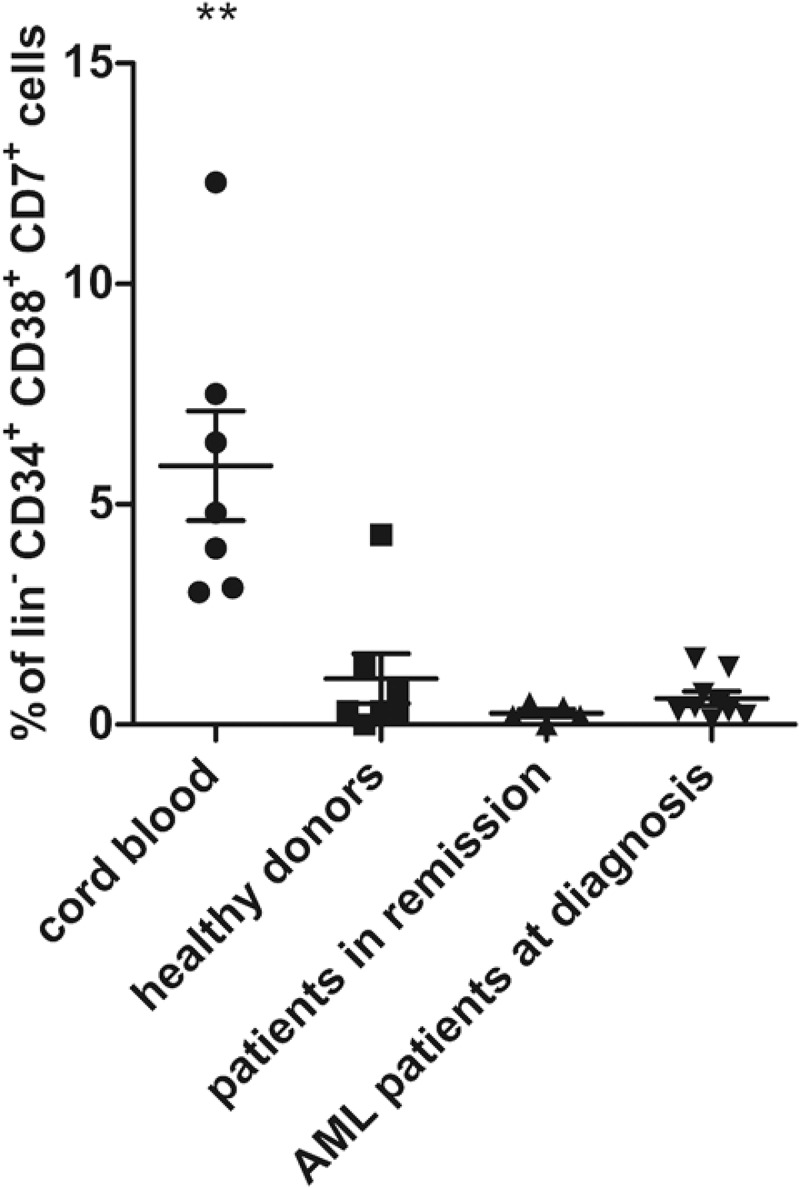
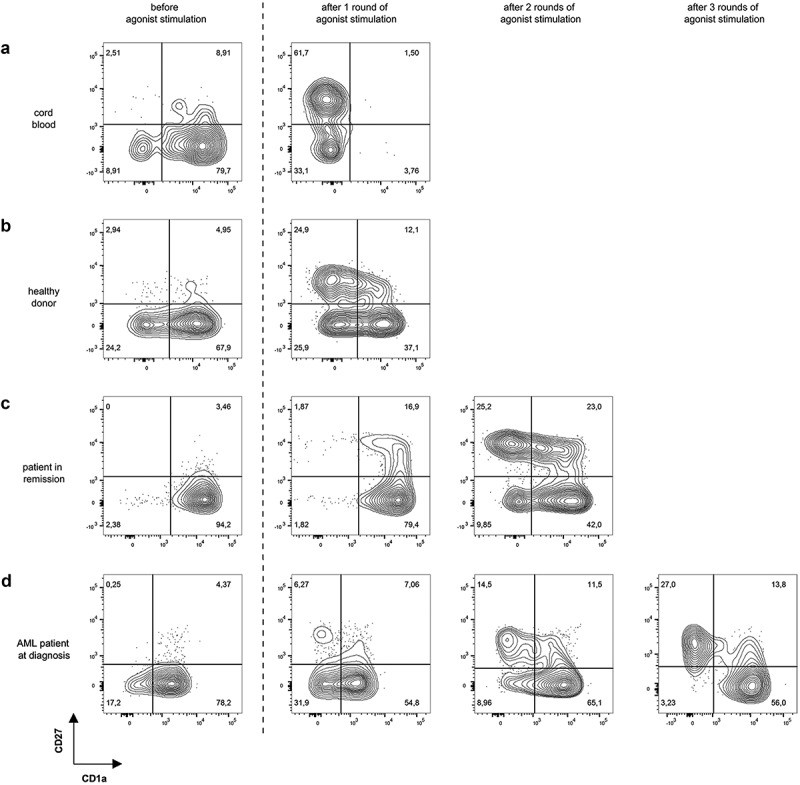
Chimeric antigen receptor (CAR) T-cells have shown great promise in the treatment of B-cell malignancies. For acute myeloid leukemia (AML), however, the optimal target surface antigen has yet to be discovered. Alternatively, T-cell receptor (TCR)-redirected T-cells target intracellular antigens, marking a broader territory of available target antigens. Currently, adoptive TCR T-cell therapy uses peripheral blood lymphocytes for the introduction of a transgenic TCR. However, this can cause graft-versus-host disease, due to mispairing of introduced and endogenous TCR chains. Therefore, we started from hematopoietic stem and progenitor cells (HSPC), that do not express a TCR yet, isolated from healthy donors, patients in remission after chemotherapy and AML patients at diagnosis. Using the OP9-DL1 in vitro co-culture system and agonist selection, TCR-transduced HSPC develop into mature tumor antigen-specific T-cells with only one TCR. We show here that this approach is feasible with adult HSPC from clinically relevant sources, albeit with slower maturation and lower cell yield compared to cord blood HSPC. Moreover, cryopreservation of HSPC does not have an effect on cell numbers or functionality of the generated T-cells. In conclusion, we show here that it is feasible to generate TA-specific T-cells from HSPC from adult healthy donors and patients and we believe these T-cells could be of use as a very valuable form of patient-tailored T-cell immunotherapy.
嵌合抗原受体(CAR)T细胞在治疗B细胞恶性肿瘤方面已显示出巨大潜力。然而,对于急性髓系白血病(AML),最佳的靶表面抗原尚未被发现。相比之下,T细胞受体(TCR)重定向T细胞靶向细胞内抗原,这标志着可利用的靶抗原领域更为广阔。目前,过继性TCR T细胞疗法使用外周血淋巴细胞来引入转基因TCR。然而,由于引入的TCR链与内源性TCR链错配,这可能会导致移植物抗宿主病。因此,我们从尚未表达TCR的造血干细胞和祖细胞(HSPC)入手,这些细胞取自健康供体、化疗后缓解期的患者以及诊断时的AML患者。利用OP9-DL1体外共培养系统和激动剂筛选,经TCR转导的HSPC可发育成仅带有一种TCR的成熟肿瘤抗原特异性T细胞。我们在此表明,这种方法对于来自临床相关来源的成人HSPC是可行的,尽管与脐血HSPC相比,其成熟速度较慢且细胞产量较低。此外,HSPC的冷冻保存对所产生T细胞的数量或功能没有影响。总之,我们在此表明,从成人健康供体和患者的HSPC中产生肿瘤抗原(TA)特异性T细胞是可行的,并且我们相信这些T细胞可作为一种非常有价值的患者定制T细胞免疫疗法形式发挥作用。