Van Caeneghem Yasmine, De Munter Stijn, Tieppo Paola, Goetgeluk Glenn, Weening Karin, Verstichel Greet, Bonte Sarah, Taghon Tom, Leclercq Georges, Kerre Tessa, Debets Reno, Vermijlen David, Abken Hinrich, Vandekerckhove Bart
Department of Clinical Chemistry, Microbiology and Immunology, Ghent University , Ghent, Belgium.
Department of Biopharmacy and Institute for Medical Immunology, Université Libre de Bruxelles (ULB) , Brussels, Belgium.
Oncoimmunology. 2017 Jan 19;6(3):e1283460. doi: 10.1080/2162402X.2017.1283460. eCollection 2017.
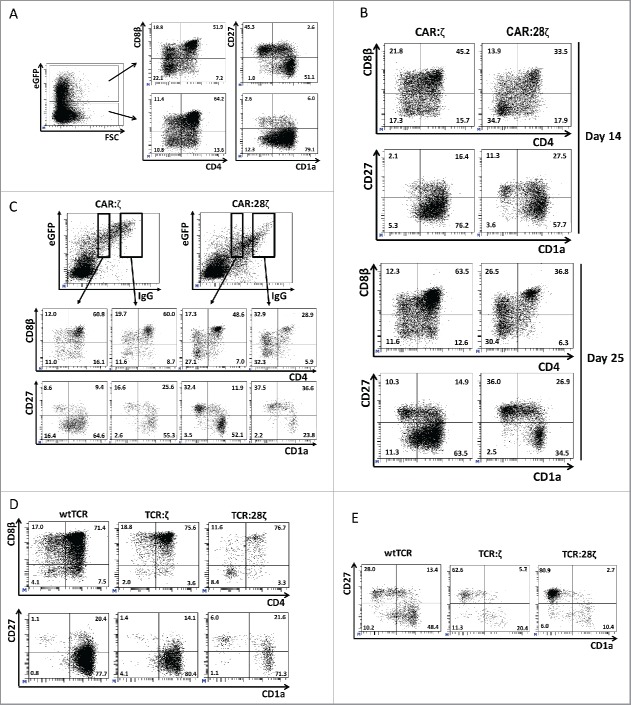
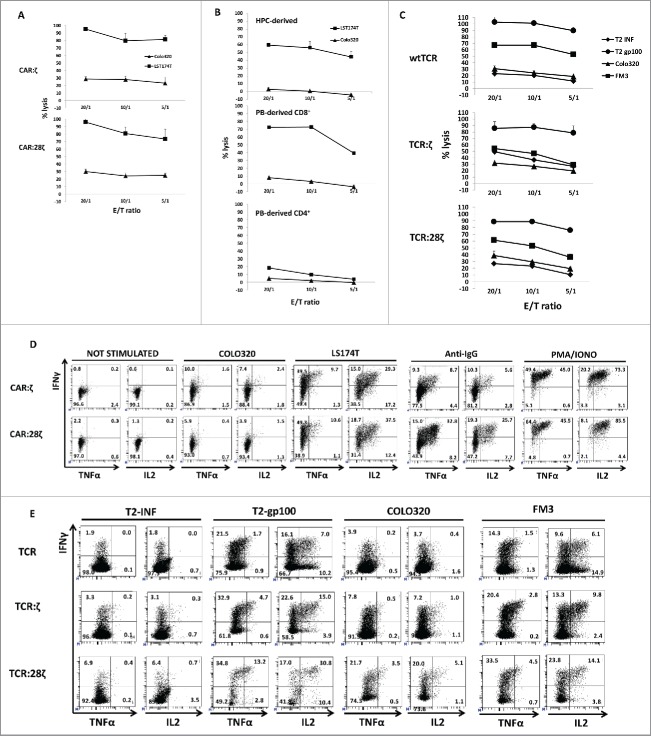
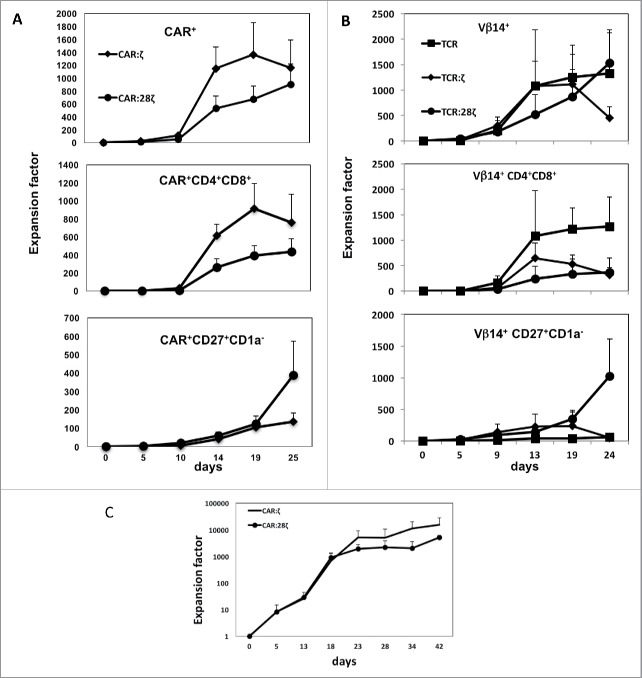
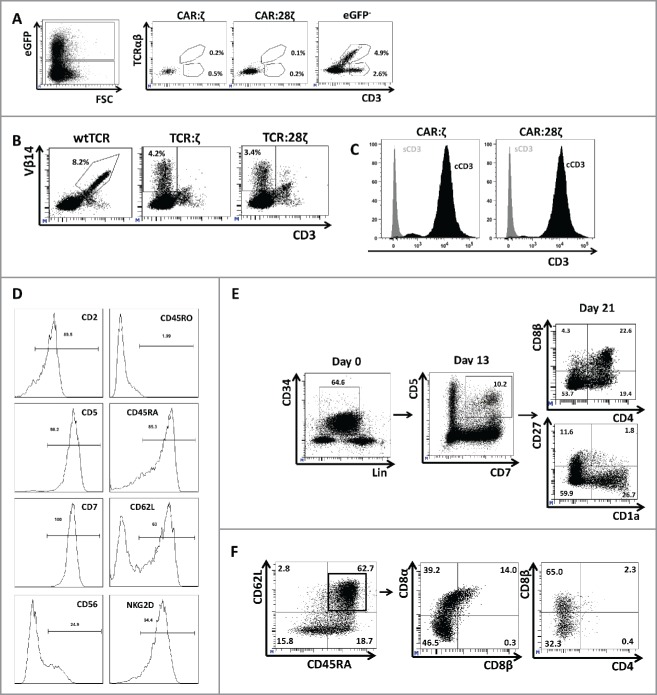
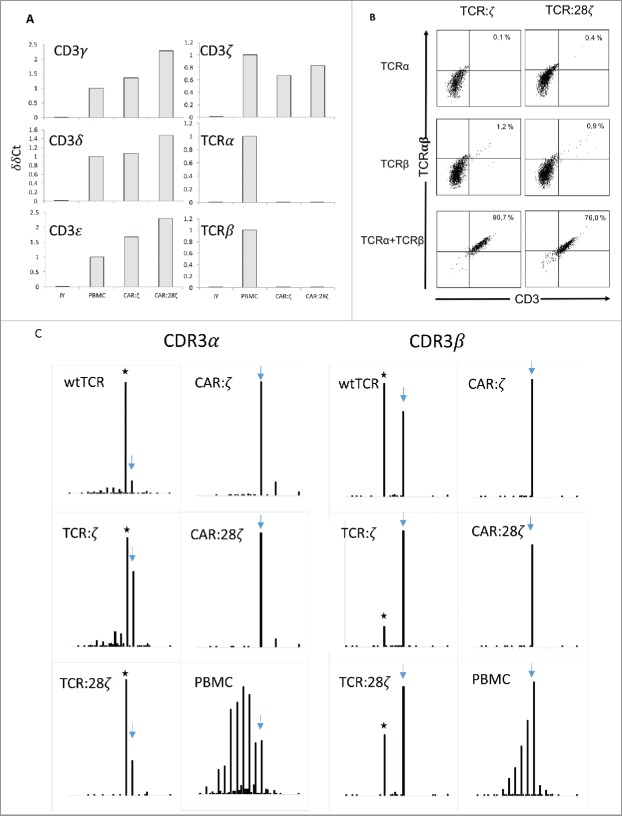
Recent clinical studies indicate that adoptive T-cell therapy and especially chimeric antigen receptor (CAR) T-cell therapy is a very potent and potentially curative treatment for B-lineage hematologic malignancies. Currently, autologous peripheral blood T cells are used for adoptive T-cell therapy. Adoptive T cells derived from healthy allogeneic donors may have several advantages; however, the expected occurrence of graft versus host disease (GvHD) as a consequence of the diverse allogeneic T-cell receptor (TCR) repertoire expressed by these cells compromises this approach. Here, we generated T cells from cord blood hematopoietic progenitor cells (HPCs) that were transduced to express an antigen receptor (AR): either a CAR or a TCR with or without built-in CD28 co-stimulatory domains. These AR-transgenic HPCs were culture-expanded on an OP9-DL1 feeder layer and subsequently differentiated to CD5CD7 T-lineage precursors, to CD4 CD8 double positive cells and finally to mature AR T cells. The AR T cells were largely naive CD45RACD62L T cells. These T cells had mostly germline TCRα and TCRβ loci and therefore lacked surface-expressed CD3/TCRαβ complexes. The CD3 AR-transgenic cells were mono-specific, functional T cells as they displayed specific cytotoxic activity. Cytokine production, including IL-2, was prominent in those cells bearing ARs with built-in CD28 domains. Data sustain the concept that cord blood HPC derived, generated allogeneic CD3 AR T cells can be used to more effectively eliminate malignant cells, while at the same time limiting the occurrence of GvHD.
近期临床研究表明,过继性T细胞疗法,尤其是嵌合抗原受体(CAR)T细胞疗法,对于B系血液系统恶性肿瘤是一种非常有效的潜在治愈性疗法。目前,过继性T细胞疗法使用的是自体外周血T细胞。源自健康异基因供体的过继性T细胞可能具有若干优势;然而,由于这些细胞表达的异基因T细胞受体(TCR)库不同,预计会发生移植物抗宿主病(GvHD),这一问题影响了该方法的应用。在此,我们从脐带血造血祖细胞(HPC)中生成T细胞,并将其转导以表达抗原受体(AR):即带有或不带有内置CD28共刺激结构域的CAR或TCR。这些AR转基因HPC在OP9-DL1饲养层上进行培养扩增,随后分化为CD5CD7 T系前体细胞、CD4 CD8双阳性细胞,最终分化为成熟的AR T细胞。AR T细胞主要是初始CD45RACD62L T细胞。这些T细胞大多具有种系TCRα和TCRβ基因座,因此缺乏表面表达的CD3/TCRαβ复合物。CD3 AR转基因细胞是单特异性的功能性T细胞,因为它们表现出特异性细胞毒性活性。在带有内置CD28结构域的AR的细胞中,包括IL-2在内的细胞因子产生较为显著。数据支持这样的概念,即源自脐带血HPC的同种异体CD3 AR T细胞可用于更有效地消除恶性细胞,同时限制GvHD的发生。