Jamburaj Arunkumar, Darlington Danny, Chinnathambi Jagatheswaran
Urology, Pondicherry Institute of Medical Sciences, Pondicherry, IND.
Cureus. 2020 Jan 19;12(1):e6701. doi: 10.7759/cureus.6701.
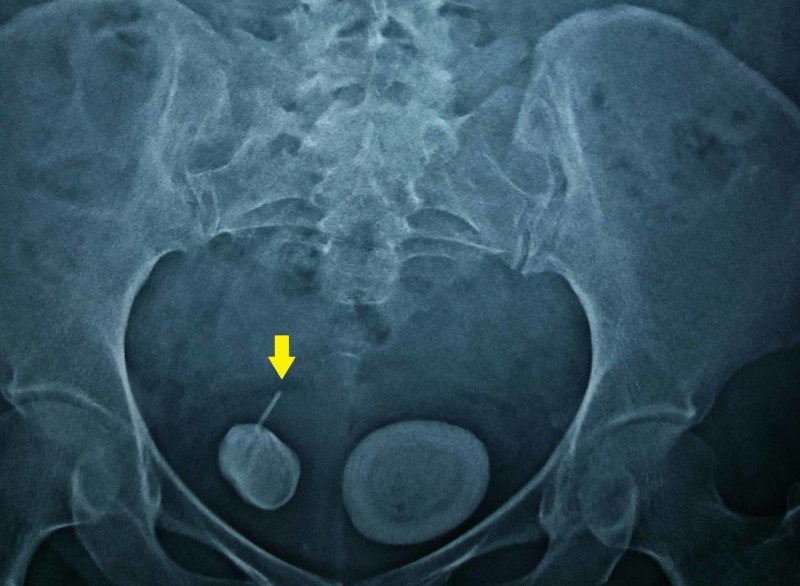
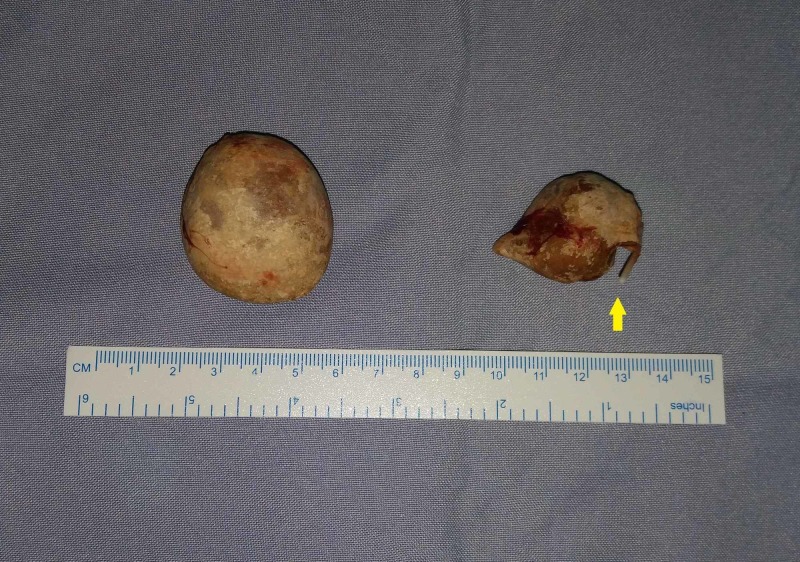
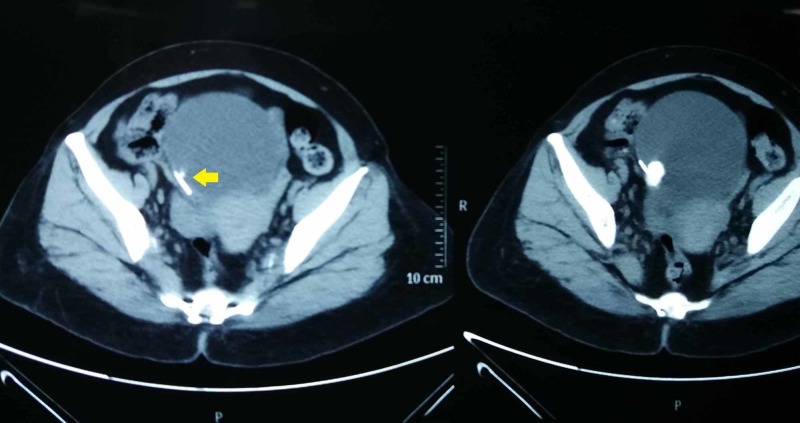
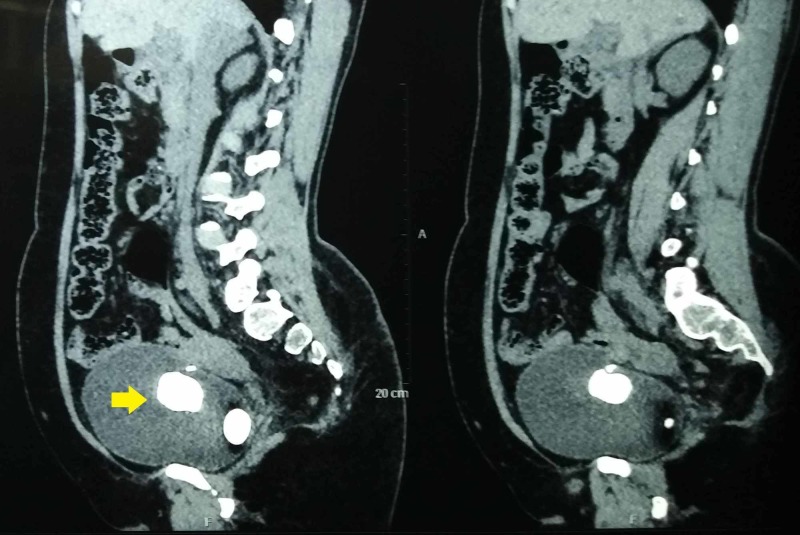
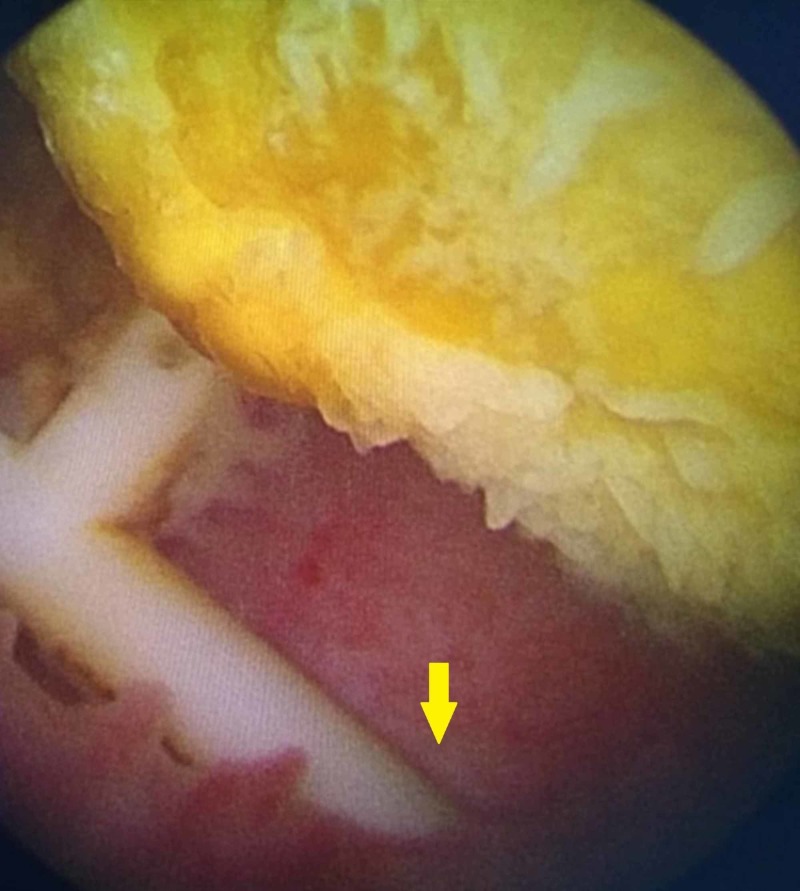
Intravesical migration is an uncommon but serious complication of intrauterine contraceptive devices. Calculus formation is common over such migrated intrauterine contraceptive devices. This dreaded complication usually presents with lower urinary tract symptoms such as suprapubic pain, frequency, and nocturia. We present a case of a 50-year-old woman with intravesical migration of copper-T device placed in the immediate postpartum period 25 years ago. She presented with dysuria, which was confirmed by computed tomography. The migrated device was encrusted with a 3.5-cm-sized stone around its vertical limb. Another stone of approximately the same size was present in the bladder. Surprisingly, the patient never had symptoms and hence she never followed up for 25 years. The stones could not be removed endoscopically, and therefore an open vesicolithotomy was performed. This case has been presented to highlight the significance of following up patients with intrauterine contraceptive devices to avoid potentially devastating complications.
膀胱内移位是宫内节育器一种罕见但严重的并发症。在这种移位的宫内节育器上结石形成很常见。这种可怕的并发症通常表现为下尿路症状,如耻骨上疼痛、尿频和夜尿症。我们报告一例50岁女性,其25年前产后立即放置的铜-T节育器发生膀胱内移位。她表现为排尿困难,经计算机断层扫描确诊。移位的节育器垂直臂周围结有一块3.5厘米大小的结石。膀胱内还有一块大小相近的结石。令人惊讶的是,患者从未有过症状,因此25年来从未进行过随访。结石无法通过内镜取出,因此进行了开放性膀胱切开取石术。本病例旨在强调对宫内节育器患者进行随访以避免潜在严重并发症的重要性。