Palamà Maria Elisabetta Federica, Shaw Georgina Margaret, Carluccio Simonetta, Reverberi Daniele, Sercia Laura, Persano Luana, Pisignano Dario, Cortese Katia, Barry Francis Peter, Murphy Josephine Mary, Gentili Chiara
Laboratory of Cellular Oncology, Department of Experimental Medicine, University of Genoa, Genoa, Italy.
Regenerative Medicine Institute, National University of Ireland Galway, Galway, Ireland.
Front Bioeng Biotechnol. 2020 Feb 14;8:90. doi: 10.3389/fbioe.2020.00090. eCollection 2020.
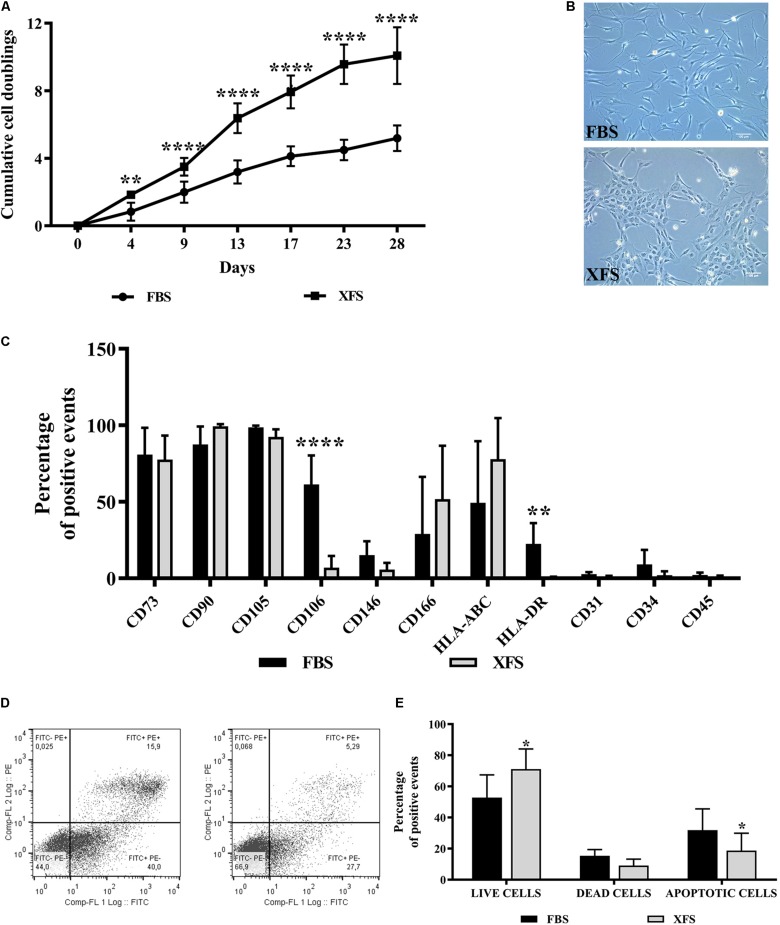
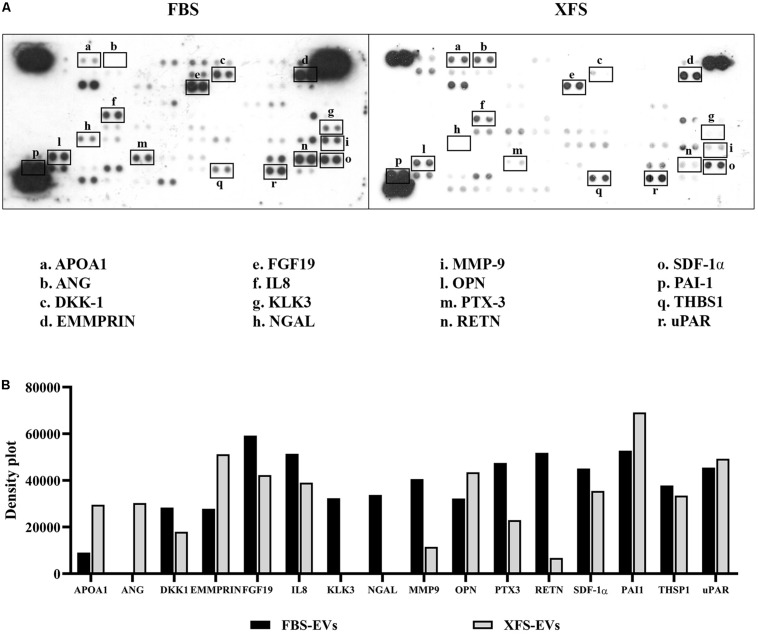
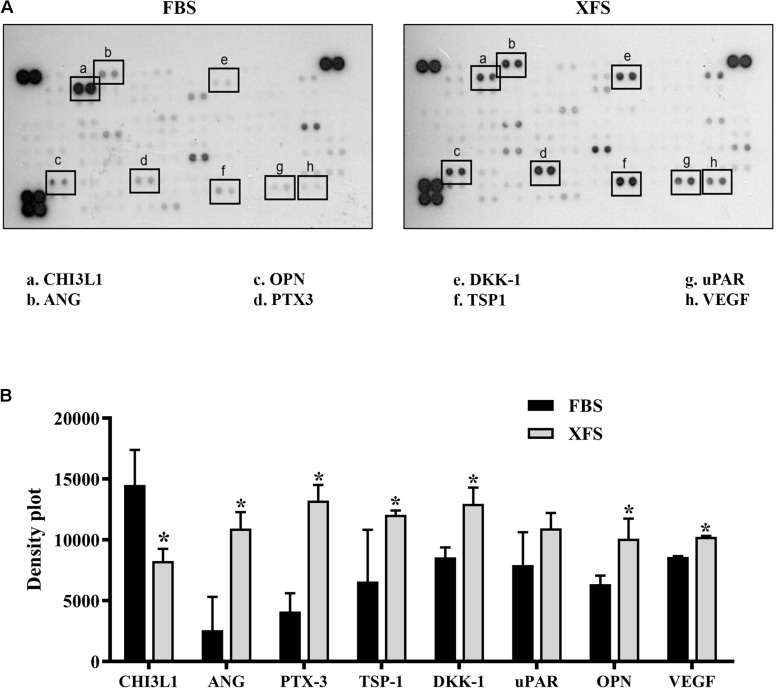
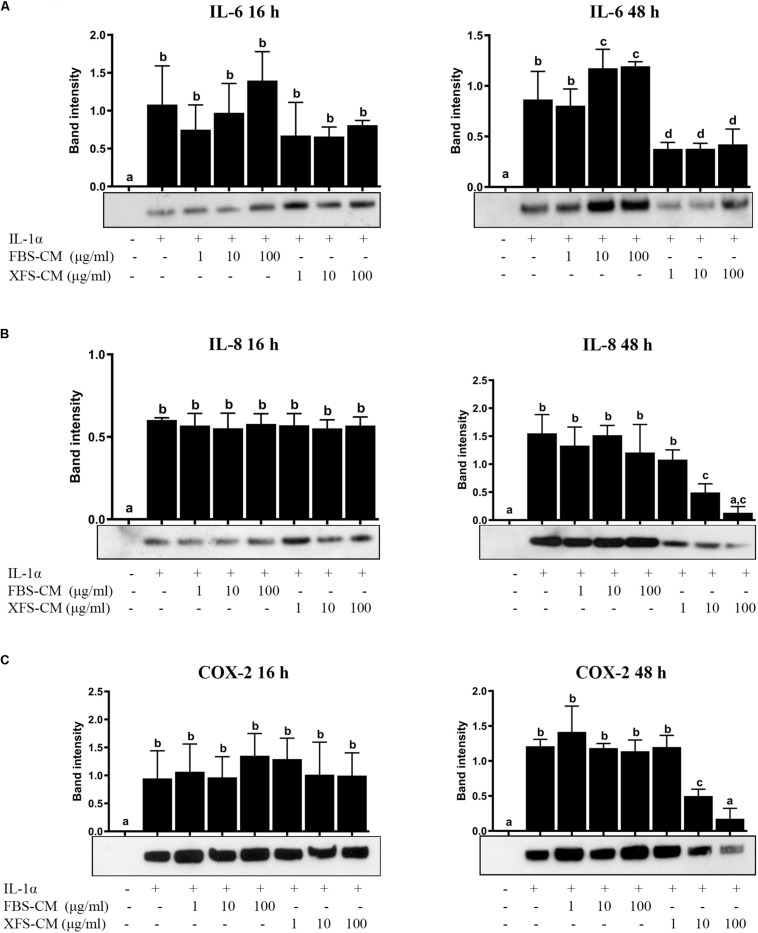
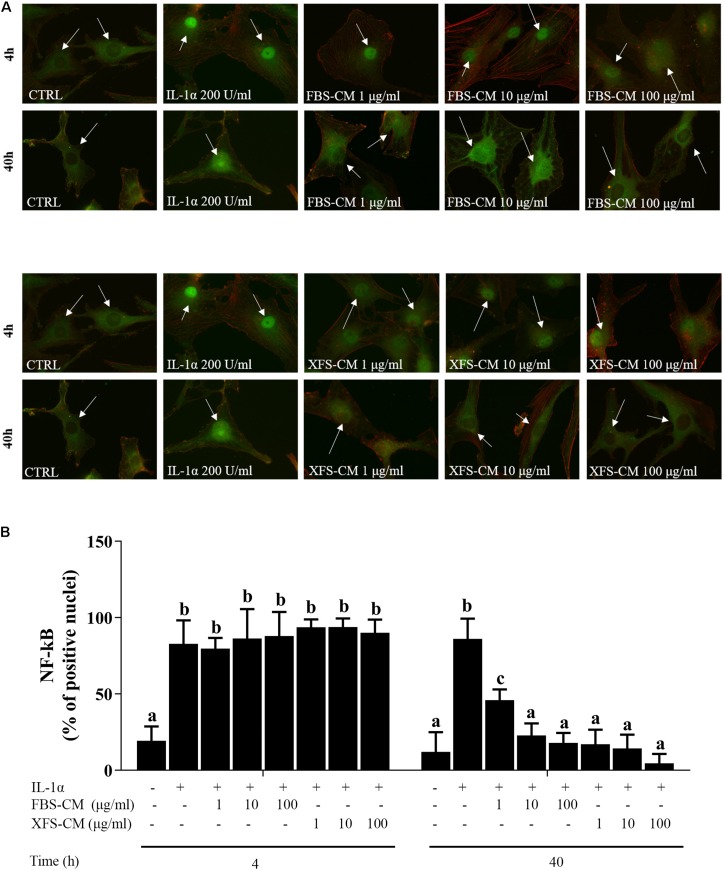
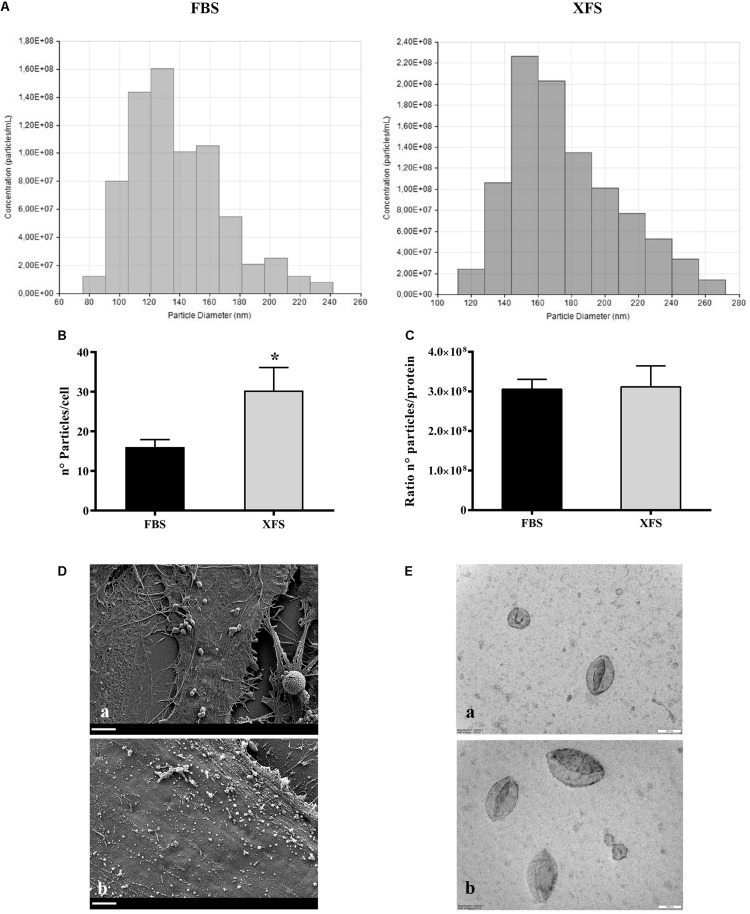
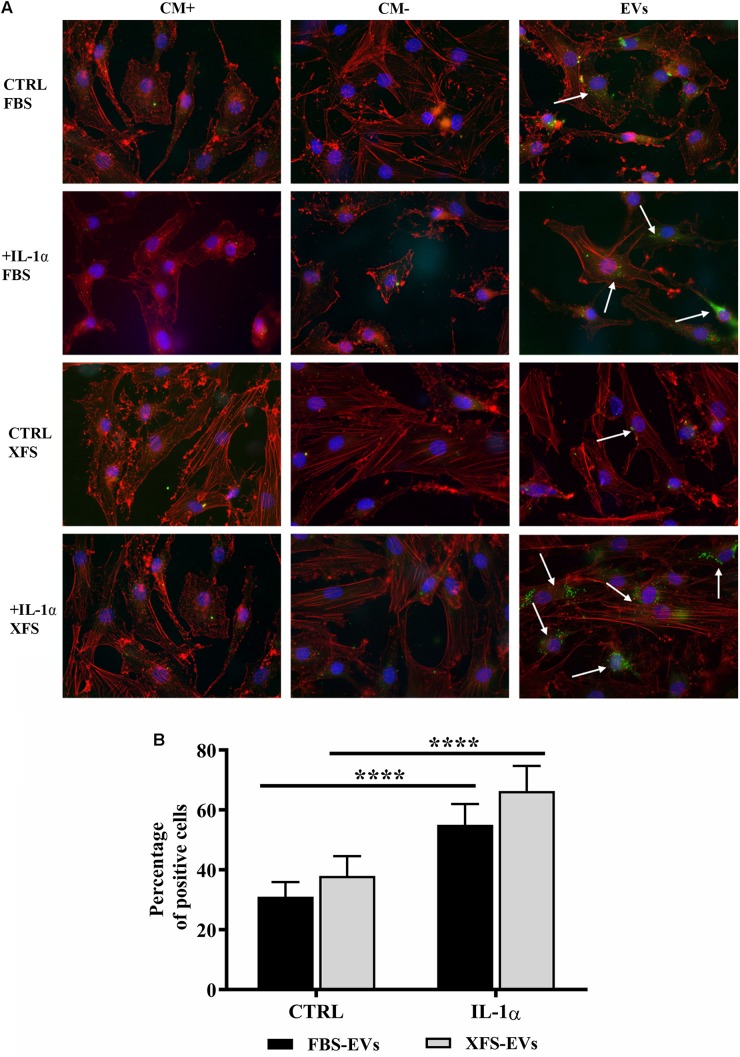
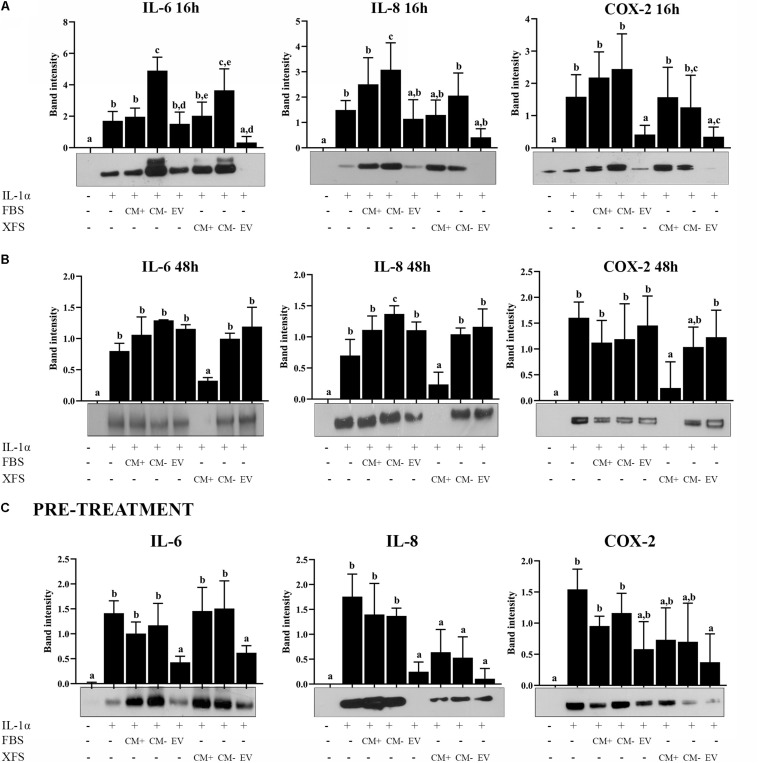
Osteoarthritis (OA) is a disabling joint disorder causing articular cartilage degeneration. Currently, the treatments are mainly aimed to pain and symptoms relief, rather than disease amelioration. Human bone marrow stromal cells (hBMSCs) have emerged as a promising paracrine mechanism-based tool for OA treatment. Here, we investigate the therapeutic potential of conditioned media (CM) and extracellular vesicles (EVs) isolated from hBMSC and grown in a xeno-free culture system (XFS) compared to the conventional fetal bovine serum-culture system (FBS) in an model of OA. First, we observed that XFS promoted growth and viability of hBMSCs compared to FBS-containing medium while preserving their typical phenotype. The biological effects of the CM derived from hBMSC cultivated in XFS- and FBS-based medium were tested on IL-1α treated human chondrocytes, to mimic the OA enviroment. Treatment with CM derived from XFS-cultured hBMSC inhibited IL-1α-induced expression of IL-6, IL-8, and COX-2 by hACs compared to FBS-based condition. Furthermore, we observed that hBMSCs grown in XFS produced a higher amount of EVs compared to FBS-culture. The hBMSC-EVs not only inhibit the adverse effects of IL-1α-induced inflammation, but play a significant chondroprotective effect. In conclusion, the XFS medium was found to be suitable for isolation and expansion of hBMSCs with increased safety profile and intended for ready-to-use clinical therapies.
骨关节炎(OA)是一种导致关节软骨退变的致残性关节疾病。目前,治疗主要旨在缓解疼痛和症状,而非改善疾病。人骨髓间充质干细胞(hBMSCs)已成为一种有前景的基于旁分泌机制的OA治疗工具。在此,我们在OA模型中研究了与传统胎牛血清培养系统(FBS)相比,在无血清培养系统(XFS)中培养的hBMSCs分离出的条件培养基(CM)和细胞外囊泡(EVs)的治疗潜力。首先,我们观察到与含FBS的培养基相比,XFS促进了hBMSCs的生长和活力,同时保留了它们的典型表型。在IL-1α处理的人软骨细胞上测试了基于XFS和FBS的培养基中培养的hBMSCs来源的CM的生物学效应,以模拟OA环境。与基于FBS的条件相比,用XFS培养的hBMSCs来源的CM处理可抑制hACs中IL-1α诱导的IL-6、IL-8和COX-2的表达。此外,我们观察到与FBS培养相比,在XFS中生长的hBMSCs产生的EVs数量更多。hBMSC-EVs不仅抑制IL-1α诱导炎症的不良反应,而且具有显著的软骨保护作用。总之,发现XFS培养基适用于hBMSCs的分离和扩增,具有更高的安全性,可用于即用型临床治疗。