La Marca John E, Richardson Helena E
Richardson Laboratory, Department of Biochemistry and Genetics, La Trobe Institute for Molecular Science, La Trobe University, Melbourne, VIC, Australia.
Front Cell Dev Biol. 2020 Feb 5;8:42. doi: 10.3389/fcell.2020.00042. eCollection 2020.
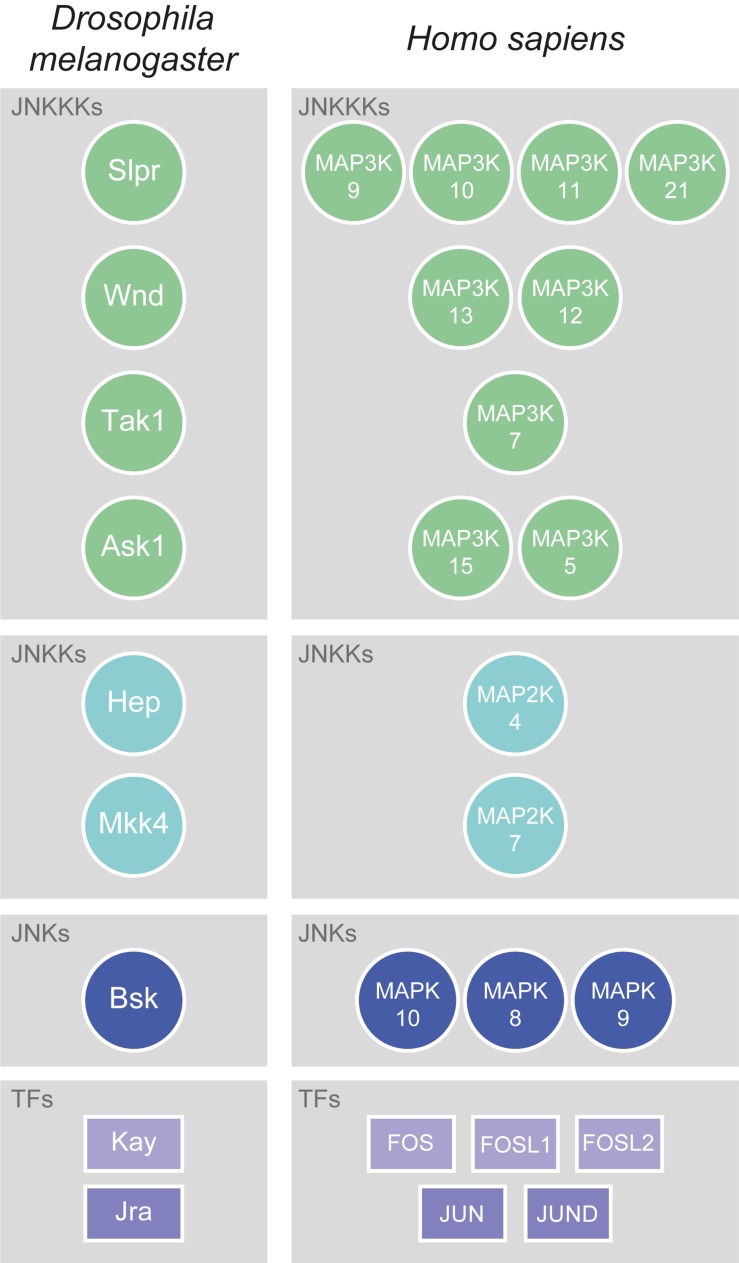
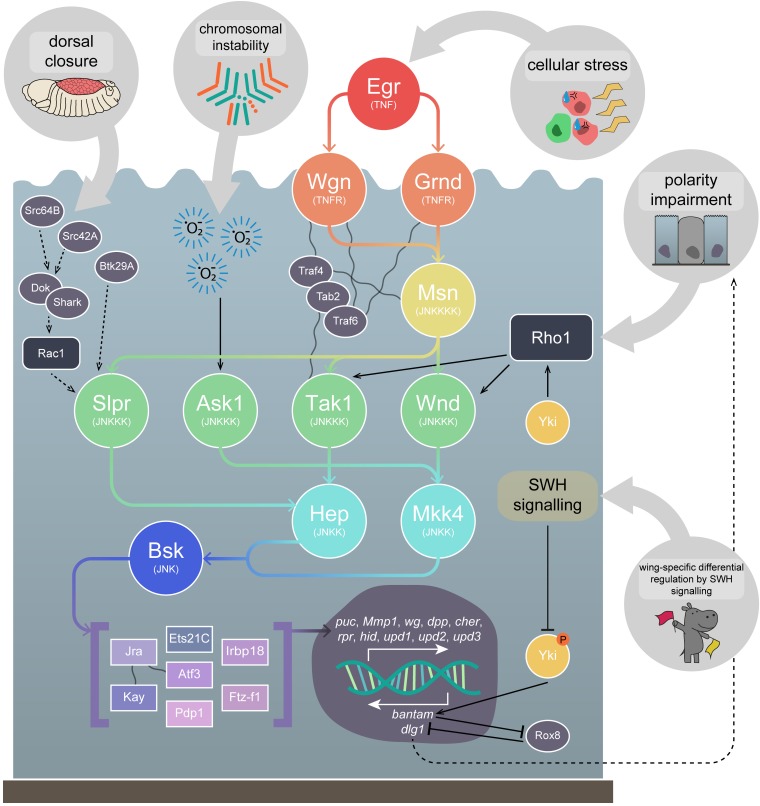
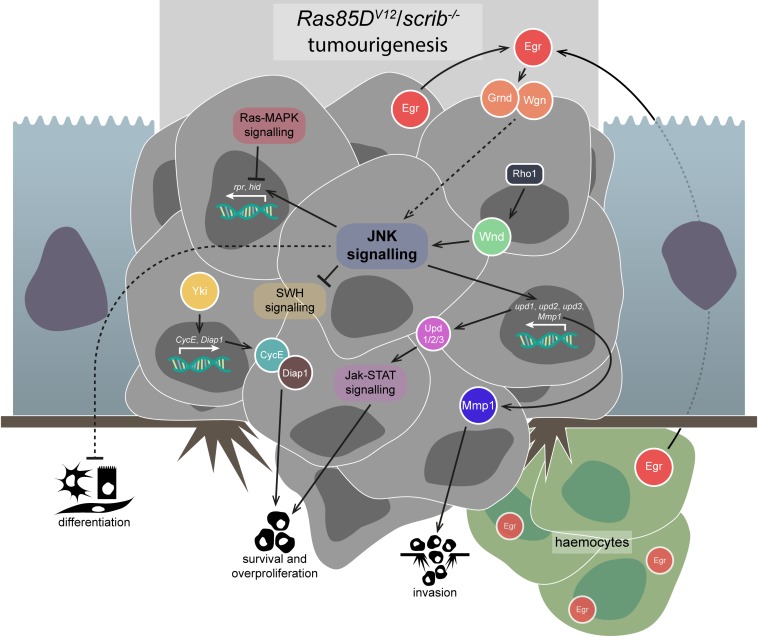
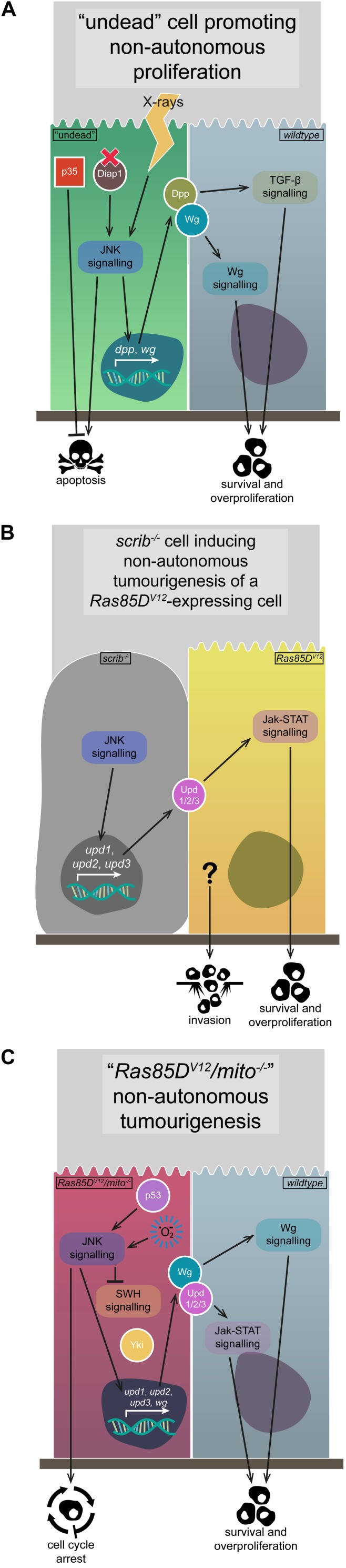
The highly conserved c-Jun N-terminal Kinase (JNK) signalling pathway has many functions, regulating a diversity of processes: from cell movement during embryogenesis to the stress response of cells after environmental insults. Studies modelling cancer using the vinegar fly, , have identified both pro- and anti-tumourigenic roles for JNK signalling, depending on context. As a tumour suppressor, JNK signalling commonly is activated by conserved Tumour Necrosis Factor (TNF) signalling, which promotes the caspase-mediated death of tumourigenic cells. JNK pathway activation can also occur via actin cytoskeleton alterations, and after cellular damage inflicted by reactive oxygen species (ROS). Additionally, JNK signalling frequently acts in concert with Salvador-Warts-Hippo (SWH) signalling - either upstream of or parallel to this potent growth-suppressing pathway. As a tumour promoter, JNK signalling is co-opted by cells expressing activated Ras-MAPK signalling (among other pathways), and used to drive cell morphological changes, induce invasive behaviours, block differentiation, and enable persistent cell proliferation. Furthermore, JNK is capable of non-autonomous influences within tumour microenvironments by effecting the transcription of various cell growth- and proliferation-promoting molecules. In this review, we discuss these aspects of JNK signalling in tumourigenesis models, and highlight recent publications that have expanded our knowledge of this important and versatile pathway.
高度保守的c-Jun氨基末端激酶(JNK)信号通路具有多种功能,调控着各种各样的过程:从胚胎发育过程中的细胞运动到环境损伤后细胞的应激反应。利用果蝇对癌症进行建模的研究已经确定,根据具体情况,JNK信号通路既具有促肿瘤作用,也具有抗肿瘤作用。作为一种肿瘤抑制因子,JNK信号通路通常由保守的肿瘤坏死因子(TNF)信号激活,后者促进半胱天冬酶介导的致瘤细胞死亡。JNK通路的激活也可通过肌动蛋白细胞骨架的改变以及活性氧(ROS)造成的细胞损伤后发生。此外,JNK信号通路经常与萨尔瓦多-沃茨-河马(SWH)信号通路协同作用——要么在这条强大的生长抑制通路的上游,要么与之平行。作为一种肿瘤促进因子,JNK信号通路被表达激活的Ras-MAPK信号通路(以及其他通路)的细胞利用,以驱动细胞形态变化、诱导侵袭行为、阻断分化并实现持续的细胞增殖。此外,JNK能够通过影响各种促进细胞生长和增殖的分子的转录,在肿瘤微环境中产生非自主影响。在这篇综述中,我们讨论了JNK信号通路在肿瘤发生模型中的这些方面,并重点介绍了最近扩展了我们对这条重要且多功能通路认识的出版物。