Abou-Al-Shaar Hussam, Krisht Khaled M, Cohen Michael A, Abunimer Abdullah M, Neil Jayson A, Karsy Michael, Alzhrani Gmaan, Couldwell William T
Department of Neurosurgery, Clinical Neurosciences Center, University of Utah, Salt Lake City, UT, United States.
Department of Neurological Surgery, University of Pittsburgh Medical Center, Pittsburgh, PA, United States.
Front Surg. 2020 Feb 7;7:1. doi: 10.3389/fsurg.2020.00001. eCollection 2020.
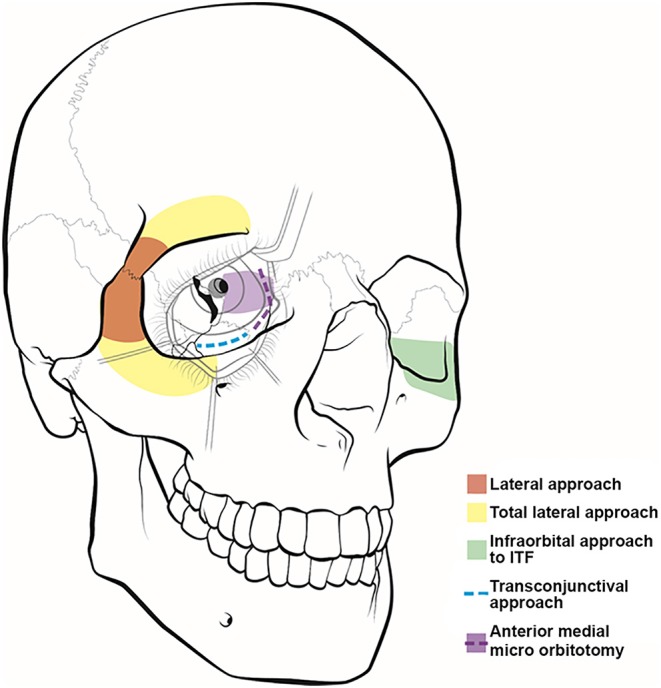
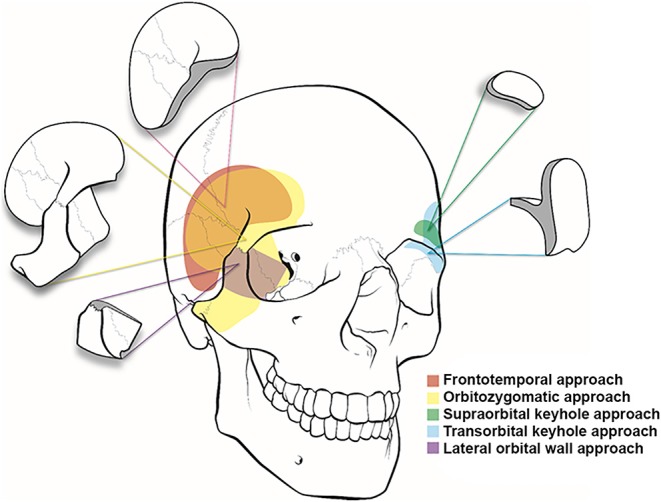
Orbital approaches for targeting intracranial, orbital, and infratemporal disease have evolved over the years in an effort to discover safe, reliable, effective, and cosmetically satisfying surgical corridors. The surgical goals of these approaches balance important factors such as proximity of the lesion to the optic nerve, the degree of anticipated manipulation and required space for surgical maneuverability, and the type of disease. The authors provide a comprehensive review of the most commonly used periorbital approaches in the management of intra- and extracranial disease, with emphasis on the advantages and limitations of each approach.
多年来,用于治疗颅内、眶内和颞下疾病的眼眶入路不断发展,旨在探寻安全、可靠、有效且美观满意的手术通道。这些入路的手术目标平衡了诸多重要因素,如病变与视神经的距离、预期的操作程度和手术可操作性所需空间,以及疾病类型。作者对治疗颅内和颅外疾病时最常用的眶周入路进行了全面综述,重点阐述了每种入路的优缺点。