Chambers Christine T, Dol Justine, Parker Jennifer A, Caes Line, Birnie Kathryn A, Taddio Anna, Campbell-Yeo Marsha, Halperin Scott A, Langille Jennifer
Department of Psychology and Neuroscience, Dalhousie University, Halifax, NS, Canada.
Department of Pediatrics, Dalhousie University, Halifax, NS, Canada.
JMIR Pediatr Parent. 2020 Mar 4;3(1):e13552. doi: 10.2196/13552.
Despite the availability of high-quality evidence and clinical practice guidelines for the effective management of pediatric pain, this evidence is rarely used in practice for managing children's pain from needle procedures such as vaccinations. Parents are generally unaware of pain management strategies they can use with their children.
This study aimed to develop, implement, and evaluate the implementation effectiveness of a parent-directed YouTube video on evidence-based strategies to manage needle pain in children.
This was a descriptive study. Analytics were extracted from YouTube to describe video reach. A Web-based survey was used to seek parent and health care professional (HCP) feedback about the video. The 2-minute 18-second video was launched on YouTube on November 4, 2013. In the video, a 4-year-old girl tells parents what they should and should not do to help needles hurt less. The key evidence-based messages shared in the video were distraction, deep breathing, and topical anesthetic creams. A group of parents (n=163) and HCPs (n=278) completed the Web-based survey. Measures of reach included number of unique views, country where the video was viewed, sex of the viewer, and length of watch time. The Web-based survey assessed implementation outcomes of the video, such as acceptability, appropriateness, penetration, and adoption.
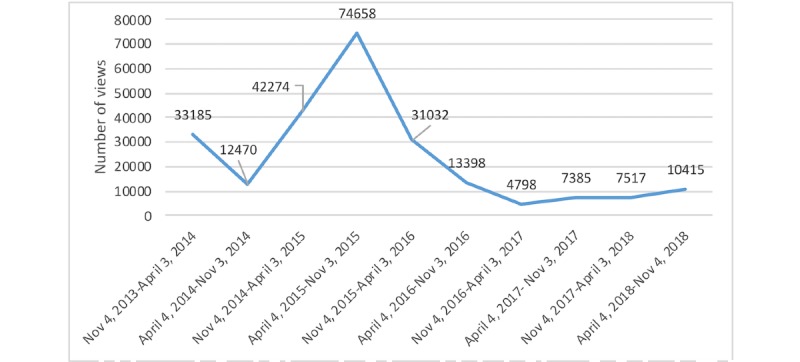
As of November 4, 2018 (5 years after launch), the video had 237,132 unique views from 182 countries, with most viewers watching an average of 55.1% (76/138 seconds) of the video. Overall, both parents and HCPs reported strong acceptance of the video (ie, they liked the video, found it helpful, and felt more confident) and reported significant improvements in plans to use distraction, deep breathing, and topical anesthetic creams.
This parent-directed YouTube video was an acceptable and appropriate way to disseminate evidence about the procedure of pain management to a large number of parents.
尽管有高质量的证据和临床实践指南用于小儿疼痛的有效管理,但这些证据在实际中很少用于处理诸如疫苗接种等针刺操作给儿童带来的疼痛。家长通常并不知晓可用于孩子的疼痛管理策略。
本研究旨在开发、实施并评估一个由家长主导的YouTube视频在基于证据的儿童针刺疼痛管理策略方面的实施效果。
这是一项描述性研究。从YouTube提取分析数据以描述视频的传播范围。采用基于网络的调查来征求家长和医护专业人员(HCP)对该视频的反馈。这个2分18秒的视频于2013年11月4日在YouTube上发布。视频中,一名4岁女孩向家长讲述帮助减轻针刺疼痛应该做什么和不应该做什么。视频中分享的基于证据的关键信息包括分散注意力、深呼吸和外用麻醉乳膏。一组家长(n = 163)和医护专业人员(n = 278)完成了基于网络的调查。传播范围的衡量指标包括独立观看次数、视频观看国家、观看者性别和观看时长。基于网络的调查评估了视频的实施效果,如可接受性、适宜性、渗透率和采用率。
截至2018年11月4日(发布后5年),该视频在182个国家有237,132次独立观看,大多数观看者平均观看了视频的55.1%(76/138秒)。总体而言,家长和医护专业人员都表示对该视频高度认可(即他们喜欢这个视频,觉得有帮助,并且更有信心),并报告在使用分散注意力、深呼吸和外用麻醉乳膏的计划方面有显著改善。
这个由家长主导的YouTube视频是向大量家长传播疼痛管理程序相关证据的一种可接受且适宜的方式。