Shizuoka Cancer Center, Division of Gastrointestinal Oncology, 1007 Shimonagakubo Nagaizumi-cho Sunto-gun, Shizuoka, 411-8777, Japan.
Shizuoka Cancer Center, Division of Medical Oncology, Sunto-gun, Shizuoka, Japan.
BMC Cancer. 2020 Mar 4;20(1):182. doi: 10.1186/s12885-020-6682-1.
Aspiration pneumonia is one of the most important side effects of chemoradiotherapy (CRT) and bio-radiotherapy (BRT) in patients with head and neck cancer (HNC). Aspiration pneumonia can lead to cancer-related mortality in HNC patients. However, the relationship between aspiration pneumonia occurring during CRT or BRT for HNC and treatment outcomes in HNC patients is not well characterized. In this study, we assessed the influence of aspiration pneumonia on treatment outcomes and sought to identify the clinical risk factors for aspiration pneumonia during definitive CRT and BRT in HNC patients.
We retrospectively assessed the data pertaining to patients with locally advanced HNC who received definitive CRT or BRT at the Shizuoka Cancer Center between August 2006 and December 2016.
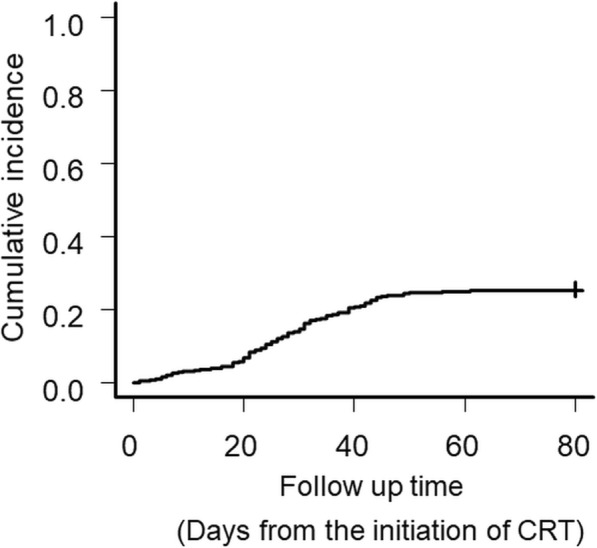
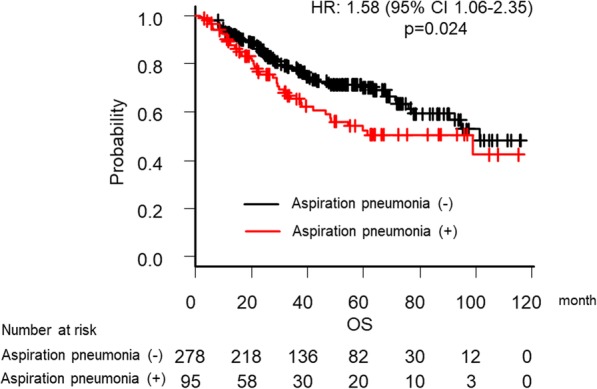
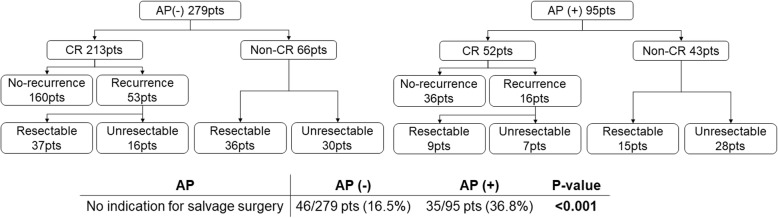
Among the 374 HNC patients who received CRT or BRT, 95 (25.4%) developed aspiration pneumonia during treatment. Aspiration pneumonia was significantly associated with therapeutic response to CRT or BRT (multivariate adjusted odds ratio for complete response, 0.52, p = 0.020) and poor overall survival (multivariate adjusted hazard ratio for overall survival, 1.58, p = 0.024). The multivariate analyses identified four independent factors for aspiration pneumonia: poor oral hygiene, high N-classification, hypoalbuminemia before treatment, and inpatient treatment.
Aspiration pneumonia occurring during CRT or BRT has a detrimental effect on the therapeutic response and survival of HNC patients. Careful attention should be paid to these risk factors for aspiration pneumonia in HNC patients undergoing CRT or BRT.
头颈部癌症(HNC)患者接受放化疗(CRT)和生物放化疗(BRT)时,吸入性肺炎是最重要的副作用之一。吸入性肺炎可导致 HNC 患者的癌症相关死亡。然而,HNC 患者 CRT 或 BRT 期间发生的吸入性肺炎与治疗结果之间的关系尚未得到很好的描述。在本研究中,我们评估了吸入性肺炎对治疗结果的影响,并试图确定 HNC 患者接受根治性 CRT 和 BRT 期间发生吸入性肺炎的临床危险因素。
我们回顾性评估了 2006 年 8 月至 2016 年 12 月在静冈癌症中心接受根治性 CRT 或 BRT 的局部晚期 HNC 患者的数据。
在接受 CRT 或 BRT 的 374 例 HNC 患者中,95 例(25.4%)在治疗期间发生了吸入性肺炎。吸入性肺炎与 CRT 或 BRT 的治疗反应显著相关(完全缓解的多变量调整比值比,0.52,p=0.020),并且与总体生存不良相关(总体生存的多变量调整风险比,1.58,p=0.024)。多变量分析确定了吸入性肺炎的四个独立危险因素:口腔卫生差、N 类高、治疗前低白蛋白血症和住院治疗。
CRT 或 BRT 期间发生的吸入性肺炎对 HNC 患者的治疗反应和生存有不利影响。在接受 CRT 或 BRT 的 HNC 患者中,应仔细注意这些吸入性肺炎的危险因素。