Institute of Marine Research, Nye Flødevigveien 20, 4817, His, Norway.
University of Oslo, Department of Biosciences, PO Box 1066 Blindern, 0316, Oslo, Norway.
Sci Rep. 2020 Mar 4;10(1):3983. doi: 10.1038/s41598-020-60553-x.
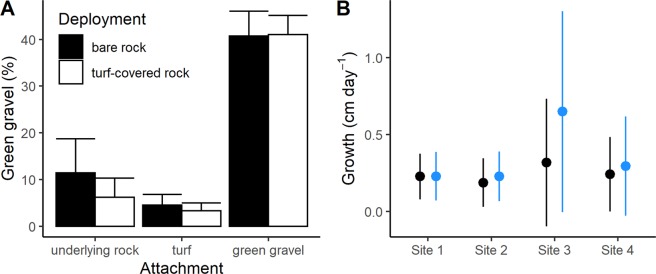
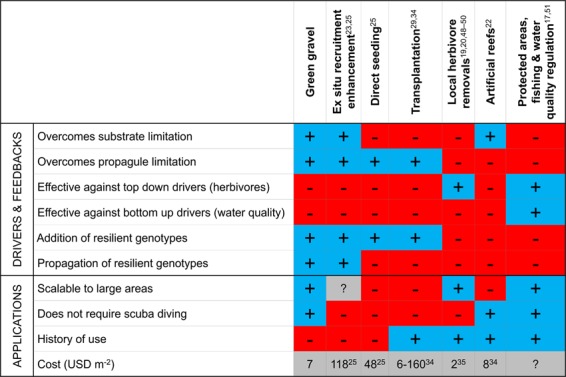
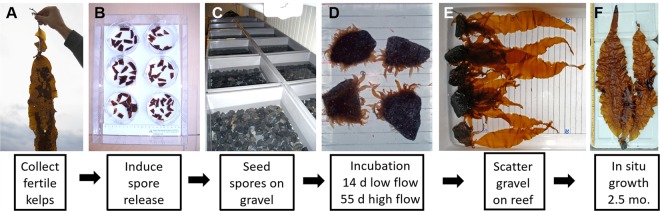
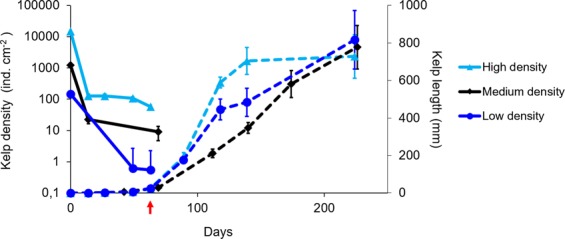
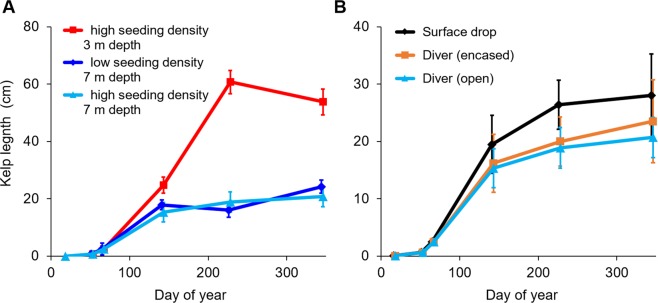
Kelp forests are in decline globally and large-scale intervention could be required to halt the loss of these valuable ecosystems. To date kelp forest restoration has had limited success and been expensive and unable to address the increasing scale of ecosystem deterioration. Here we developed and tested a new approach: "green gravel". Small rocks were seeded with kelp and reared in the laboratory until 2-3 cm, before out-planting to the field. The out-planted kelp had high survival and growth over 9 months, even when dropped from the surface. This technique is cheap, simple, and does not require scuba diving or highly trained field workers. It can be up-scaled to treat large areas or even used to introduce genes from more resilient kelp populations onto vulnerable reefs. Green gravel thus overcomes some of the current major limitations of kelp restoration and provides a promising new defense against kelp forest decline.
海带林在全球范围内正在减少,可能需要大规模干预才能阻止这些宝贵的生态系统的丧失。迄今为止,海带林的恢复工作收效甚微,而且成本高昂,无法解决生态系统恶化日益严重的问题。在这里,我们开发并测试了一种新方法:“绿色砾石”。小石块被海带种子覆盖,并在实验室中培育,直到长到 2-3 厘米,然后再移植到野外。经过 9 个月的野外种植,这些移植的海带成活率和生长率都很高,即使从表面掉落也是如此。这项技术成本低廉,简单,不需要水肺潜水或经过高度训练的野外工人。它可以扩大规模来处理大面积区域,甚至可以用来将更有弹性的海带种群的基因引入脆弱的珊瑚礁。因此,“绿色砾石”克服了海带恢复的一些当前主要限制,并为防止海带林减少提供了一种有前途的新方法。