Huang Chunguo, Han Xiaoli, Yang Zhenping, Chen Yinglong, Rengel Zed
College of Agriculture, Shanxi Agricultural University, Jinzhong, China.
College of Forestry, Shanxi Agricultural University, Jinzhong, China.
Front Microbiol. 2020 Feb 18;11:192. doi: 10.3389/fmicb.2020.00192. eCollection 2020.
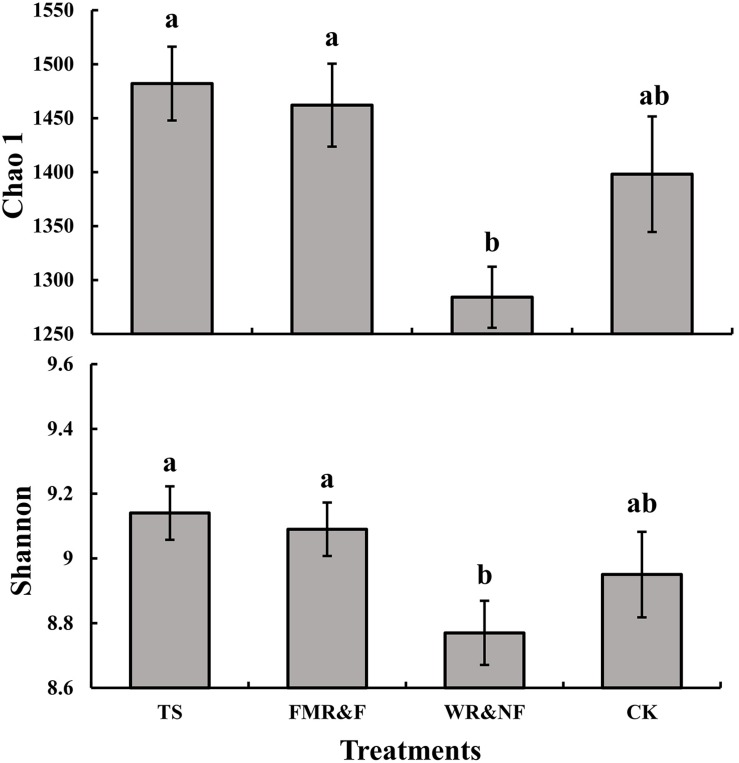
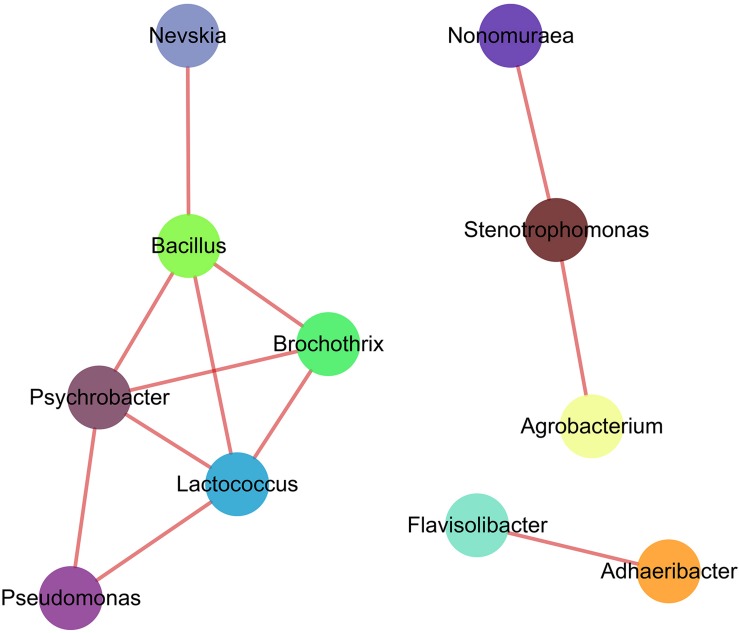
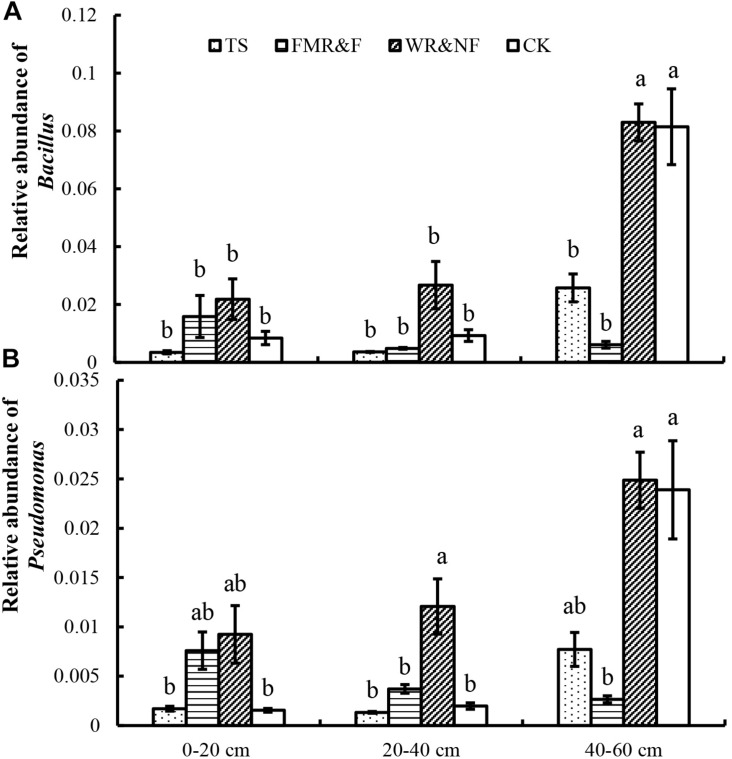
Soil bacterial diversity and community composition are crucial for soil health and plant growth, and their dynamics in response to agronomic practices are poorly understood. The aim of this study was to investigate the response of soil bacterial community structure to the changes of sowing methods, soil depth and distance to roots in a winter wheat-summer maize crop rotation system on the Loess Plateau in china (35°17'38''N, 111°40'24''E). The experiment was laid out as completely randomized block design with three replications. Sowing methods trialed were: traditional sowing (TS), film-mulched ridge and furrow sowing (FMR&F), wide ridge and narrow furrow sowing (WR&NF) and unplanted control (CK). The result showed that the WR&NF sowing method treatment significantly decreased soil bacterial diversity (Chao 1 and Shannon indices) compared to the TS and FMR&F treatment, but increased abundance of beneficial bacteria such as genera and compared to the TS treatment. These genera showed a stronger correlation with soil properties and contributed to the soil nutrient cycling and crop productivity. , nd were the keystone genera in this winter wheat-summer maize rotation system on the Loess Plateau. Strong correlations between changes in soil properties and soil bacterial diversity and abundance were identified. In summary, we suggest that the WR&NF treatment, as a no-mulching film and no-deep tillage sowing method, would be the most suitable sowing technique in the winter wheat-summer maize rotation on Loess soil.
土壤细菌多样性和群落组成对土壤健康和植物生长至关重要,而它们对农艺措施响应的动态变化却知之甚少。本研究的目的是调查中国黄土高原冬小麦-夏玉米轮作系统(北纬35°17'38'',东经111°40'24'')中土壤细菌群落结构对播种方式、土壤深度和距根距离变化的响应。试验采用完全随机区组设计,重复三次。试验的播种方式有:传统播种(TS)、膜下垄沟播种(FMR&F)、宽垄窄沟播种(WR&NF)和未种植对照(CK)。结果表明,与TS和FMR&F处理相比,WR&NF播种方式处理显著降低了土壤细菌多样性(Chao 1和Shannon指数),但与TS处理相比,增加了有益细菌如属和属的丰度。这些属与土壤性质的相关性更强,有助于土壤养分循环和作物生产力。属、属和属是黄土高原该冬小麦-夏玉米轮作系统中的关键属。研究确定了土壤性质变化与土壤细菌多样性和丰度之间的强相关性。总之,我们建议,作为一种不覆盖地膜且不深耕的播种方式,WR&NF处理将是黄土土壤冬小麦-夏玉米轮作中最合适的播种技术。