Vega-Vásquez Pablo, Mosier Nathan S, Irudayaraj Joseph
Laboratory of Renewable Resources Engineering, Department of Agricultural and Biological Engineering, Purdue University, West Lafayette, IN, United States.
Department of Agricultural and Biological Engineering, Purdue University, West Lafayette, IL, United States.
Front Bioeng Biotechnol. 2020 Feb 18;8:79. doi: 10.3389/fbioe.2020.00079. eCollection 2020.
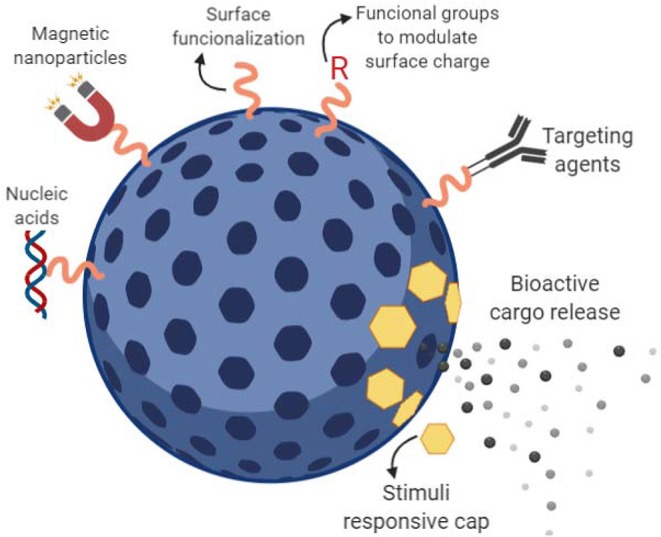
The main challenges in drug delivery systems are to protect, transport and release biologically active compounds at the right time in a safe and reproducible manner, usually at a specific target site. In the past, drug nano-carriers have contributed to the development of precision medicine and to a lesser extent have focused on its inroads in agriculture. The concept of engineered nano-carriers may be a promising route to address confounding challenges in agriculture that could perhaps lead to an increase in crop production while reducing the environmental impact associated with crop protection and food production. The main objective of this review is to contrast the advantages and disadvantages of different types of nanoparticles and nano-carriers currently used in the biomedical field along with their fabrication methods to discuss the potential use of these technologies at a larger scale in agriculture. Here we explain what is the problem that nano-delivery systems intent to solve as a technological platform and describe the benefits this technology has brought to medicine. Also here we highlight the potential drawbacks that this technology may face during its translation to agricultural applications, based on the lessons learned so far from its use for biomedical purposes. We discuss not only the characteristics of an ideal nano-delivery system, but also the potential constraints regarding the fabrication including technical, environmental, and legal aspects. A key motivation is to evaluate the potential use of these systems in agriculture, especially in the area of plant breeding, growth promotion, disease control, and post-harvest quality control. Further, we highlight the importance of a rational design of nano-carriers and identify current research gaps to enable scale-up relevant to applications in the treatment of plant diseases, controlled release of fertilizers, and plant breeding.
药物递送系统面临的主要挑战是以安全且可重复的方式,通常在特定靶点部位,在正确的时间保护、运输和释放生物活性化合物。过去,药物纳米载体推动了精准医学的发展,在一定程度上也关注了其在农业领域的应用。工程化纳米载体的概念可能是解决农业领域复杂挑战的一条有前景的途径,这或许能够提高作物产量,同时减少与作物保护和粮食生产相关的环境影响。本综述的主要目的是对比目前生物医学领域使用的不同类型纳米颗粒和纳米载体的优缺点及其制备方法,以讨论这些技术在农业大规模应用中的潜在用途。在此,我们解释纳米递送系统作为一种技术平台旨在解决的问题,并描述该技术给医学带来的益处。此外,基于目前从其生物医学用途中吸取的经验教训,我们强调该技术在向农业应用转化过程中可能面临的潜在缺点。我们不仅讨论理想纳米递送系统的特性,还讨论制备过程中包括技术、环境和法律方面的潜在限制。一个关键动机是评估这些系统在农业中的潜在用途,特别是在植物育种、生长促进、疾病控制和收获后质量控制领域。此外,我们强调纳米载体合理设计的重要性,并找出当前的研究差距,以实现与植物疾病治疗、肥料控释和植物育种应用相关的扩大规模。