Sun Yi, Jiang Yaqi, Li Yuanbo, Wang Qibin, Zhu Guikai, Yi Tianjing, Wang Quanlong, Wang Yi, Dhankher Om Parkash, Tan Zhiqiang, Lynch Iseult, White Jason C, Rui Yukui, Zhang Peng
Beijing Key Laboratory of Farmland Soil Pollution Prevention and Remediation, College of Resources and Environmental Sciences, China Agricultural University Beijing 100093 China
Department of Environmental Science and Engineering, University of Science and Technology of China Anhui 230026 China
Chem Sci. 2024 Mar 1;15(13):4709-4722. doi: 10.1039/d3sc06122a. eCollection 2024 Mar 27.
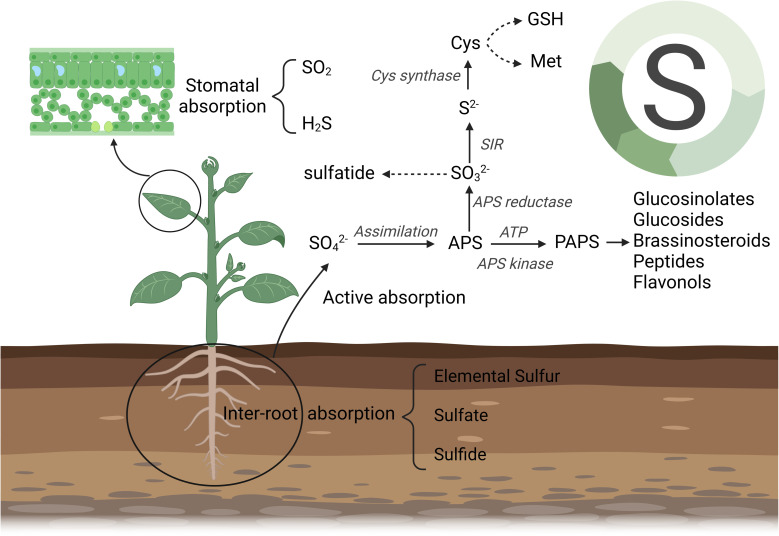
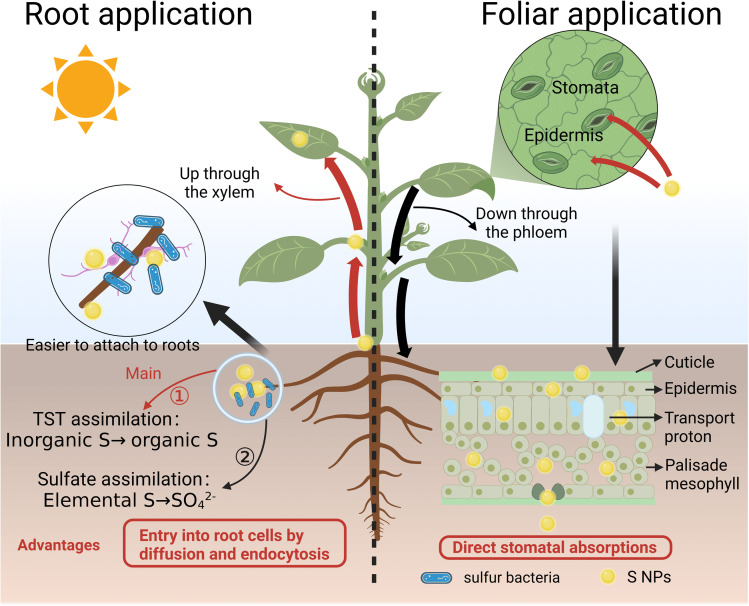
The global population is growing rapidly, which poses a significant challenge to food security. Innovation in agricultural technologies is necessary to achieve sustainable development in agriculture and combat food insecurity. Nanotechnology has emerged as a promising tool in agriculture; compared to conventional agricultural chemicals, demonstrated benefits include increased efficiency of delivery and utilization of both nutrients and pesticides, as well as nanoscale-specific stimulation of stress tolerance pathways. Among the many studied nanomaterials, nano-sulfur has demonstrated superior effects at enhancing plant resilience to pathogens and abiotic stresses, as well as improving plant growth and nutritional quality of edible tissues. A number of published studies have investigated the physiological effects (growth promotion, disease resistance) of single or several sulfur and sulfide compounds on crop species. However, there is no systematic analysis of this literature, including the effects and specific mechanisms of various sulfur forms in agricultural applications. In this review, we will discuss the effects of sulfur (including nano-sulfur) on crop species, the underlying mechanisms of action for their transport and transformation in the soil-plant system, and evaluate their suitability in sustainable agricultural development. Additionally, we discuss the current challenges and knowledge gaps for nanoscale sulfur use in agriculture, and describe future research directions to advance our understanding of the sustainable use of this material at the scale of individual fields.
全球人口正在迅速增长,这对粮食安全构成了重大挑战。农业技术创新对于实现农业可持续发展和应对粮食不安全问题至关重要。纳米技术已成为农业领域一种有前景的工具;与传统农用化学品相比,其已证明的优势包括提高养分和农药的输送及利用效率,以及对胁迫耐受途径的纳米级特异性刺激。在众多已研究的纳米材料中,纳米硫在增强植物对病原体和非生物胁迫的抗性、改善植物生长以及可食用组织的营养品质方面已显示出卓越效果。许多已发表的研究调查了单一或几种硫及硫化物化合物对作物品种的生理影响(促进生长、抗病性)。然而,尚未对该文献进行系统分析,包括各种硫形态在农业应用中的效果及具体机制。在本综述中,我们将讨论硫(包括纳米硫)对作物品种的影响、其在土壤 - 植物系统中运输和转化的潜在作用机制,并评估它们在可持续农业发展中的适用性。此外,我们讨论了农业中纳米级硫使用当前面临的挑战和知识空白,并描述了未来的研究方向,以增进我们对该材料在单个田间尺度上可持续利用的理解。