Kaludercic Nina, Di Lisa Fabio
Neuroscience Institute, National Research Council of Italy (CNR), Padua, Italy.
Department of Biomedical Sciences, University of Padua, Padua, Italy.
Front Cardiovasc Med. 2020 Feb 18;7:12. doi: 10.3389/fcvm.2020.00012. eCollection 2020.
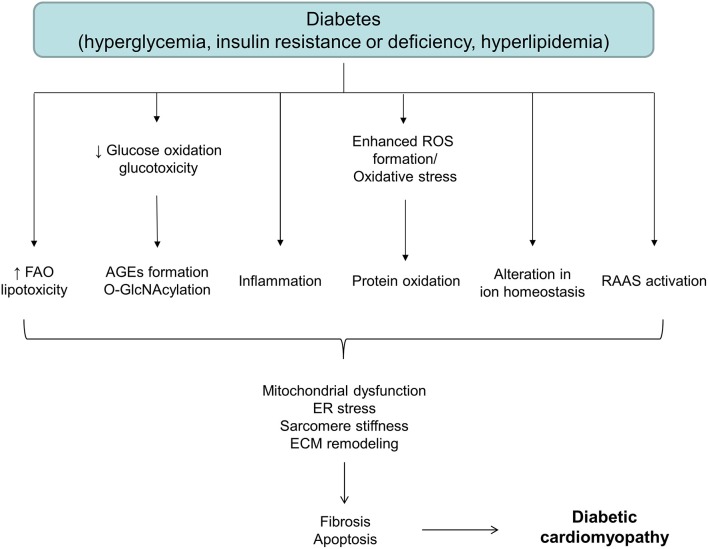
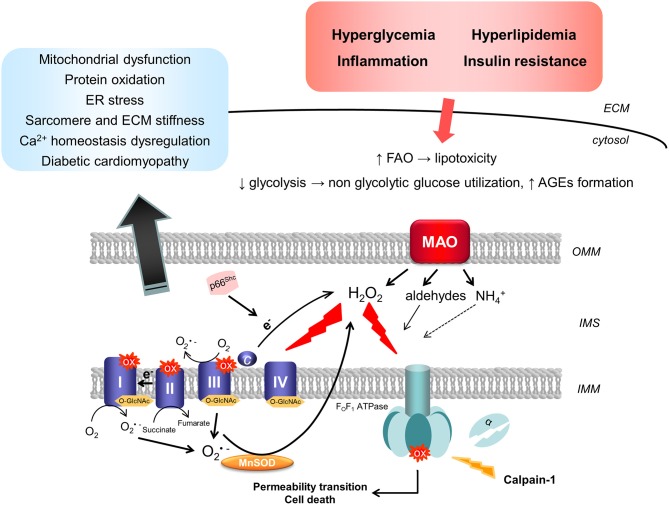
Diabetic cardiomyopathy is a result of diabetes-induced changes in the structure and function of the heart. Hyperglycemia affects multiple pathways in the diabetic heart, but excessive reactive oxygen species (ROS) generation and oxidative stress represent common denominators associated with adverse tissue remodeling. Indeed, key processes underlying cardiac remodeling in diabetes are redox sensitive, including inflammation, organelle dysfunction, alteration in ion homeostasis, cardiomyocyte hypertrophy, apoptosis, fibrosis, and contractile dysfunction. Extensive experimental evidence supports the involvement of mitochondrial ROS formation in the alterations characterizing the diabetic heart. In this review we will outline the central role of mitochondrial ROS and alterations in the redox status contributing to the development of diabetic cardiomyopathy. We will discuss the role of different sources of ROS involved in this process, with a specific emphasis on mitochondrial ROS producing enzymes within cardiomyocytes. Finally, the therapeutic potential of pharmacological inhibitors of ROS sources within the mitochondria will be discussed.
糖尿病性心肌病是糖尿病引起的心脏结构和功能改变的结果。高血糖影响糖尿病心脏的多个途径,但过量活性氧(ROS)生成和氧化应激是与不良组织重塑相关的共同因素。事实上,糖尿病心脏重塑的关键过程对氧化还原敏感,包括炎症、细胞器功能障碍、离子稳态改变、心肌细胞肥大、凋亡、纤维化和收缩功能障碍。大量实验证据支持线粒体ROS形成参与了糖尿病心脏特征性改变。在本综述中,我们将概述线粒体ROS的核心作用以及氧化还原状态改变在糖尿病性心肌病发展中的作用。我们将讨论参与这一过程的不同ROS来源的作用,特别强调心肌细胞内产生线粒体ROS的酶。最后,将讨论线粒体ROS来源的药理学抑制剂的治疗潜力。