Department of Pathogenic Biology, Army Medical University (The Third Military Medical University), Chongqing 400038, P.R. China.
Department of Immunology, College of Basic Medical Sciences, China Medical University, Shenyang, Liaoning, P.R. China.
Sci Adv. 2020 Feb 26;6(9):eaay9269. doi: 10.1126/sciadv.aay9269. eCollection 2020 Feb.
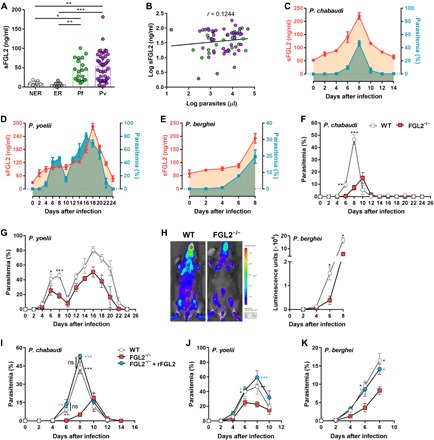
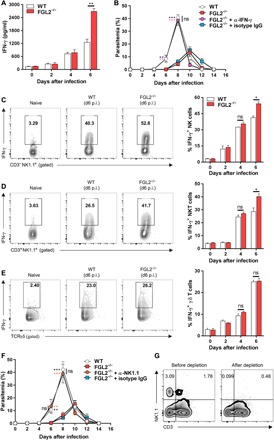
Malaria parasites suppress host immune responses to facilitate their survival, but the underlying mechanism remains elusive. Here, we found that blood-stage malaria parasites predominantly induced CD4Foxp3CD25 regulatory T cells to release soluble fibrinogen-like protein 2 (sFGL2), which substantially enhanced the infection. This was attributed to the capacity of sFGL2 to inhibit macrophages from releasing monocyte chemoattractant protein-1 (MCP-1) and to sequentially reduce the recruitment of natural killer/natural killer T cells to the spleen and the production of interferon-γ. sFGL2 inhibited c-Jun N-terminal kinase phosphorylation in the Toll-like receptor 2 signaling pathway of macrophages dependent on FcγRIIB receptor to release MCP-1. Notably, sFGL2 were markedly elevated in the sera of patients with malaria, and recombinant FGL2 substantially suppressed from inducing macrophages to release MCP-1. Therefore, we highlight a previously unrecognized immune suppression strategy of malaria parasites and uncover the fundamental mechanism of sFGL2 to suppress host innate immune responses.
疟原虫抑制宿主免疫反应以促进其存活,但潜在的机制仍难以捉摸。在这里,我们发现血液阶段的疟原虫主要诱导 CD4Foxp3CD25 调节性 T 细胞释放可溶性纤维蛋白原样蛋白 2(sFGL2),这大大增强了感染。这归因于 sFGL2 抑制巨噬细胞释放单核细胞趋化蛋白-1(MCP-1)的能力,并依次减少自然杀伤/自然杀伤 T 细胞向脾脏的募集和干扰素-γ的产生。sFGL2 抑制依赖 FcγRIIB 受体的巨噬细胞中 Toll 样受体 2 信号通路中 c-Jun N 末端激酶磷酸化以释放 MCP-1。值得注意的是,疟疾患者血清中的 sFGL2 明显升高,重组 FGL2 显著抑制 IFN-γ从诱导巨噬细胞释放 MCP-1。因此,我们强调了疟原虫以前未被认识到的免疫抑制策略,并揭示了 sFGL2 抑制宿主先天免疫反应的基本机制。