Department of Biological Sciences and the RNA Institute, University at Albany, State University of New York, Albany, NY, USA.
Sheffield Institute For Nucleic Acids (SInFoNiA) and Department of Molecular Biology and Biotechnology, The University of Sheffield, Firth Court, Western Bank, Sheffield S10 2TN, UK.
Nucleic Acids Res. 2020 May 7;48(8):4195-4213. doi: 10.1093/nar/gkaa147.
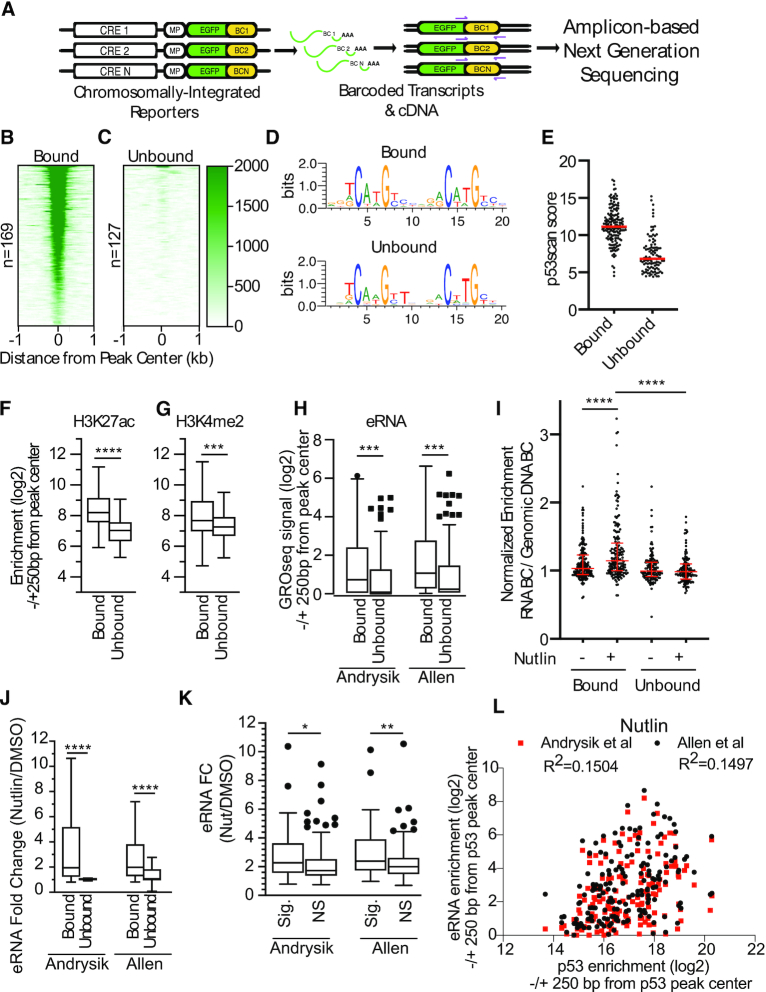
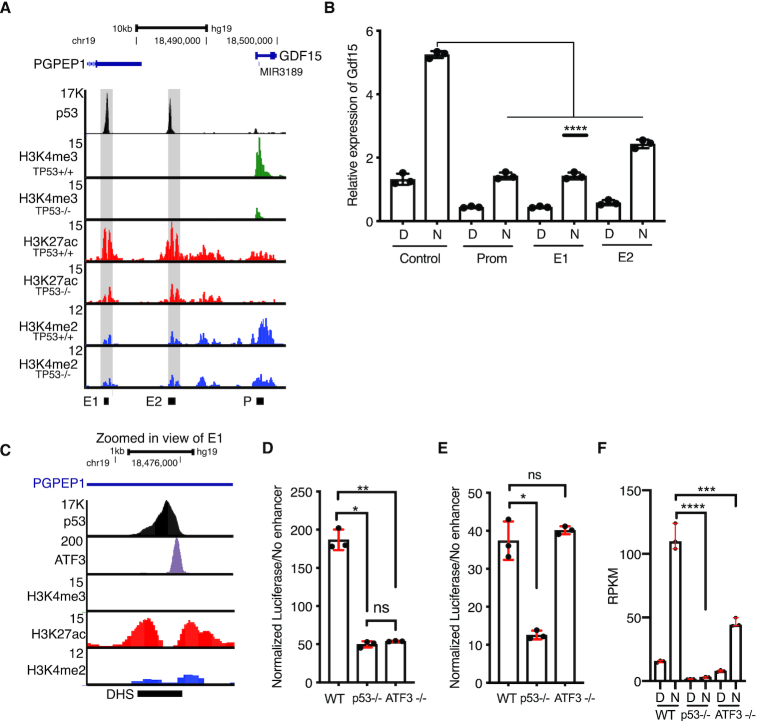
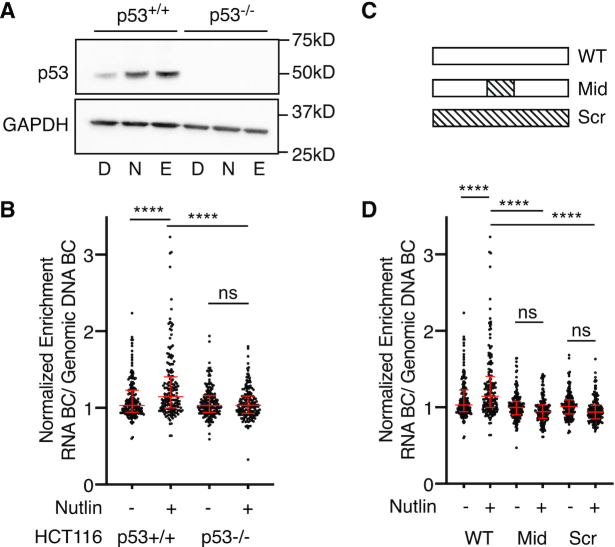
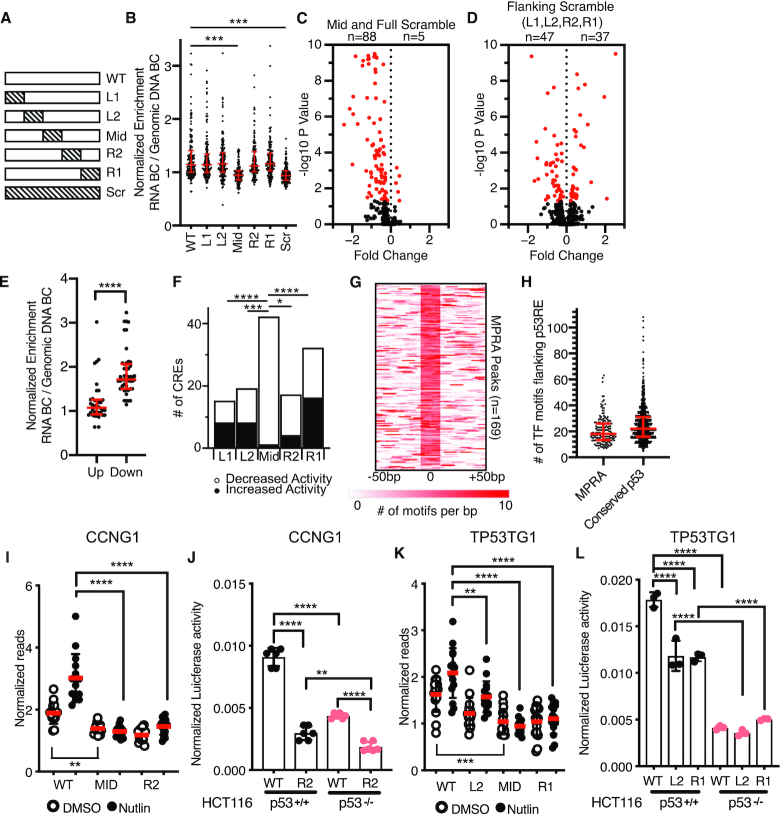
The master tumor suppressor p53 controls transcription of a wide-ranging gene network involved in apoptosis, cell cycle arrest, DNA damage repair, and senescence. Recent studies revealed pervasive binding of p53 to cis-regulatory elements (CREs), which are non-coding segments of DNA that spatially and temporally control transcription through the combinatorial binding of local transcription factors. Although the role of p53 as a strong trans-activator of gene expression is well known, the co-regulatory factors and local sequences acting at p53-bound CREs are comparatively understudied. We designed and executed a massively parallel reporter assay (MPRA) to investigate the effect of transcription factor binding motifs and local sequence context on p53-bound CRE activity. Our data indicate that p53-bound CREs are both positively and negatively affected by alterations in local sequence context and changes to co-regulatory TF motifs. Our data suggest p53 has the flexibility to cooperate with a variety of transcription factors in order to regulate CRE activity. By utilizing different sets of co-factors across CREs, we hypothesize that global p53 activity is guarded against loss of any one regulatory partner, allowing for dynamic and redundant control of p53-mediated transcription.
主肿瘤抑制因子 p53 控制着涉及细胞凋亡、细胞周期停滞、DNA 损伤修复和衰老的广泛基因网络的转录。最近的研究揭示了 p53 与顺式调控元件 (CREs) 的广泛结合,这些 CREs 是 DNA 的非编码片段,通过局部转录因子的组合结合在时空上控制转录。尽管 p53 作为基因表达的强转录激活因子的作用是众所周知的,但在 p53 结合的 CRE 上起作用的共调节因子和局部序列相对研究较少。我们设计并执行了大规模平行报告基因检测 (MPRA) 来研究转录因子结合基序和局部序列背景对 p53 结合 CRE 活性的影响。我们的数据表明,p53 结合的 CREs 既受到局部序列背景改变的正向影响,也受到共调节 TF 基序改变的负向影响。我们的数据表明,p53 具有与各种转录因子合作以调节 CRE 活性的灵活性。通过在 CRE 上使用不同的共因子集,我们假设全局 p53 活性不会因失去任何一个调节伙伴而受到影响,从而允许 p53 介导的转录进行动态和冗余控制。