Program in Neuroscience, Hussman Institute for Autism, Baltimore, MD, USA.
J Neurosci Res. 2020 Jun;98(6):1213-1231. doi: 10.1002/jnr.24608. Epub 2020 Mar 4.
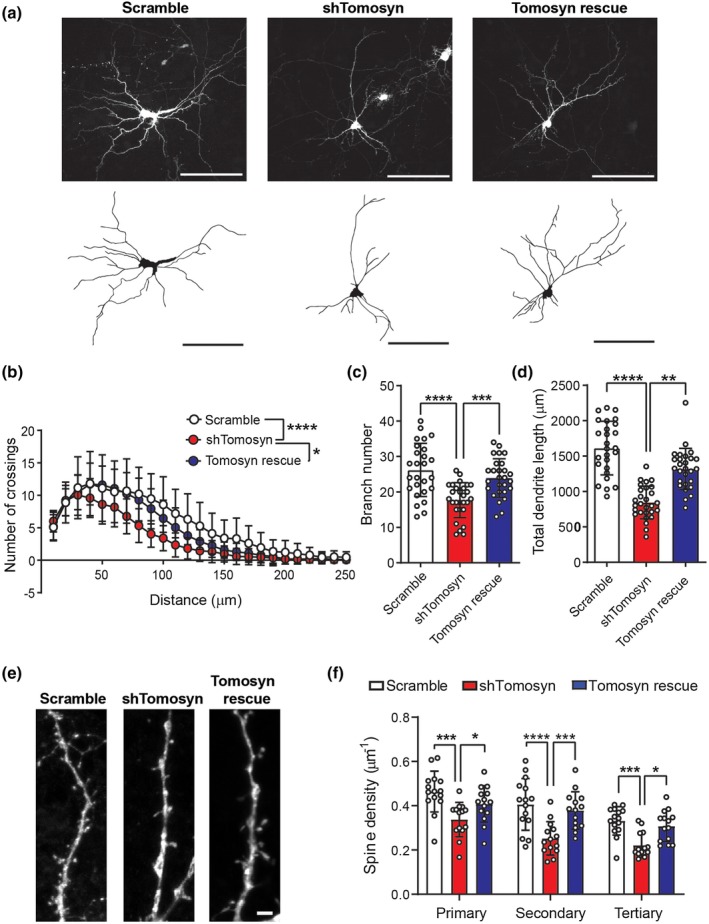
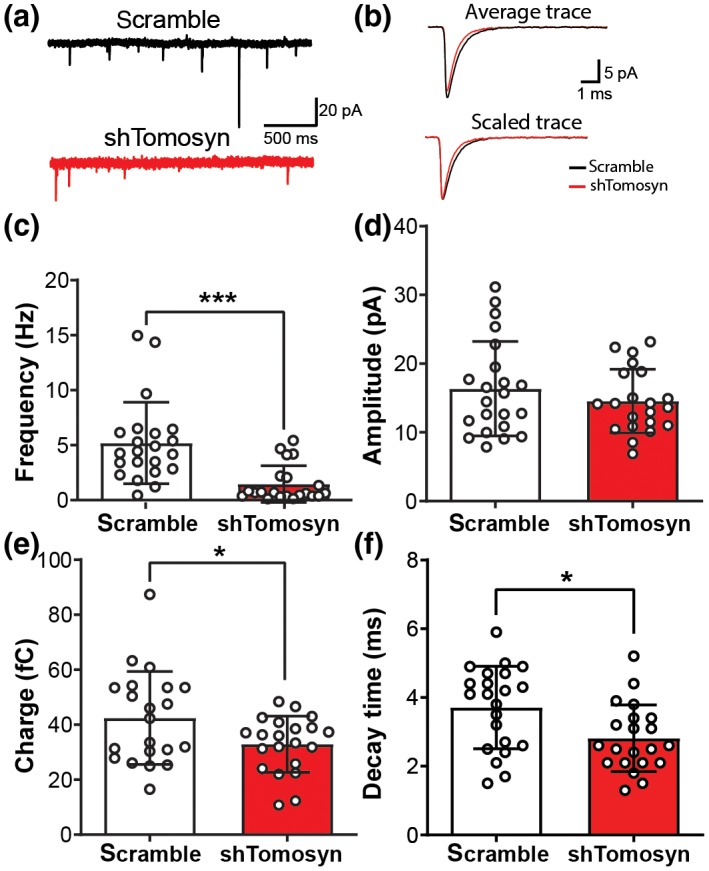
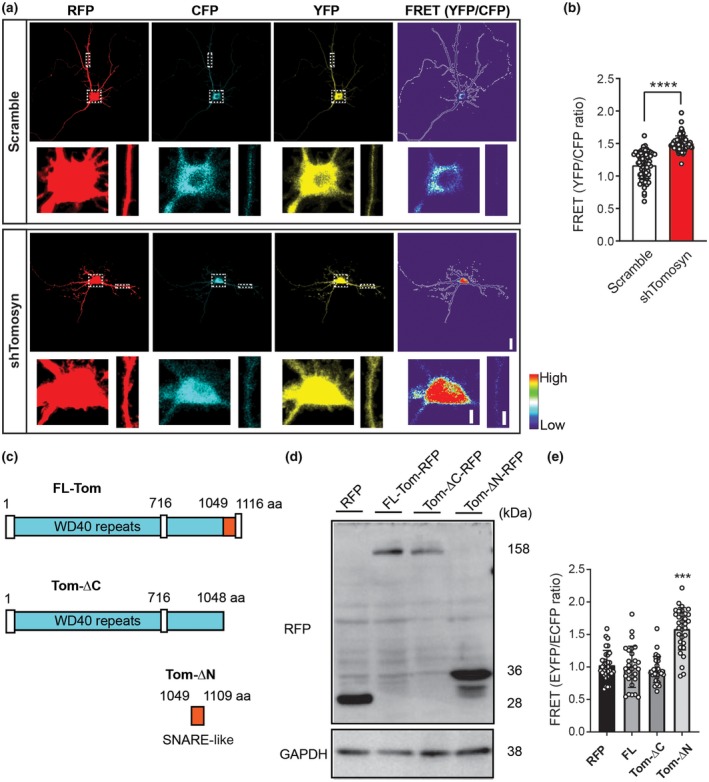
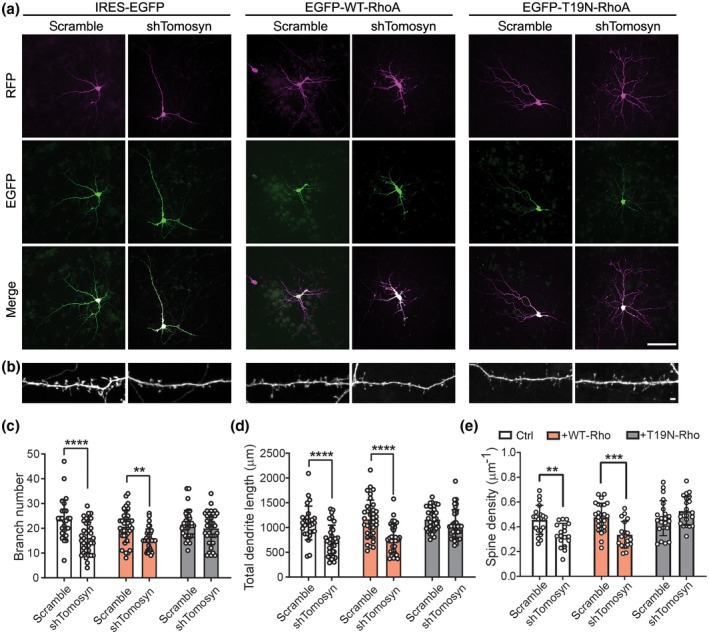
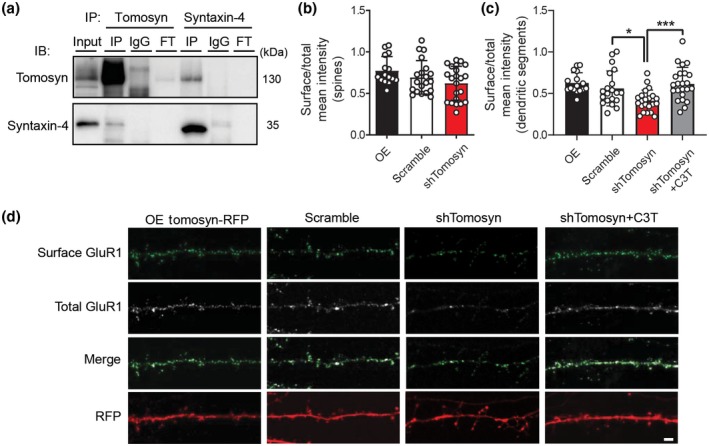
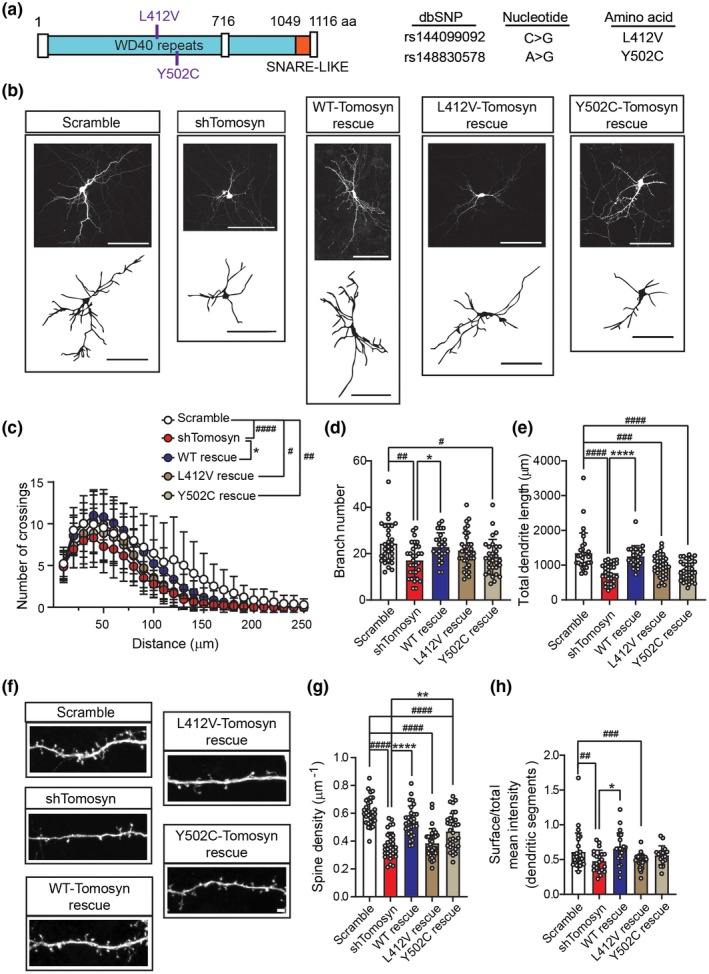
Tomosyn, a protein encoded by syntaxin-1-binding protein 5 (STXBP5) gene, has a well-established presynaptic role in the inhibition of neurotransmitter release and the reduction of synaptic transmission by its canonical interaction with the soluble N-ethylmaleimide-sensitive factor attachment protein receptor machinery. However, the postsynaptic role of tomosyn in dendritic arborization, spine stability, and trafficking of ionotropic glutamate receptors remains to be elucidated. We used short hairpin RNA to knock down tomosyn in mouse primary neurons to evaluate the postsynaptic cellular function and molecular signaling regulated by tomosyn. Knockdown of tomosyn led to an increase of RhoA GTPase activity accompanied by compromised dendritic arborization, loss of dendritic spines, decreased surface expression of AMPA receptors, and reduced miniature excitatory postsynaptic current frequency. Inhibiting RhoA signaling was sufficient to rescue the abnormal dendritic morphology and the surface expression of AMPA receptors. The function of tomosyn regulating RhoA is mediated through the N-terminal WD40 motif, where two variants each carrying a single nucleotide mutation in this region were found in individuals with autism spectrum disorder (ASD). We demonstrated that these variants displayed loss-of-function phenotypes. Unlike the wild-type tomosyn, these two variants failed to restore the reduced dendritic complexity, spine density, as well as decreased surface expression of AMPA receptors in tomosyn knockdown neurons. This study uncovers a novel role of tomosyn in maintaining neuronal function by inhibiting RhoA activity. Further analysis of tomosyn variants also provides a potential mechanism for explaining cellular pathology in ASD.
Tomosyn 是一种由 syntaxin-1-binding protein 5(STXBP5)基因编码的蛋白质,它通过与可溶性 N-乙基马来酰亚胺敏感因子附着蛋白受体机制的经典相互作用,在抑制神经递质释放和减少突触传递方面具有明确的突触前作用。然而,Tomosyn 在树突分支、棘稳定性和离子型谷氨酸受体转运中的突触后作用仍有待阐明。我们使用短发夹 RNA 敲低小鼠原代神经元中的 Tomosyn,以评估 Tomosyn 调节的突触后细胞功能和分子信号。Tomosyn 的敲低导致 RhoA GTPase 活性增加,伴随着树突分支受损、树突棘丢失、AMPA 受体表面表达减少以及微小兴奋性突触后电流频率降低。抑制 RhoA 信号足以挽救异常的树突形态和 AMPA 受体的表面表达。Tomosyn 调节 RhoA 的功能是通过 N 端 WD40 基序介导的,在自闭症谱系障碍(ASD)个体中发现该区域的每个变体都有一个单核苷酸突变。我们证明了这些变体表现出功能丧失表型。与野生型 Tomosyn 不同,这两种变体未能恢复 Tomosyn 敲低神经元中减少的树突复杂性、棘密度以及 AMPA 受体的表面表达。这项研究揭示了 Tomosyn 通过抑制 RhoA 活性来维持神经元功能的新作用。对 Tomosyn 变体的进一步分析也为解释 ASD 中的细胞病理学提供了潜在机制。