Division of Genetics and Genomics, The Roslin Institute, Easter Bush, Midlothian, United Kingdom.
USDA, Agricultural Research Service, US National Poultry Research Center, Avian Disease and Oncology Laboratory, East Lansing, Michigan, United States of America.
PLoS Biol. 2020 Mar 5;18(3):e3000619. doi: 10.1371/journal.pbio.3000619. eCollection 2020 Mar.
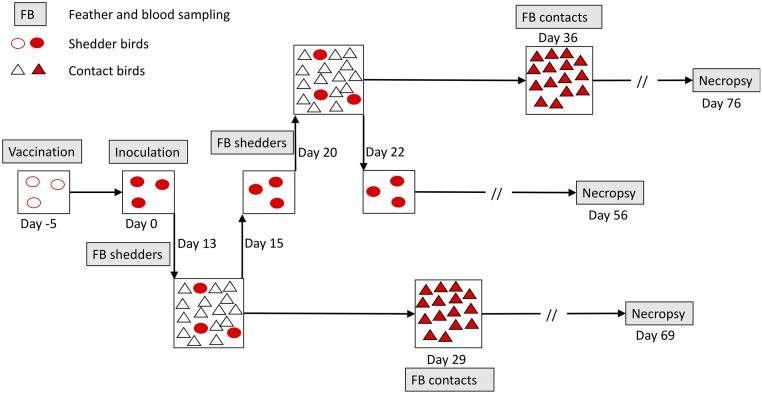
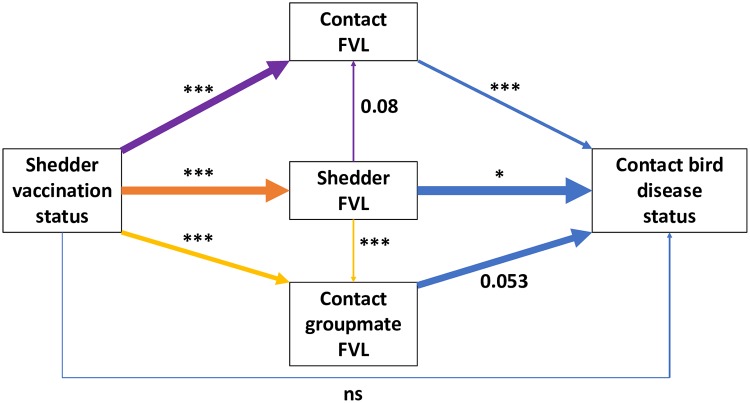
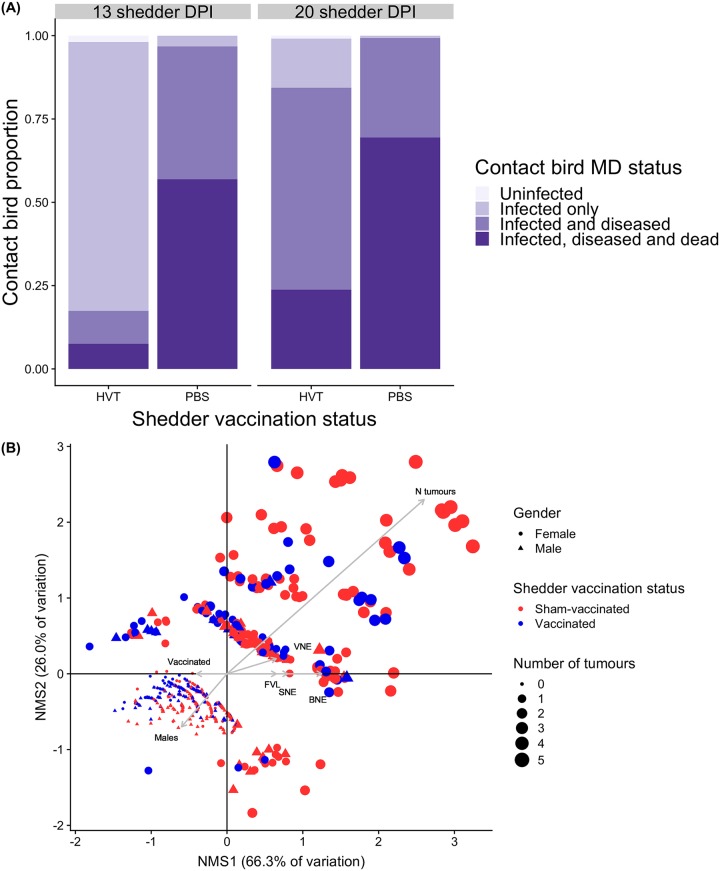
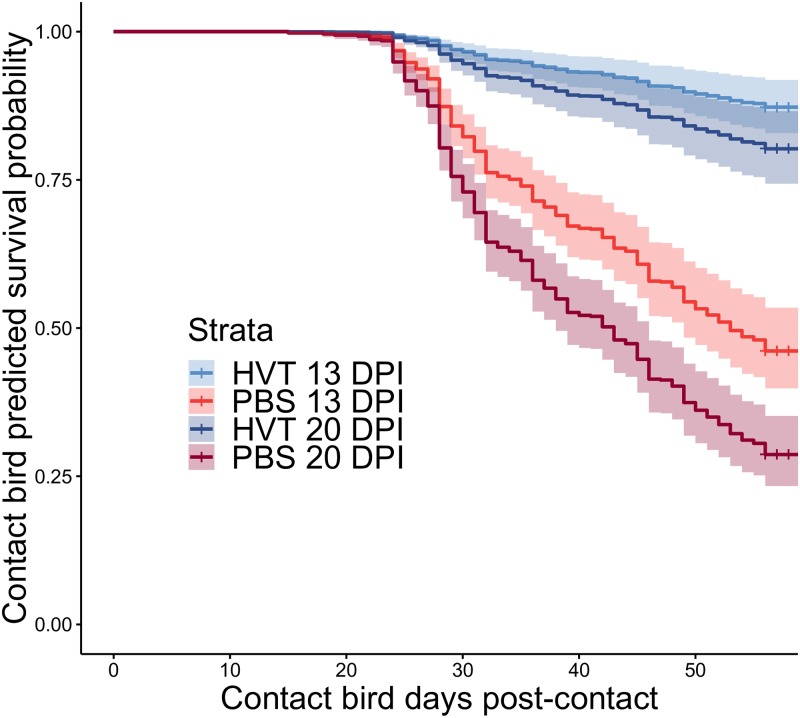
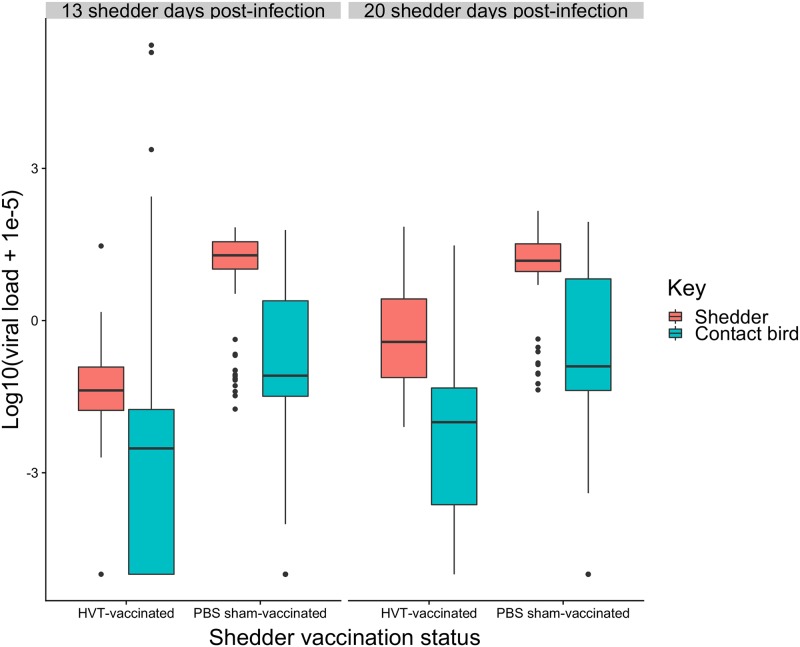
Many livestock and human vaccines are leaky because they block symptoms but do not prevent infection or onward transmission. This leakiness is concerning because it increases vaccination coverage required to prevent disease spread and can promote evolution of increased pathogen virulence. Despite leakiness, vaccination may reduce pathogen load, affecting disease transmission dynamics. However, the impacts on post-transmission disease development and infectiousness in contact individuals are unknown. Here, we use transmission experiments involving Marek disease virus (MDV) in chickens to show that vaccination with a leaky vaccine substantially reduces viral load in both vaccinated individuals and unvaccinated contact individuals they infect. Consequently, contact birds are less likely to develop disease symptoms or die, show less severe symptoms, and shed less infectious virus themselves, when infected by vaccinated birds. These results highlight that even partial vaccination with a leaky vaccine can have unforeseen positive consequences in controlling the spread and symptoms of disease.
许多牲畜和人类疫苗是“渗漏的”,因为它们可以阻止症状出现,但不能预防感染或进一步传播。这种渗漏性令人担忧,因为它增加了预防疾病传播所需的疫苗接种覆盖率,并可能促进病原体毒力的增加。尽管存在渗漏性,疫苗接种仍可能降低病原体载量,从而影响疾病传播动力学。然而,其对接触者个体在传播后的疾病发展和传染性的影响尚不清楚。在这里,我们使用涉及鸡马立克氏病病毒(MDV)的传播实验表明,接种渗漏疫苗可显著降低接种个体和他们感染的未接种接触个体中的病毒载量。因此,当被接种的鸟类感染时,接触鸟类更不可能出现疾病症状或死亡,症状更轻,自身排出的传染性病毒也更少。这些结果强调,即使使用渗漏疫苗进行部分接种,也可能会对控制疾病的传播和症状产生意想不到的积极影响。