Laboratory of Fungal Pathogenesis, Centre for DNA Fingerprinting and Diagnostics, Hyderabad, Telangana, India.
Graduate Studies, Manipal Academy of Higher Education, Manipal, Karnataka, India.
PLoS Genet. 2020 Mar 5;16(3):e1008620. doi: 10.1371/journal.pgen.1008620. eCollection 2020 Mar.
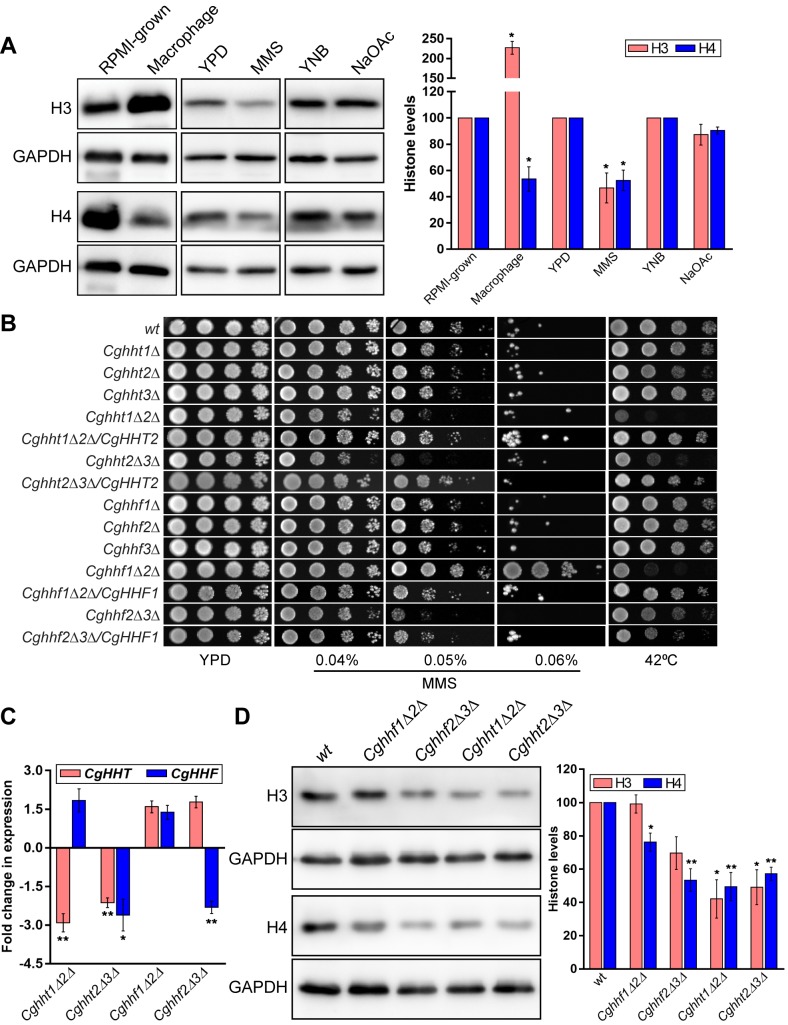
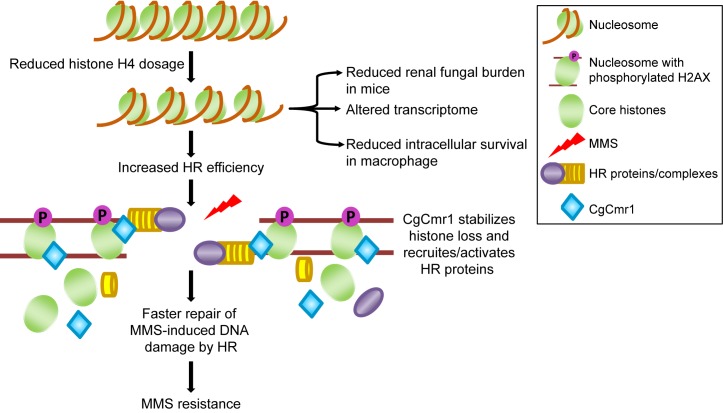
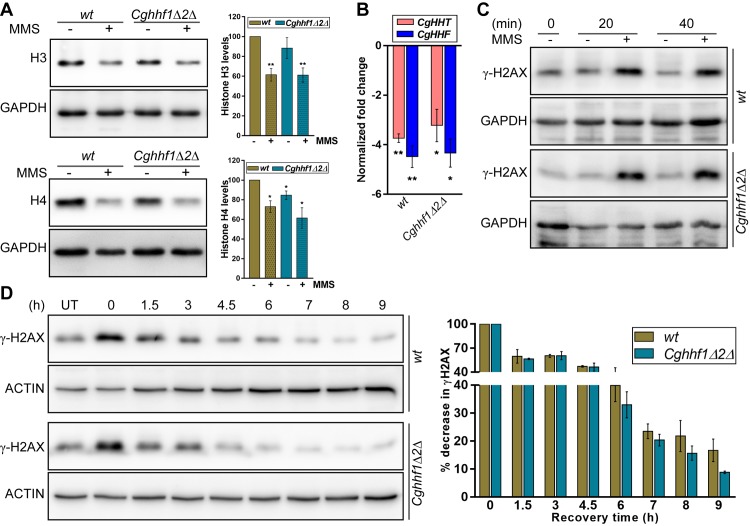
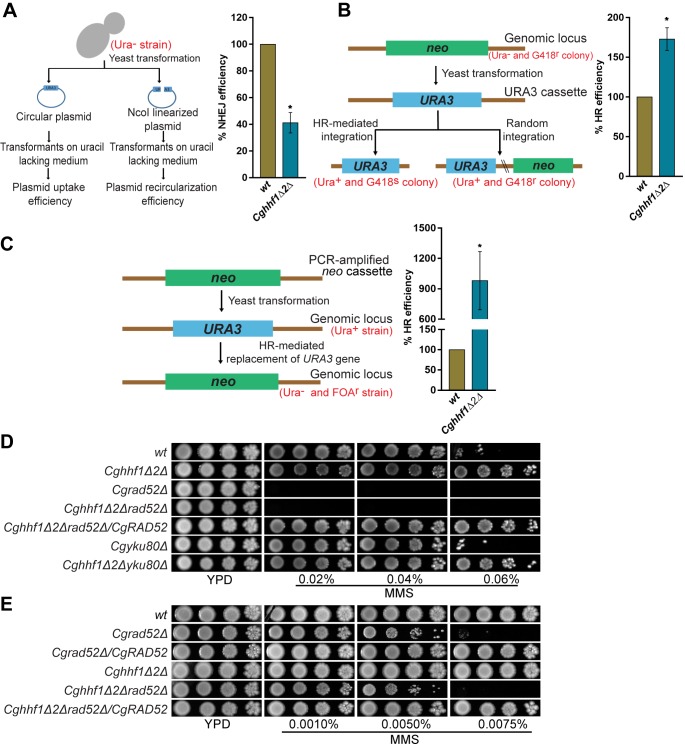
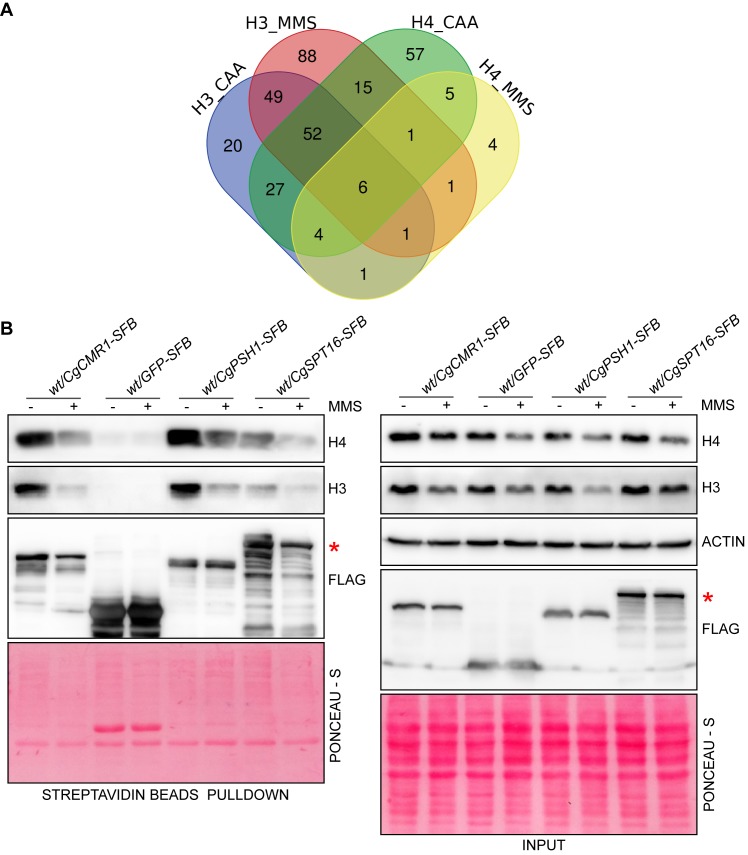
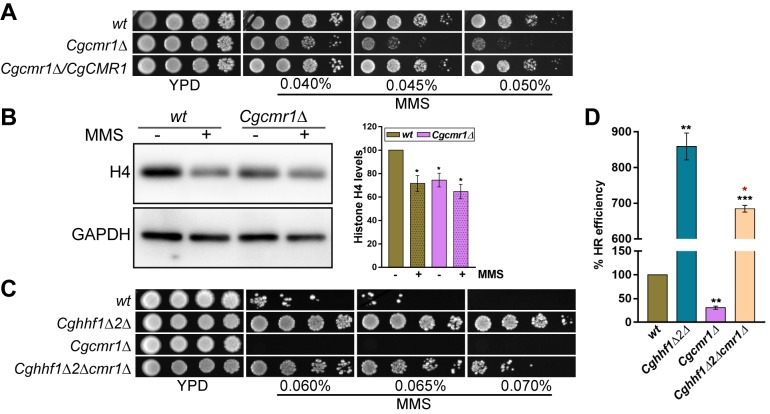
Candida glabrata, a nosocomial fungal bloodstream pathogen, causes significant morbidity and mortality in hospitals worldwide. The ability to replicate in macrophages and survive a high level of oxidative stress contributes to its virulence in the mammalian host. However, the role of DNA repair and recombination mechanisms in its pathobiology is still being discovered. Here, we have characterized the response of C. glabrata to the methyl methanesulfonate (MMS)-induced DNA damage. We found that the MMS exposure triggered a significant downregulation of histone H4 transcript and protein levels, and that, the damaged DNA was repaired by the homologous recombination (HR) pathway. Consistently, the reduced H4 gene dosage was associated with increased HR frequency and elevated resistance to MMS. The genetic analysis found CgRad52, a DNA strand exchange-promoter protein of the HR system, to be essential for this MMS resistance. Further, the tandem-affinity purification and mass spectrometry analysis revealed a substantially smaller interactome of H4 in MMS-treated cells. Among 23 identified proteins, we found the WD40-repeat protein CgCmr1 to interact genetically and physically with H4, and regulate H4 levels, HR pathway and MMS stress survival. Controlling H4 levels tightly is therefore a regulatory mechanism to survive MMS stress in C. glabrata.
光滑念珠菌是一种医院内真菌性血流病原体,在全球范围内导致了大量的发病率和死亡率。其在巨噬细胞中复制和耐受高水平氧化应激的能力有助于其在哺乳动物宿主中的毒力。然而,DNA 修复和重组机制在其病理生物学中的作用仍在被发现。在这里,我们对光滑念珠菌对甲基甲磺酸(MMS)诱导的 DNA 损伤的反应进行了表征。我们发现,MMS 暴露显著下调了组蛋白 H4 的转录和蛋白水平,并且受损的 DNA 通过同源重组(HR)途径得到修复。一致地,H4 基因剂量的降低与 HR 频率的增加和对 MMS 的抗性的提高有关。遗传分析发现,HR 系统的 DNA 链交换促进蛋白 CgRad52 对这种 MMS 抗性是必需的。此外,串联亲和纯化和质谱分析揭示了 MMS 处理细胞中 H4 的相互作用组显著减小。在 23 种鉴定出的蛋白质中,我们发现 WD40 重复蛋白 CgCmr1 与 H4 在遗传和物理上相互作用,并调节 H4 水平、HR 途径和 MMS 应激生存。因此,严格控制 H4 水平是 C. glabrata 在 MMS 应激中生存的一种调节机制。