Department of Plant Biology, Faculty of Biological Sciences, Tarbiat Modares University, Tehran, Iran.
PLoS One. 2020 Mar 5;15(3):e0229846. doi: 10.1371/journal.pone.0229846. eCollection 2020.
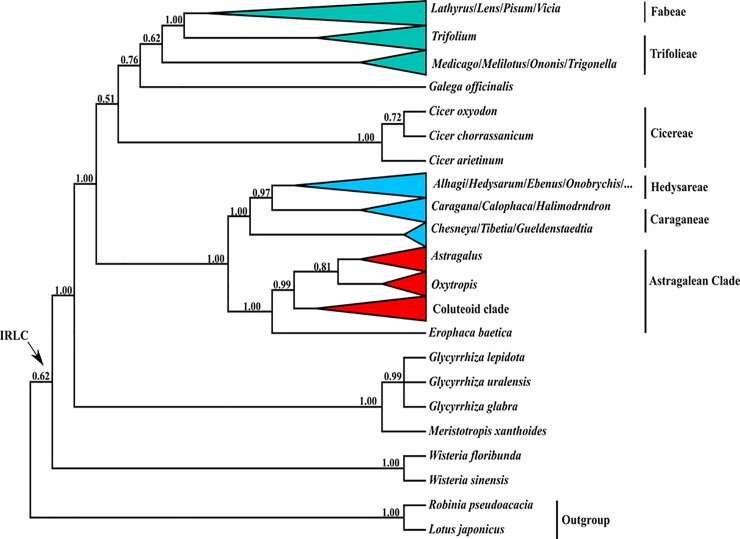
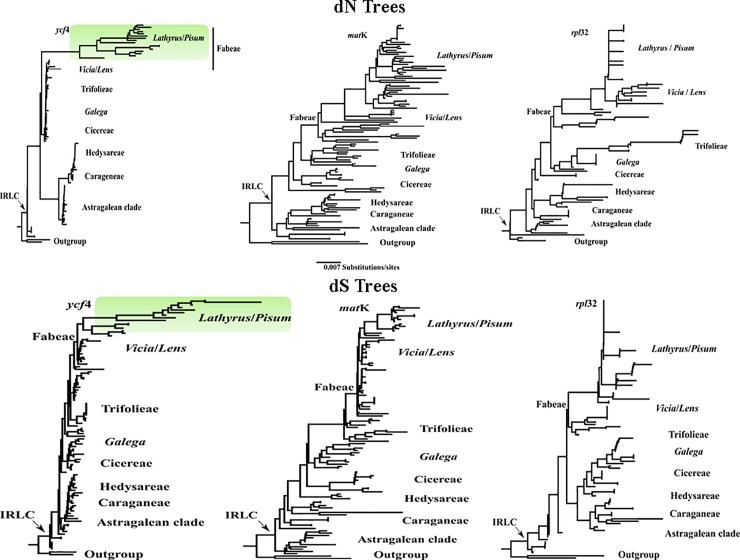
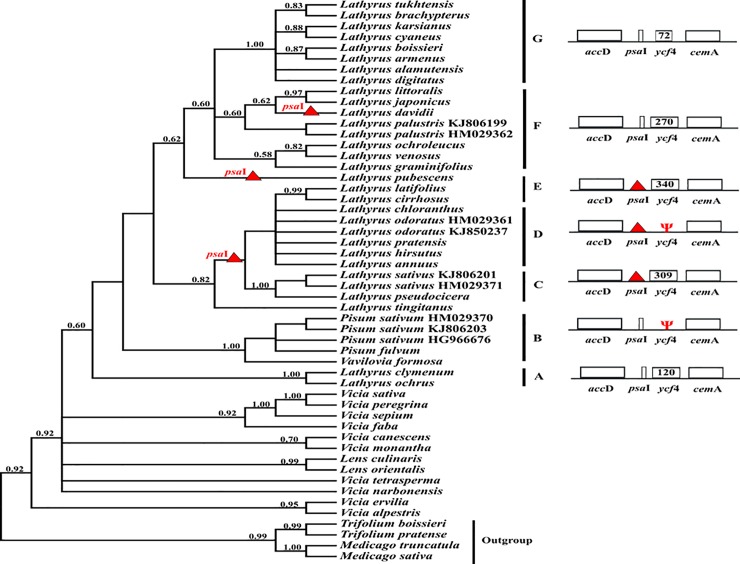
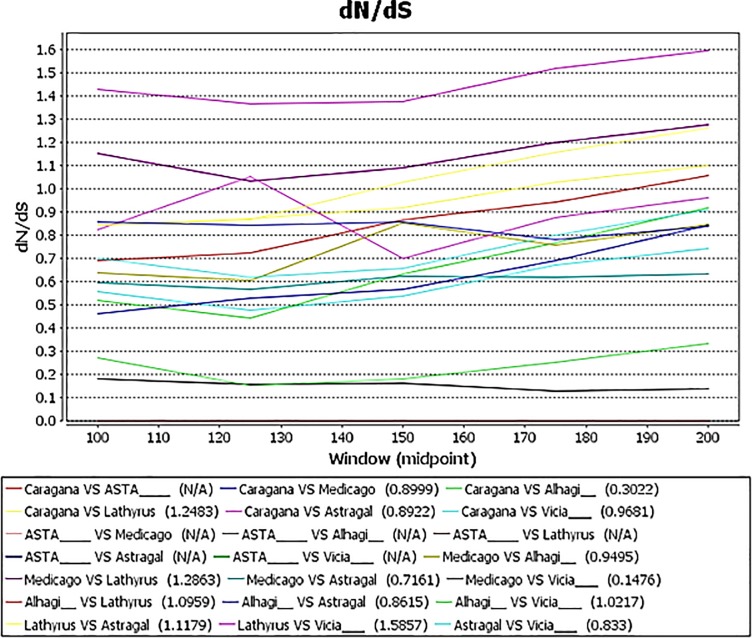
The genome organization and gene content of plastome (plastid genome) are highly conserved among most flowering plant species. Plastome variation (in size and gene order) is rare in photosynthetic species but size variation, rearrangements and gene/intron losses is attributed to groups of seed plants. Fabaceae (legume family), in particular the subfamily Papilionoideae and the inverted repeat lacking clade (IRLC), a largest legume lineage, display the most dramatic and structural change which providing an excellent model for understanding of mechanisms of genomic evolution. The IRLC comprises 52 genera and ca 4000 species divided into seven tribes. In present study, we have sampled several representatives from each tribe across the IRLC from various herbaria and field. The ycf4 gene, which plays a role in regulating and assembly of photosystem I, is more variable in the tribe Fabeae than in other tribes. In certain species of Lathyrus, Pisum and Vavilovia, all belonging to Fabeae, the gene is either absent or a pseudogene. Our study suggests that ycf4 gene has undergone positive selection. Furthermore, the rapid evolution of the gene is locus and lineage specific and is not a shared character of the IRLC in legumes.
质体基因组(质体基因组)的基因组组织和基因组成在大多数开花植物物种中高度保守。质体变异(大小和基因顺序)在光合物种中很少见,但大小变异、重排和基因/内含子丢失归因于种子植物群。豆科(豆科),特别是子叶蝶形花亚科和无反向重复区(IRLC),是最大的豆科谱系,显示出最显著和结构变化,为理解基因组进化机制提供了一个极好的模型。IRLC 包含 52 个属和大约 4000 种物种,分为七个部落。在本研究中,我们从不同的标本馆和野外采集了来自 IRLC 各个部落的几个代表。ycf4 基因在调节和组装光系统 I 中起作用,在 Fabeae 部落中的变异性比其他部落中的变异性更大。在某些属于 Fabeae 的豌豆属、豌豆属和 Vavilovia 属的物种中,该基因要么不存在,要么是假基因。我们的研究表明,ycf4 基因经历了正选择。此外,该基因的快速进化是特定于基因座和谱系的,而不是豆科植物 IRLC 的共同特征。