Department of Molecular Genetics, Biochemistry, and Microbiology,University of Cincinnati, Cincinnati, Ohio, United States of America.
Division of Infectious Diseases, Cincinnati Children's Hospital Medical Center, Cincinnati, Ohio, United States of America.
PLoS Pathog. 2020 Mar 5;16(3):e1008296. doi: 10.1371/journal.ppat.1008296. eCollection 2020 Mar.
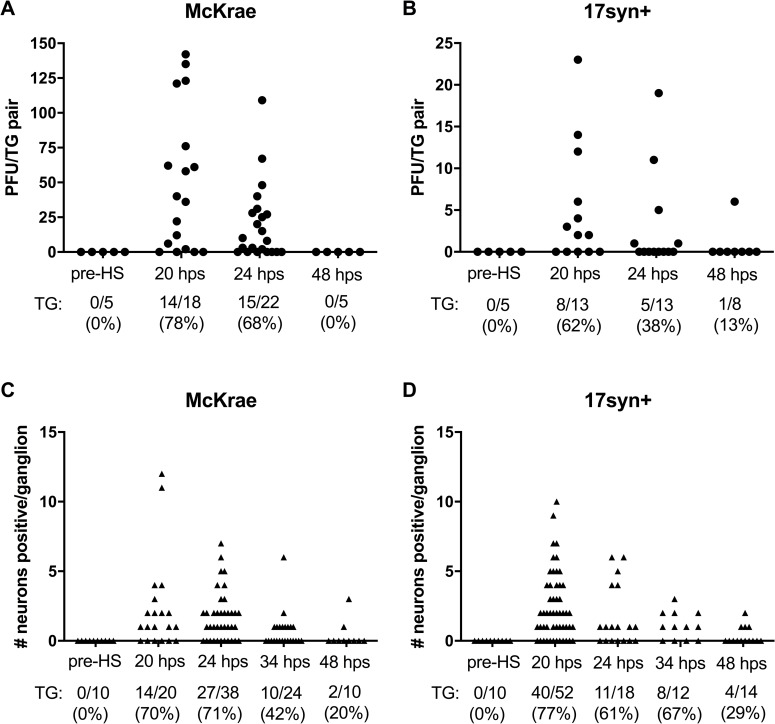
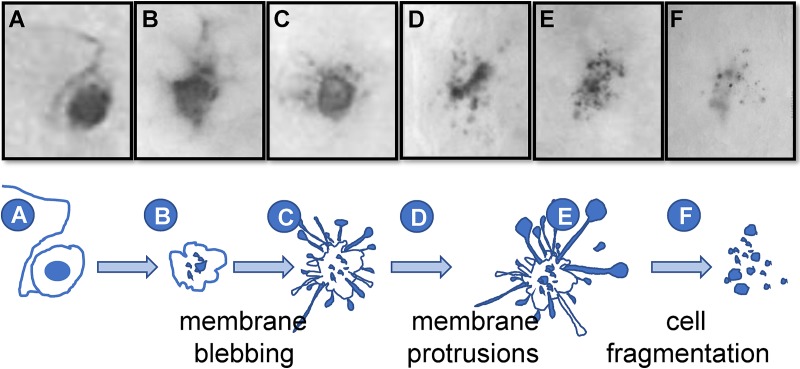
A fundamental question in herpes simplex virus (HSV) pathogenesis is the consequence of viral reactivation to the neuron. Evidence supporting both post-reactivation survival and demise is published. The exceedingly rare nature of this event at the neuronal level in the sensory ganglion has limited direct examination of this important question. In this study, an in-depth in vivo analysis of the resolution of reactivation was undertaken. Latently infected C57BL/6 mice were induced to reactivate in vivo by hyperthermic stress. Infectious virus was detected in a high percentage (60-80%) of the trigeminal ganglia from these mice at 20 hours post-reactivation stimulus, but declined by 48 hours post-stimulus (0-13%). With increasing time post-reactivation stimulus, the percentage of reactivating neurons surrounded by a cellular cuff increased, which correlated with a decrease in detectable infectious virus and number of viral protein positive neurons. Importantly, in addition to intact viral protein positive neurons, fragmented viral protein positive neurons morphologically consistent with apoptotic bodies and containing cleaved caspase-3 were detected. The frequency of this phenotype increased through time post-reactivation. These fragmented neurons were surrounded by Iba1+ cells, consistent with phagocytic removal of dead neurons. Evidence of neuronal destruction post-reactivation prompted re-examination of the previously reported non-cytolytic role of T cells in controlling reactivation. Latently infected mice were treated with anti-CD4/CD8 antibodies prior to induced reactivation. Neither infectious virus titers nor neuronal fragmentation were altered. In contrast, when viral DNA replication was blocked during reactivation, fragmentation was not observed even though viral proteins were expressed. Our data demonstrate that at least a portion of reactivating neurons are destroyed. Although no evidence for direct T cell mediated antigen recognition in this process was apparent, inhibition of viral DNA replication blocked neuronal fragmentation. These unexpected findings raise new questions about the resolution of HSV reactivation in the host nervous system.
单纯疱疹病毒(HSV)发病机制中的一个基本问题是病毒再激活对神经元的后果。有支持病毒再激活后存活和死亡的证据。在感觉神经节中,这种事件在神经元水平上极为罕见,这限制了对这一重要问题的直接检查。在这项研究中,我们对再激活的解决进行了深入的体内分析。通过热应激诱导潜伏感染的 C57BL/6 小鼠体内再激活。在再激活刺激后 20 小时,这些小鼠的三叉神经节中有 60-80%的病毒可检测到,但在再激活刺激后 48 小时(0-13%)下降。随着再激活刺激后时间的增加,被细胞套包围的再激活神经元的百分比增加,这与可检测的感染性病毒和病毒蛋白阳性神经元数量的减少相关。重要的是,除了完整的病毒蛋白阳性神经元外,还检测到形态上与凋亡小体一致且含有切割的 caspase-3 的碎片化病毒蛋白阳性神经元。这种表型的频率随着再激活后时间的增加而增加。这些碎片化神经元被 Iba1+细胞包围,这与吞噬清除死亡神经元一致。再激活后神经元破坏的证据促使我们重新检查 T 细胞在控制再激活方面以前报道的非溶细胞作用。在诱导再激活之前,用抗 CD4/CD8 抗体处理潜伏感染的小鼠。感染性病毒滴度或神经元碎片化均未改变。相比之下,当再激活期间阻断病毒 DNA 复制时,即使表达了病毒蛋白,也未观察到碎片化。我们的数据表明,至少一部分再激活的神经元被破坏。虽然在这个过程中没有明显的证据表明直接由 T 细胞介导的抗原识别,但阻断病毒 DNA 复制阻止了神经元碎片化。这些意外的发现提出了关于宿主神经系统中单纯疱疹病毒再激活解决的新问题。