Mei Xionge, Ten Cate Rosemarie, van Leeuwen Caspar M, Rodermond Hans M, de Leeuw Lidewij, Dimitrakopoulou Dionysia, Stalpers Lukas J A, Crezee Johannes, Kok H Petra, Franken Nicolaas A P, Oei Arlene L
Laboratory for Experimental Oncology and Radiobiology (LEXOR), Center for Experimental Molecular Medicine, Amsterdam University Medical Centers, P.O. Box 22700, 1100 DE Amsterdam, The Netherlands.
Department of Radiotherapy, Amsterdam University Medical Centers, P.O. Box 22700, 1100 DE Amsterdam, The Netherlands.
Cancers (Basel). 2020 Mar 3;12(3):582. doi: 10.3390/cancers12030582.
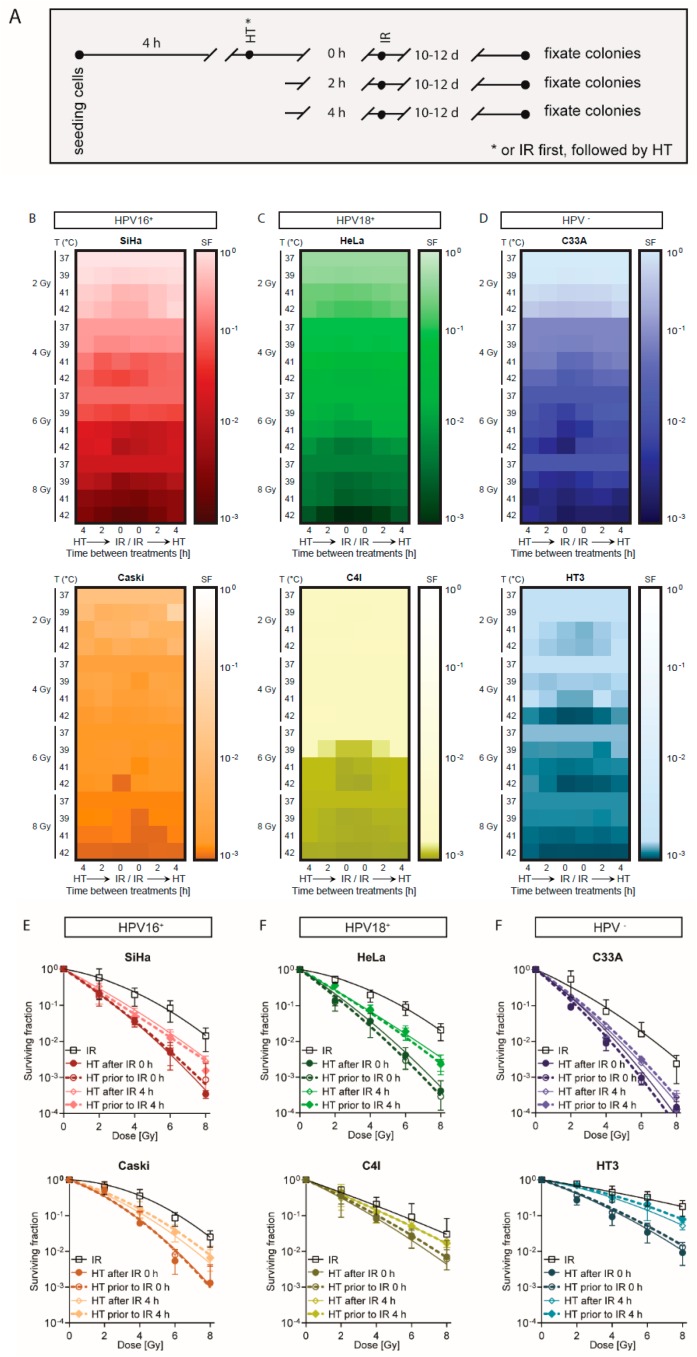
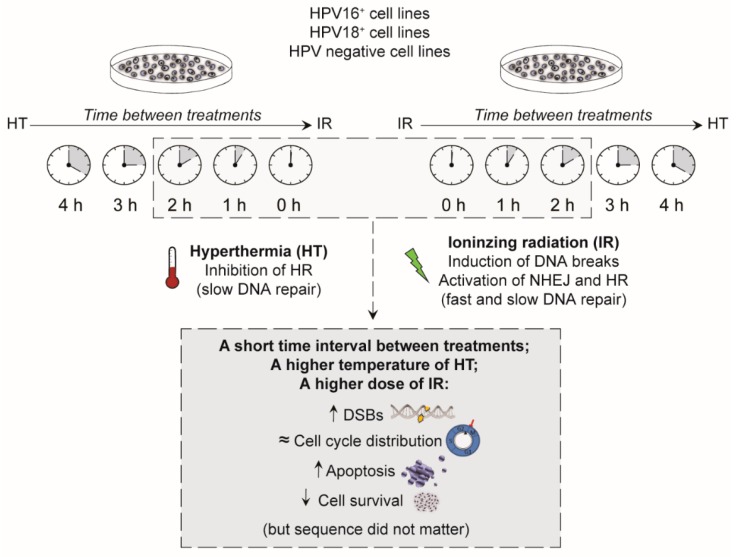
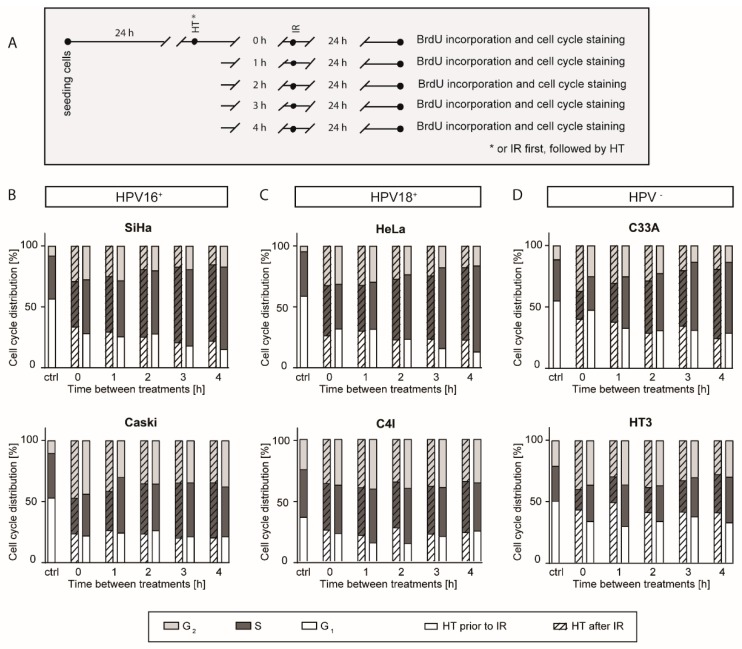
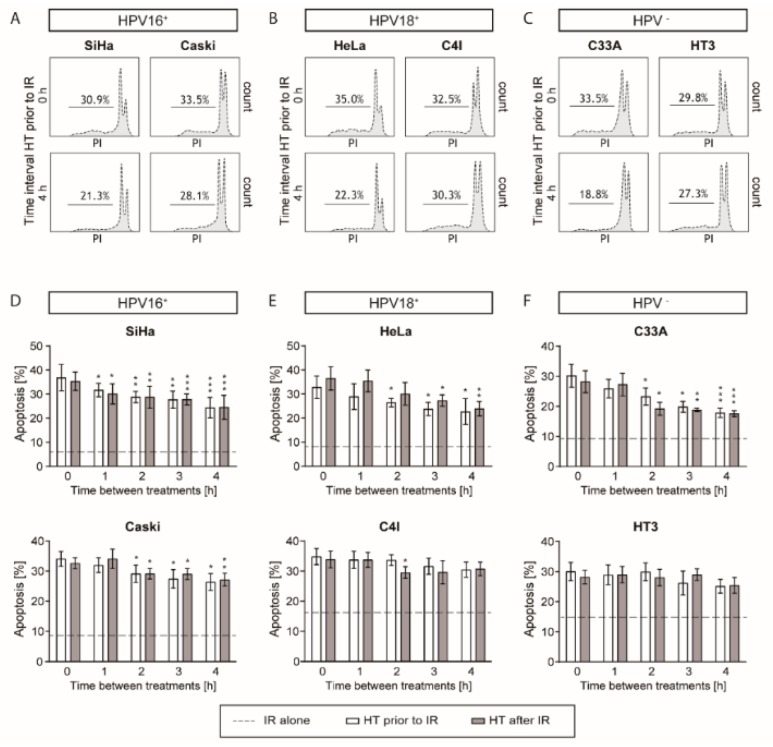
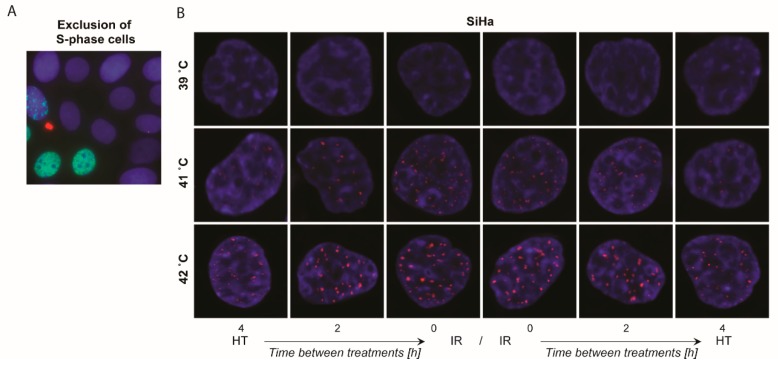
Cervical cancers are almost exclusively caused by an infection with the human papillomavirus (HPV). When patients suffering from cervical cancer have contraindications for chemoradiotherapy, radiotherapy combined with hyperthermia is a good treatment option Radiation-induced DNA breaks can be repaired by nonhomologous end-joining (NHEJ) or homologous recombination (HR). Hyperthermia can temporarily inactivate homologous recombination. Therefore, combining radiotherapy with hyperthermia can result in the persistence of more fatal radiation-induced DNA breaks. However, there is no consensus on the optimal sequence of radiotherapy and hyperthermia and the optimal time interval between these modalities. Moreover, the temperature of hyperthermia and HPV-type may also be important in radiosensitization by hyperthermia. In this study we thoroughly investigated the impact of different temperatures (37-42 °C), and the sequence of and time interval (0 up to 4 h) between ionizing radiation and hyperthermia on HPV16: SiHa, Caski; HPV18: HeLa, C4I; and HPV: C33A, HT3 cervical cancer cell lines. Our results demonstrate that a short time interval between treatments caused more unrepaired DNA damages and more cell kill, especially at higher temperatures. Although hyperthermia before ionizing radiation may result in slightly more DNA damage, the sequence between hyperthermia and ionizing radiation yielded similar effects on cell survival.
宫颈癌几乎完全由人乳头瘤病毒(HPV)感染引起。当宫颈癌患者存在放化疗禁忌证时,放疗联合热疗是一种不错的治疗选择。辐射诱导的DNA断裂可通过非同源末端连接(NHEJ)或同源重组(HR)修复。热疗可使同源重组暂时失活。因此,放疗联合热疗可导致更多致命的辐射诱导DNA断裂持续存在。然而,对于放疗和热疗的最佳顺序以及这两种治疗方式之间的最佳时间间隔,目前尚无共识。此外,热疗温度和HPV类型在热疗增敏方面可能也很重要。在本研究中,我们全面研究了不同温度(37 - 42°C)以及电离辐射与热疗之间的顺序和时间间隔(0至4小时)对HPV16:SiHa、Caski;HPV18:HeLa、C4I;以及HPV:C33A、HT3宫颈癌细胞系的影响。我们的结果表明,治疗之间的短时间间隔会导致更多未修复的DNA损伤和更多的细胞杀伤,尤其是在较高温度下。尽管在电离辐射前进行热疗可能会导致稍多的DNA损伤,但热疗和电离辐射的顺序对细胞存活产生的影响相似。