Department of Biological Sciences, Missouri University of Science and Technology, Rolla, MO 65409, USA.
Department of Biomedical Sciences, University of Wisconsin-Milwaukee, Milwaukee, WI 53211, USA.
Int J Mol Sci. 2020 Mar 3;21(5):1731. doi: 10.3390/ijms21051731.
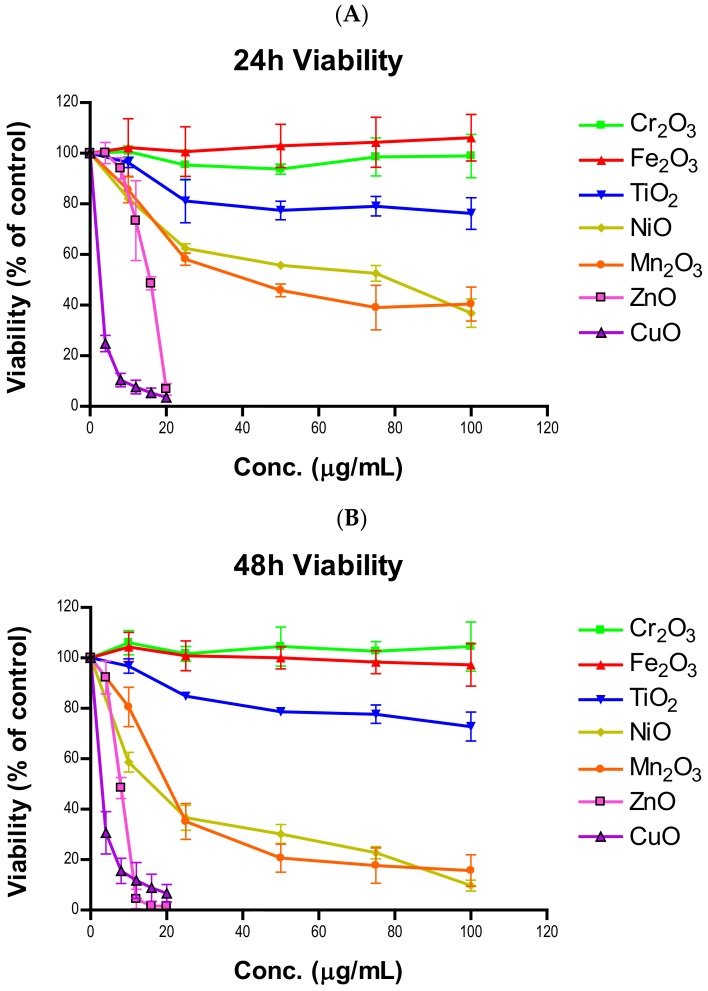
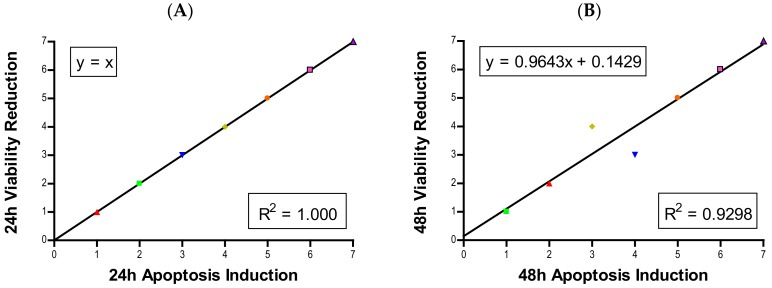
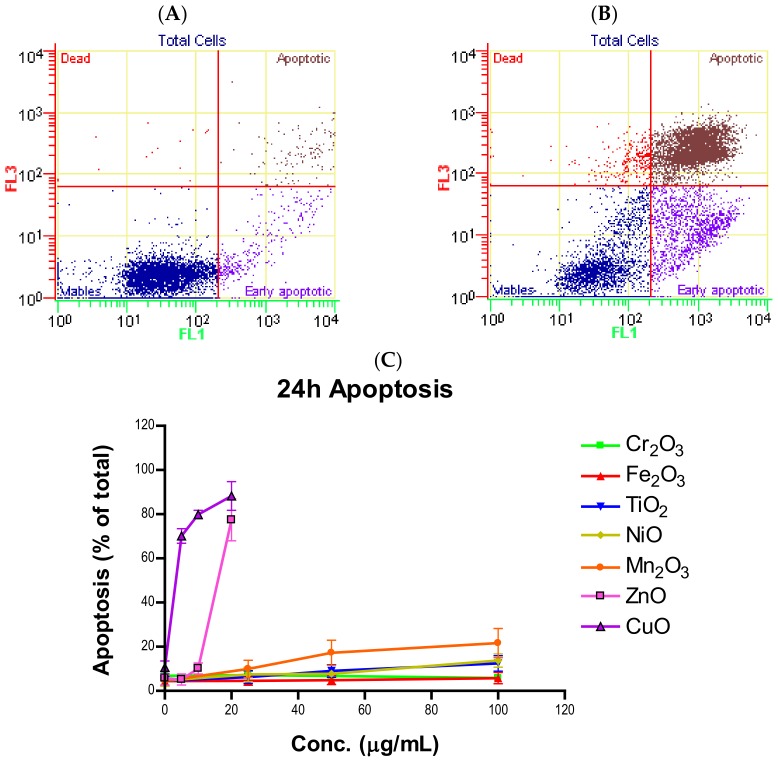
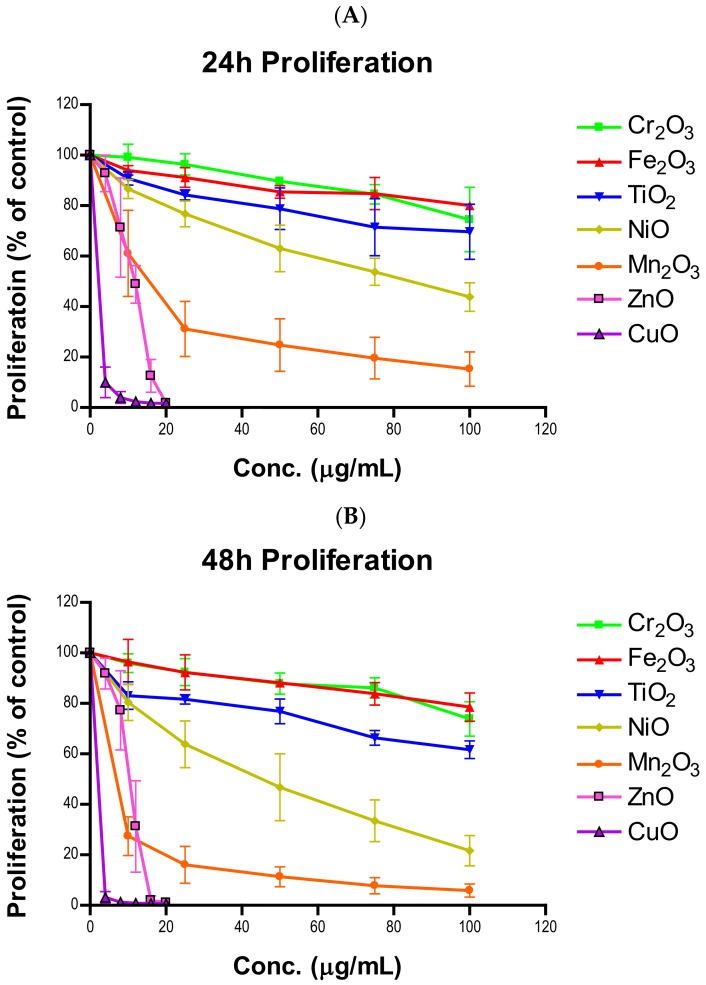
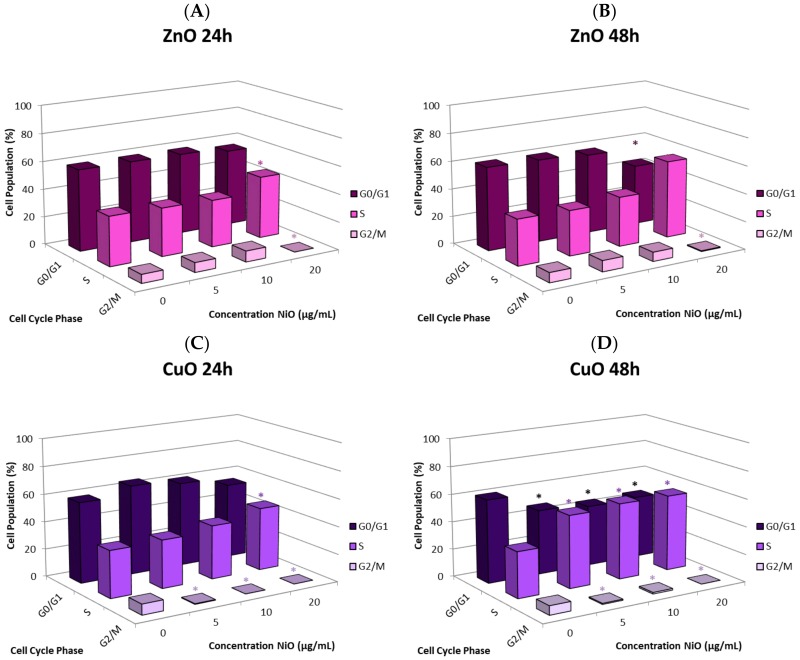
The application of nanoparticles (NPs) in industry is on the rise, along with the potential for human exposure. While the toxicity of microscale equivalents has been studied, nanoscale materials exhibit different properties and bodily uptake, which limits the prediction ability of microscale models. Here, we examine the cytotoxicity of seven transition metal oxide NPs in the fourth period of the periodic table of the chemical elements. We hypothesized that NP-mediated cytotoxicity is a function of cell killing and suppression of cell proliferation. To test our hypothesis, transition metal oxide NPs were tested in a human lung cancer cell model (A549). Cells were exposed to a series of concentrations of TiO, CrO, MnO, FeO, NiO, CuO, or ZnO for either 24 or 48 h. All NPs aside from CrO and FeO showed a time- and dose-dependent decrease in viability. All NPs significantly inhibited cellular proliferation. The trend of cytotoxicity was in parallel with that of proliferative inhibition. Toxicity was ranked according to severity of cellular responses, revealing a strong correlation between viability, proliferation, and apoptosis. Cell cycle alteration was observed in the most toxic NPs, which may have contributed to promoting apoptosis and suppressing cell division rate. Collectively, our data support the hypothesis that cell killing and cell proliferative inhibition are essential independent variables in NP-mediated cytotoxicity.
纳米颗粒(NPs)在工业中的应用正在增加,同时也伴随着人类暴露的风险。虽然已经研究了微尺度等效物的毒性,但纳米尺度的材料表现出不同的性质和体内摄取,这限制了微尺度模型的预测能力。在这里,我们研究了元素周期表第四周期七种过渡金属氧化物 NPs 的细胞毒性。我们假设 NP 介导的细胞毒性是细胞杀伤和抑制细胞增殖的函数。为了验证我们的假设,我们在人肺癌细胞模型(A549)中测试了过渡金属氧化物 NPs。细胞暴露于一系列浓度的 TiO、CrO、MnO、FeO、NiO、CuO 或 ZnO 24 或 48 h。除了 CrO 和 FeO 之外,所有的 NPs 都表现出时间和剂量依赖性的活力下降。所有 NPs 都显著抑制了细胞增殖。细胞毒性的趋势与增殖抑制的趋势平行。毒性根据细胞反应的严重程度进行排序,这表明细胞活力、增殖和凋亡之间存在很强的相关性。在最毒的 NPs 中观察到细胞周期改变,这可能有助于促进细胞凋亡和抑制细胞分裂率。总的来说,我们的数据支持这样的假设,即细胞杀伤和细胞增殖抑制是 NP 介导的细胞毒性的两个重要的独立变量。