Systems Biology & Bioinformatics Unit, Leibniz Institute for Natural Product Research and Infection Biology, Hans Knöll Institute, Jena, Germany.
Systems Biology and Bioinformatics Group, School of Biological Sciences, Faculty of Sciences, The University of Hong Kong, Hong Kong, China.
Microbiome. 2020 Mar 5;8(1):28. doi: 10.1186/s40168-020-00811-2.
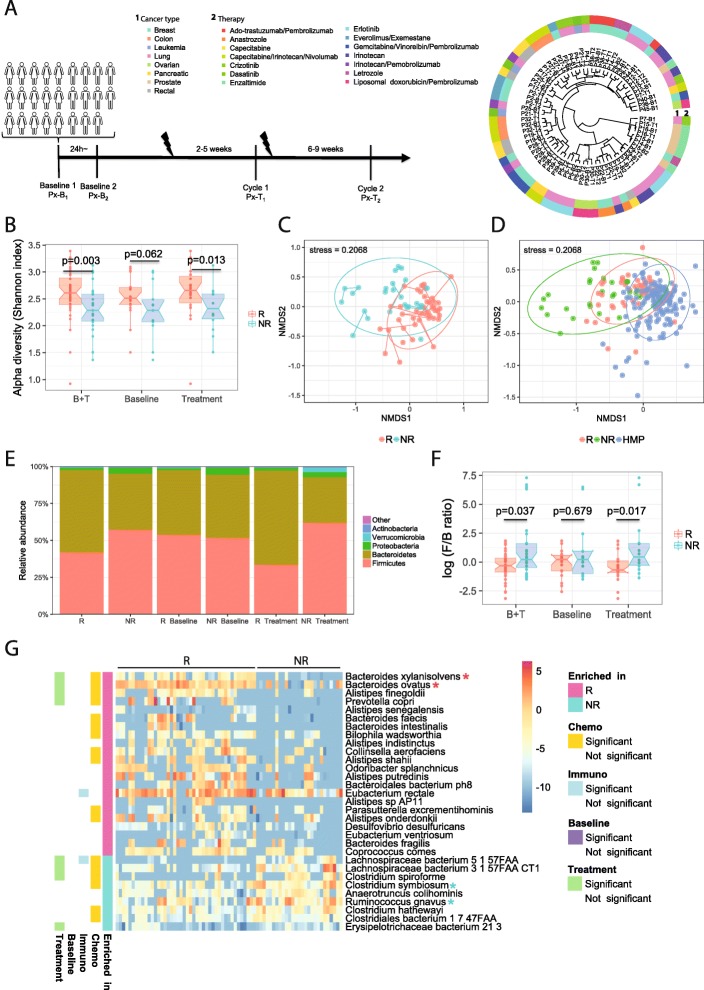
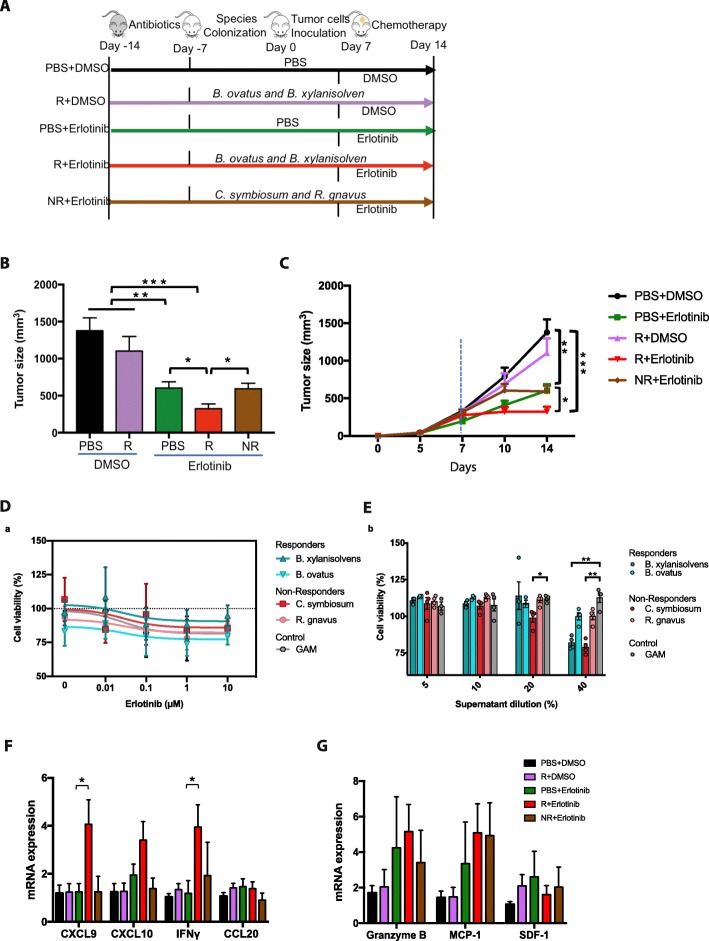
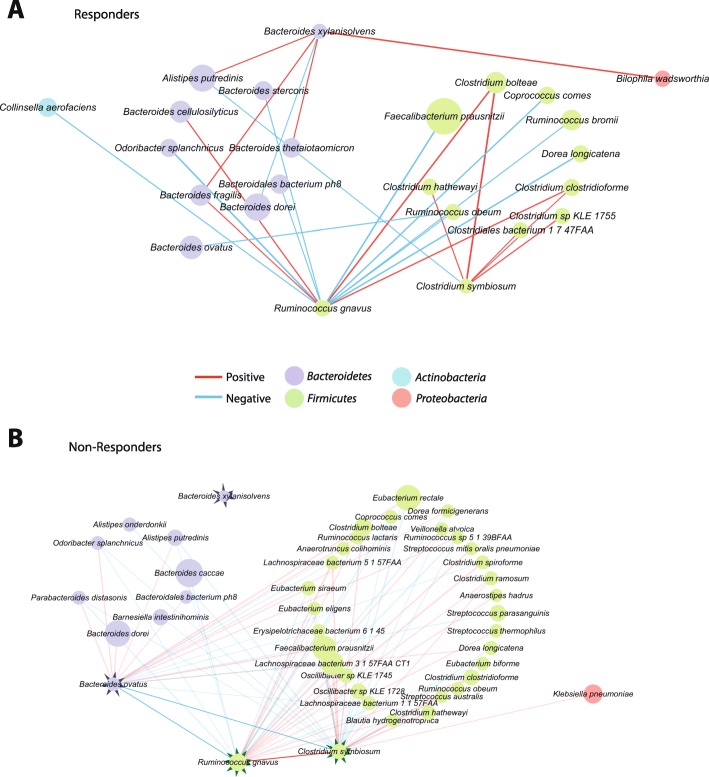
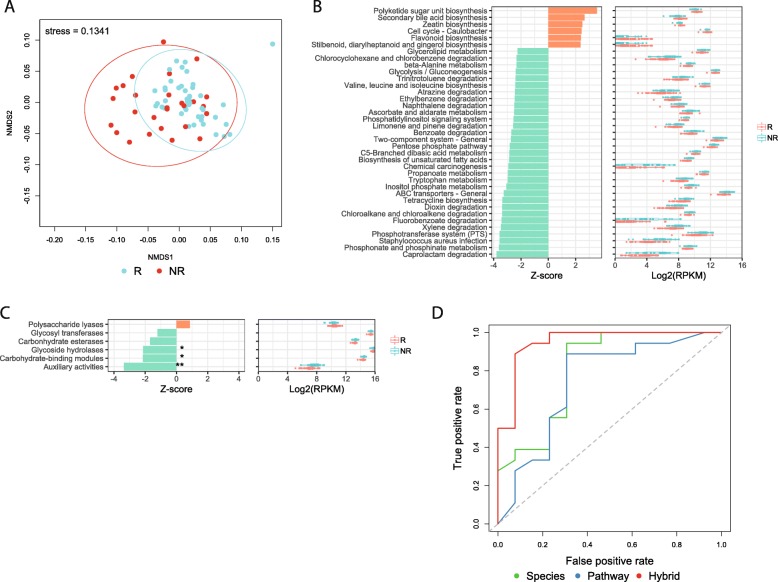
The gut microbiota has the potential to influence the efficacy of cancer therapy. Here, we investigated the contribution of the intestinal microbiome on treatment outcomes in a heterogeneous cohort that included multiple cancer types to identify microbes with a global impact on immune response. Human gut metagenomic analysis revealed that responder patients had significantly higher microbial diversity and different microbiota compositions compared to non-responders. A machine-learning model was developed and validated in an independent cohort to predict treatment outcomes based on gut microbiota composition and functional repertoires of responders and non-responders. Specific species, Bacteroides ovatus and Bacteroides xylanisolvens, were positively correlated with treatment outcomes. Oral gavage of these responder bacteria significantly increased the efficacy of erlotinib and induced the expression of CXCL9 and IFN-γ in a murine lung cancer model. These data suggest a predictable impact of specific constituents of the microbiota on tumor growth and cancer treatment outcomes with implications for both prognosis and therapy.
肠道微生物群有可能影响癌症治疗的效果。在这里,我们研究了肠道微生物组对包括多种癌症类型的异质队列中治疗结果的贡献,以确定对免疫反应具有全局影响的微生物。人类肠道宏基因组分析显示,与无反应者相比,有反应者的微生物多样性显著更高,且其微生物组成也不同。我们开发了一个机器学习模型,并在一个独立的队列中进行了验证,以根据肠道微生物组组成和有反应者和无反应者的功能谱来预测治疗结果。特定的物种,卵形拟杆菌和木质纤维素分解菌,与治疗结果呈正相关。口服灌胃这些有反应的细菌可显著提高厄洛替尼的疗效,并在小鼠肺癌模型中诱导 CXCL9 和 IFN-γ 的表达。这些数据表明,特定的微生物组成对肿瘤生长和癌症治疗结果具有可预测的影响,这对预后和治疗都有影响。