French Health Products Safety Agency, Saint-Denis, Île-de-France, France.
Hospital pharmacy, University of Strasbourg Faculty of Pharmacy, Illkirch-Graffenstaden, France.
BMJ Open. 2020 Mar 4;10(3):e034033. doi: 10.1136/bmjopen-2019-034033.
The aim was to provide figures for drug shortages in France and describe their characteristics, causes and trends between 2012 and 2018.
Data from the national reporting system from the Agency of Medicine and Health Product Safety (ANSM) was analysed. This database contains information regarding effective and predicted shortages of major therapeutic of interest drugs (ie, drugs whose shortage would be life-threatening or representing a loss of treatment opportunity for patients with a severe disease) which are mandatory reported by marketing authorisation holders to the ANSM. Data are presented as numbers or percentages of pharmaceutical products (ie, the product name and its formulation) reported on shortage between 2012 and 2018.
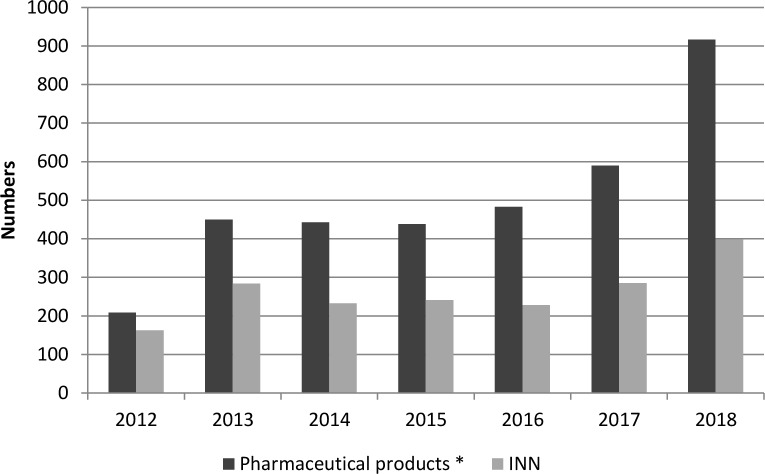
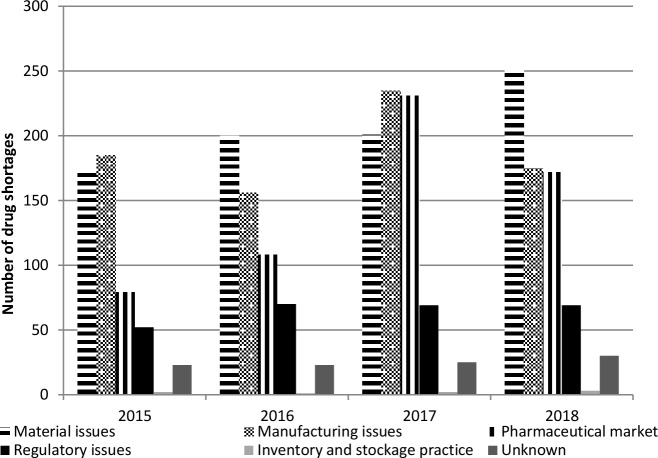
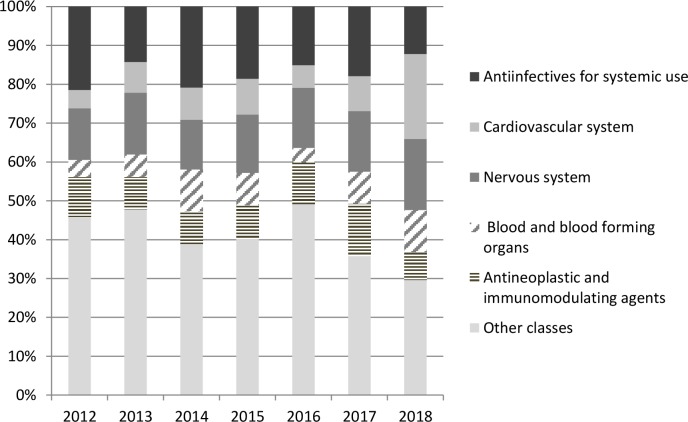
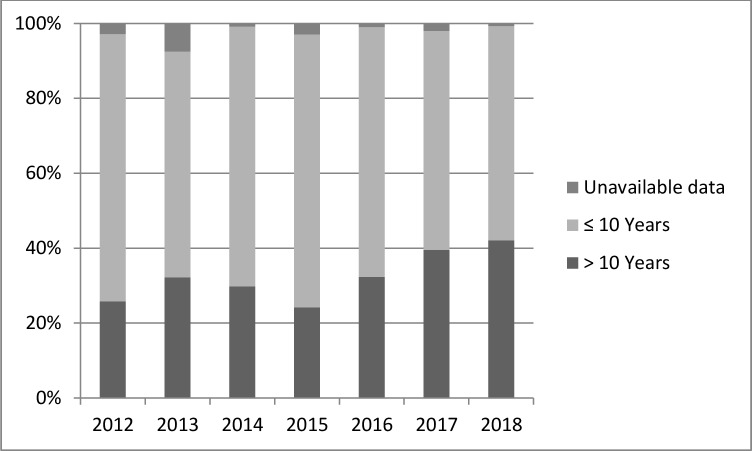
There were 3530 pharmaceutical products reported on shortage during the period, including 1833 different active substances. Drugs on shortage were mostly old products (63.4%) with national marketing authorisation procedures (62.8%), as well as injectable and oral forms (47.5% and 43.3%, respectively). Anti-infectives for systemic use ranked first (18%), followed by nervous and cardiovascular system drugs and by antineoplastic and immunomodulating agents (17.4%, 12.5% and 10.4%, respectively). The number of reported shortages presented a fourfold increase between 2012 and 2018 and a sharp rise in 2017 and 2018, along with a rise in the number of active substances on shortage. The therapeutic classes concerned remained similar over time. Manufacturing and material supply issues were the main reported reasons for the shortage each year (30%) and there was an overall rise of pharmaceutical market reasons.
Drug shortages were increasingly reported in France. Preventive measures should specifically target the products most on shortage, in particular old drugs, injectable, anti-infective, nervous system and cardiovascular system drugs as well as antineoplastic and immunomodulating agents.
提供法国药品短缺数据,并描述 2012 年至 2018 年期间药品短缺的特点、原因和趋势。
分析来自药品和健康产品安全局(ANSM)国家报告系统的数据。该数据库包含关于主要治疗药物(即短缺会危及生命或导致严重疾病患者失去治疗机会的药物)短缺的信息,这些信息由上市许可持有人强制向 ANSM 报告。数据以 2012 年至 2018 年期间报告短缺的药品(即产品名称及其制剂)数量或百分比呈现。
该期间报告短缺的药品有 3530 种,包括 1833 种不同的活性物质。短缺药品主要为国产药品(63.4%)和国家上市许可程序药品(62.8%),以及注射剂和口服制剂(分别为 47.5%和 43.3%)。全身性抗感染药物居首位(18%),其次为神经系统和心血管系统药物以及抗肿瘤和免疫调节剂(17.4%、12.5%和 10.4%)。2012 年至 2018 年期间报告短缺的数量增加了四倍,2017 年和 2018 年急剧上升,同时短缺的活性物质数量也有所增加。报告短缺的治疗类别在一段时间内保持相似。每年报告的短缺主要原因是制造和供应问题(30%),而药品市场原因总体呈上升趋势。
法国药品短缺情况日益严重。预防措施应特别针对短缺最严重的产品,特别是老药、注射剂、抗感染药、神经系统和心血管系统药物以及抗肿瘤和免疫调节剂。