Xie Yingjie, Zhang Yuan, Wei Xiaohan, Zhou Cheng, Huang Yajing, Zhu Xingwang, Chen Yongxu, Wen Huihong, Huang Xuhui, Lin Juze, Wang Ziying, Ren Yan, Fan Baochao, Deng Xue, Tan Wei, Wang Changjun
School of Traditional Chinese Medicine, Southern Medical University, Guangzhou, China.
Guangdong Provincial People's Hospital, Guangdong Academy of Medical Sciences, Guangdong Geriatric Institute, Guangzhou, China.
Front Pharmacol. 2020 Feb 18;11:16. doi: 10.3389/fphar.2020.00016. eCollection 2020.
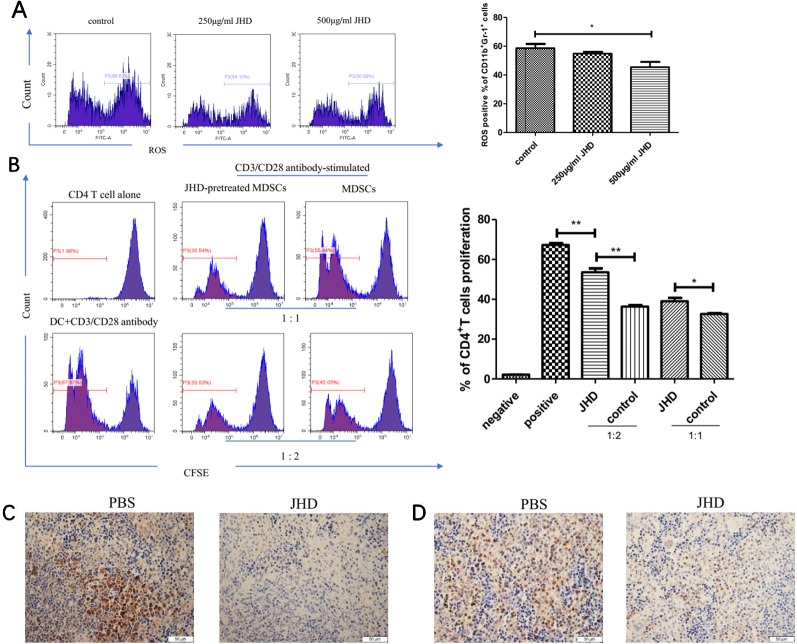
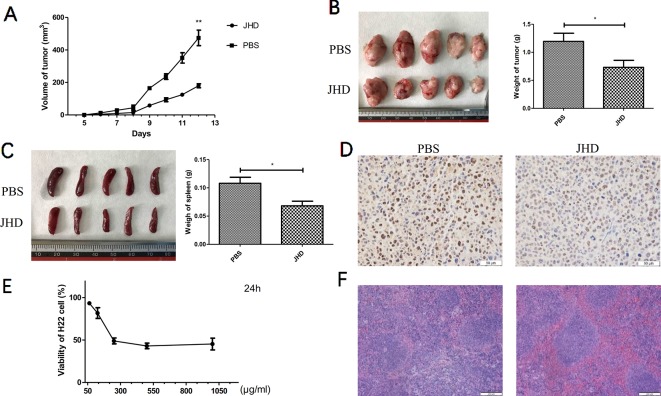
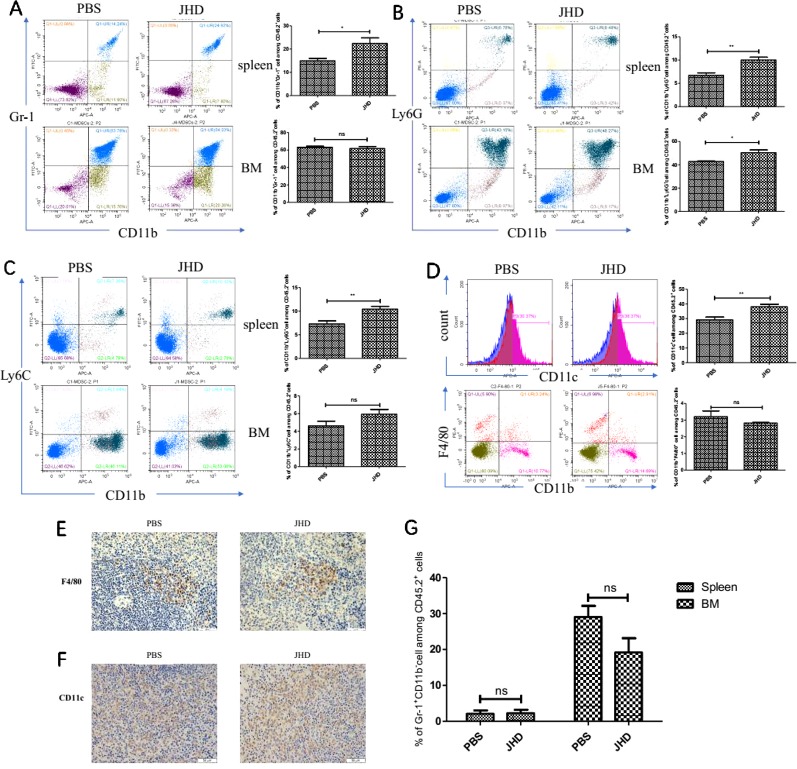
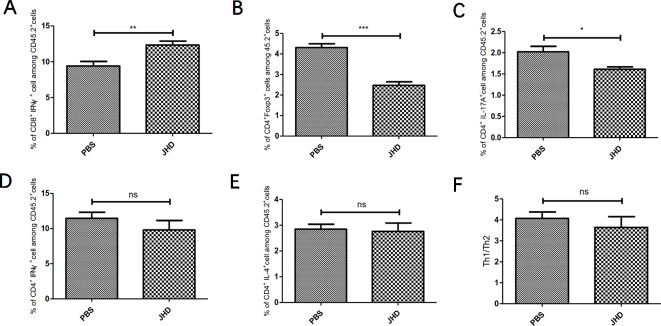
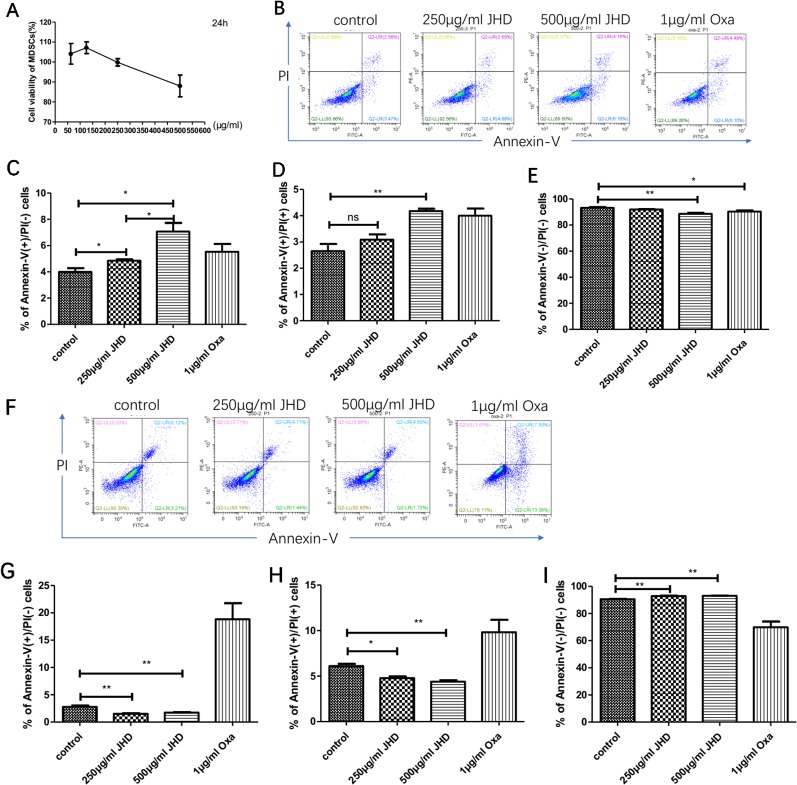
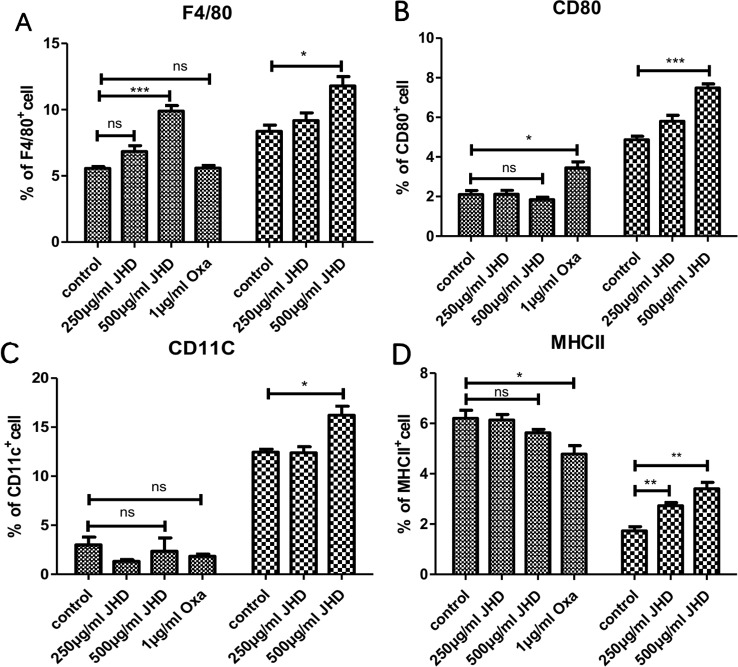
Tumor-induced immunosuppressive microenvironment in which myeloid-derived suppressor cells (MDSCs) plays an important role, remains an obstacle for effective oncotherapy currently. Inducing MDSCs into maturation was confirmed as an effective method to reduce the tumor-bearing host's immunosuppression. Traditional Chinese medicines (TCM) possess characteristics of alleviating immunosuppression of cancer patients and low toxicity. Jianpi Huayu Decoction (JHD) was an experienced formula of TCM for oncotherapy based on TCM theory and clinical practice. We previously observed that JHD attenuated the expression of interleukin-10 (IL-10) and transforming growth factor beta (TGF-β) in tumor. IL-10 and TGF-β were found to be cytokines positively related to immunosuppression induced by MDSCs. Here, our study was designed to further investigate the regulation of JHD on the immune system in the H liver-cancer mouse model. Mainly, flow cytometry was used to detect the proportion of immune cells, to analyze the apoptosis, differentiation and reactive oxygen species of MDSCs. We found that JHD significantly reduced the destruction of spleen structure, reduced the proportion of regulatory T cells (Treg) and T helper 17 cells (Th17), and increased the proportion of cytotoxic T lymphotes (CTL), Dendritic cells (DC) and CD11bGr-1cells in spleen, but with no significant change of T helper 1 cells (Th1), T helper 2 cells (Th2) and macrophages. In vitro experiments showed that apoptosis of MDSCs was decreased as the time of JHD stimulation increased, which partly explained the increase of CD11bGr-1cells in the spleen. Meanwhile, JHD could promote the differentiation of MDSCs into macrophages and dendritic cells, attenuate expression of ROS in MDSCs and reduce its inhibition on the proliferation of CD4 T cells, in vitro. Therefore, that the proportion of CD11bGr-1 cells increased in the spleen of tumor-bearing hosts may not be villainy after treatment, when these drugs suppress the immunosuppressive ability of CD11bGr-1 cells and promote it mature to replenish dendritic cell, at the same time. Generally, JHD may be a complementary and alternative drug for attenuating the immunosuppressive status induced by hepatocellular carcinoma, possibly by promoting differentiation and inhibiting the immunosuppressive activity of MDSCs.
肿瘤诱导的免疫抑制微环境是目前有效肿瘤治疗的一个障碍,其中髓源性抑制细胞(MDSCs)发挥着重要作用。诱导MDSCs成熟被证实是降低荷瘤宿主免疫抑制的有效方法。中药具有减轻癌症患者免疫抑制和低毒性的特点。健脾化瘀汤(JHD)是基于中医理论和临床实践用于肿瘤治疗的经验方。我们之前观察到JHD可减弱肿瘤中白细胞介素-10(IL-10)和转化生长因子β(TGF-β)的表达。IL-10和TGF-β被发现是与MDSCs诱导的免疫抑制呈正相关的细胞因子。在此,我们的研究旨在进一步探讨JHD对肝癌小鼠模型免疫系统的调节作用。主要通过流式细胞术检测免疫细胞比例,分析MDSCs的凋亡、分化和活性氧。我们发现JHD显著减少脾脏结构破坏,降低调节性T细胞(Treg)和辅助性T细胞17(Th17)比例,增加脾脏中细胞毒性T淋巴细胞(CTL)、树突状细胞(DC)和CD11bGr-1细胞比例,但辅助性T细胞1(Th1)、辅助性T细胞2(Th2)和巨噬细胞无明显变化。体外实验表明,随着JHD刺激时间增加,MDSCs凋亡减少,这部分解释了脾脏中CD11bGr-1细胞增加的原因。同时,JHD在体外可促进MDSCs向巨噬细胞和树突状细胞分化,减弱MDSCs中活性氧表达并降低其对CD4 T细胞增殖的抑制作用。因此,荷瘤宿主脾脏中CD11bGr-1细胞比例增加在治疗后可能并非坏事,因为这些药物在抑制CD11bGr-1细胞免疫抑制能力的同时,促进其成熟以补充树突状细胞。总体而言,JHD可能是减轻肝细胞癌诱导的免疫抑制状态的一种补充和替代药物,可能是通过促进分化和抑制MDSCs的免疫抑制活性来实现的。