Ren WeiHong, Zhang XuRan, Li WenBo, Feng Qian, Feng HuiJie, Tong Yan, Rong Hao, Wang Wei, Zhang Dai, Zhang ZhenQiang, Tu ShiChun, Zhu XiaoYan, Zhang QinXian
Department of Histology and Embryology, College of Basic Medicine, Zhengzhou University, Zhengzhou, Henan Province, People's Republic of China.
Department of Laboratory Medicine, The First Affiliated Hospital of Henan University of Chinese Medicine, Zhengzhou, Henan Province, People's Republic of China.
Cancer Manag Res. 2019 May 6;11:4023-4040. doi: 10.2147/CMAR.S198886. eCollection 2019.
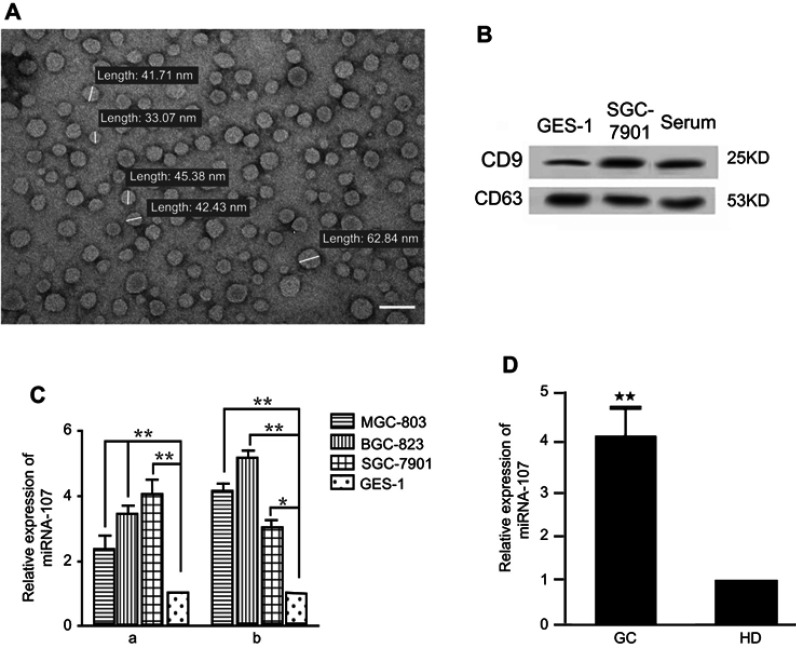
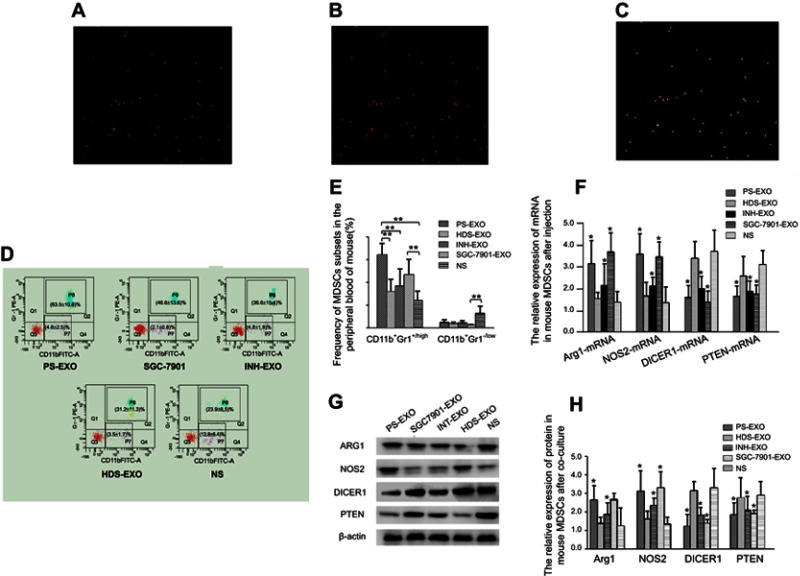
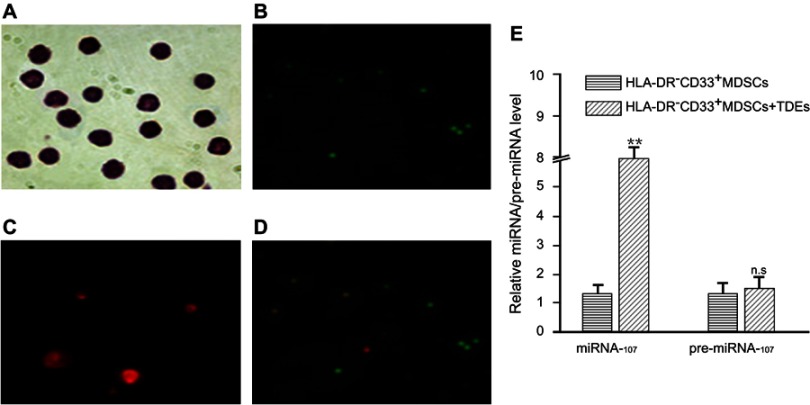
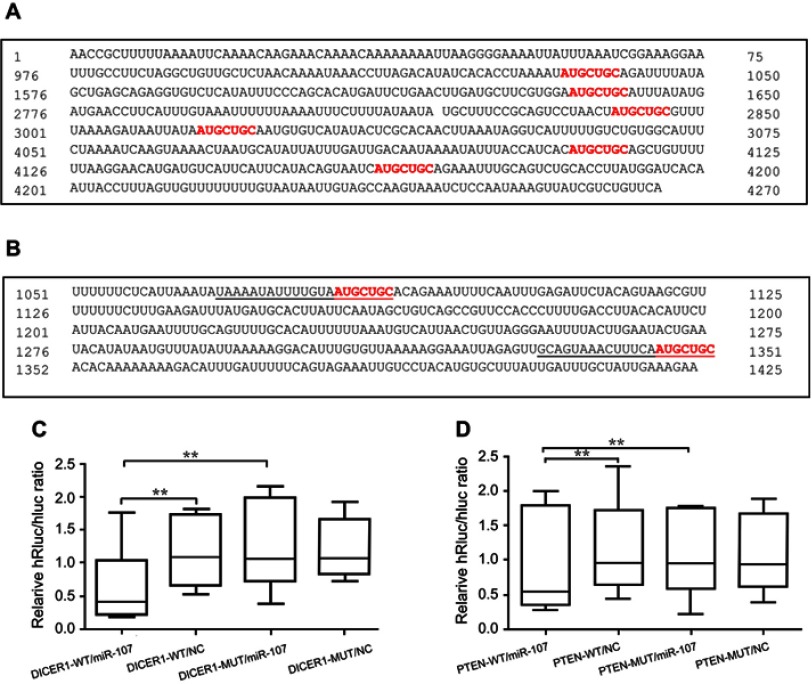
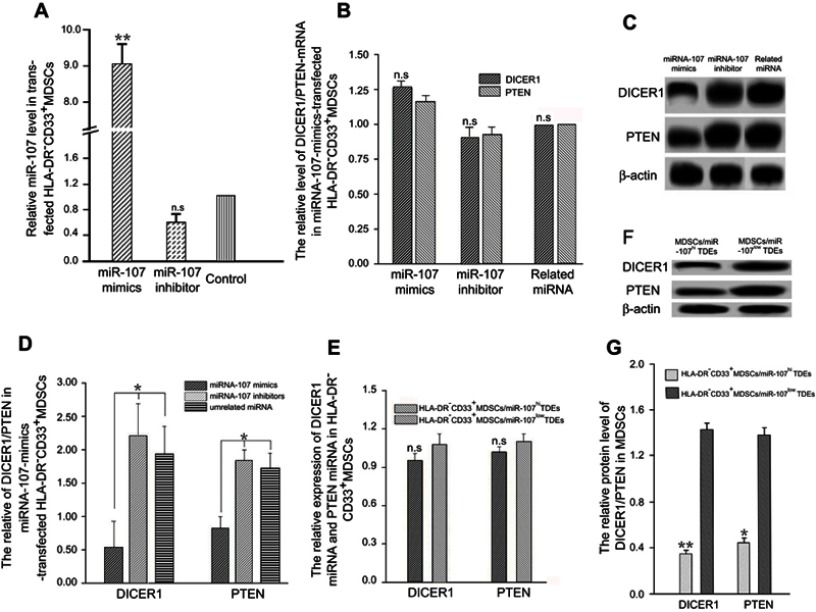
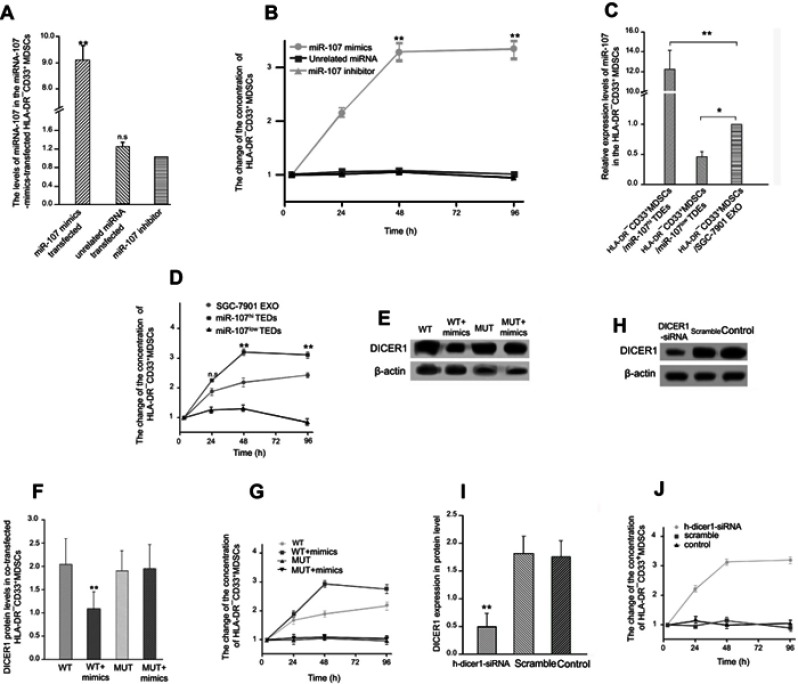
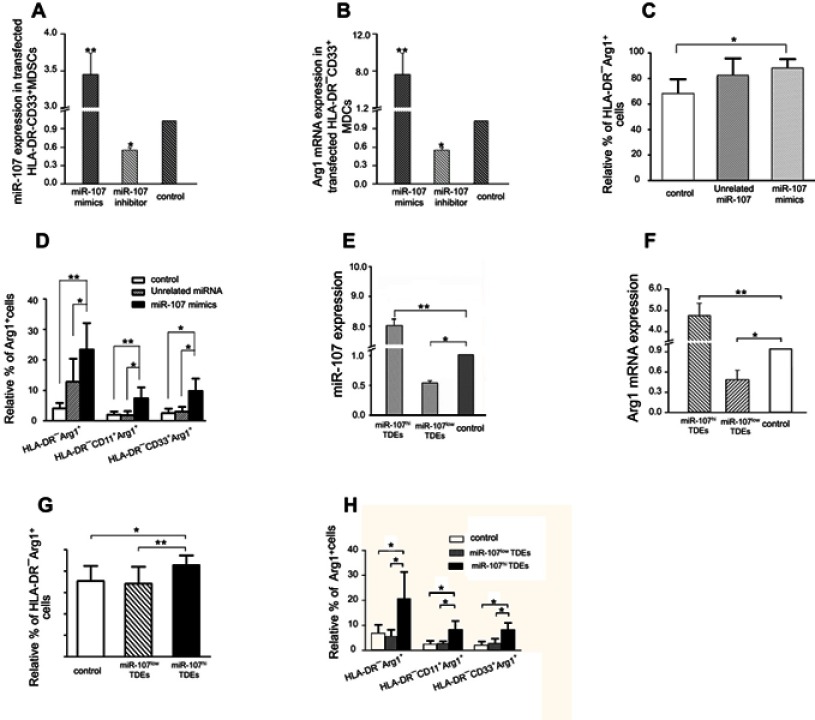
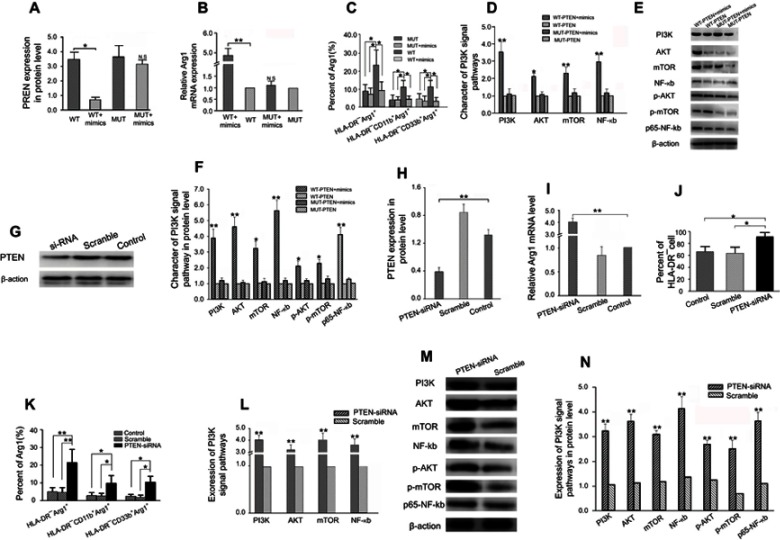
Myeloid-derived suppressor cells (MDSCs) promote immunosuppression in the tumor microenvironment, support tumor growth and survival, and may contribute to immunotherapy resistance. Recent studies showed that tumor-derived exosomes (TDEs) can induce MDSCs accumulation and expansion, the mechanisms of which are largely unknown. The morphologies and sizes of the exosomes was observed by using a JEM-1400 transmission electron microscope. MicroRNA(miR)-107 and , , , , , , and mRNAs were quantified by quantitative reverse tanscription PCR. Dual-Luciferase Reports Assay were used to examine the expression of genes which was targeted by miR-107. The expression of proteins were analyzed by using western blot. MiR-107 was not only overexpressed in gastric cancer cells but also enriched in their secreted TDEs. Also, these miR-107 enriched TDEs could be taken up by HLA-DRCD33MDSCs, where miR-107 was able to target and suppress expression of and genes. Dampened expression supported expansion of MDSCs , while decreased led to activation of the PI3K pathway, resulting in increased expression. Furthemore, gastric cancer-derived miR-107 TDEs, when dosed intravenously into mice, were also capable of inducing expansion of CD11bGr1 MDSCs in mouse peripheral blood and altering expression of , , , and in the MDSCs. Our findings demonstrate for the first time that gastric cancer-secreted exosomes are able to deliver miR-107 to the host MDSCs where they induce their expansion and activition by targeting and genes, thereby may provide novel cancer therapeutics target for gastric cancer.
髓源性抑制细胞(MDSCs)在肿瘤微环境中促进免疫抑制,支持肿瘤生长和存活,并可能导致免疫治疗耐药。最近的研究表明,肿瘤来源的外泌体(TDEs)可诱导MDSCs积累和扩增,但其机制 largely unknown。使用JEM-1400透射电子显微镜观察外泌体的形态和大小。通过定量逆转录PCR对MicroRNA(miR)-107和、、、、、、以及mRNA进行定量。使用双荧光素酶报告测定法检测miR-107靶向的基因的表达。使用蛋白质印迹法分析蛋白质的表达。miR-107不仅在胃癌细胞中过表达,而且在其分泌的TDEs中富集。此外,这些富含miR-107的TDEs可被HLA-DRCD33MDSCs摄取,其中miR-107能够靶向并抑制和基因的表达。表达的抑制支持MDSCs的扩增,而的降低导致PI3K途径的激活,从而导致表达增加。此外,将胃癌来源的miR-107 TDEs静脉注射到小鼠体内时,也能够诱导小鼠外周血中CD11bGr1 MDSCs的扩增,并改变MDSCs中、、、和的表达。我们的研究结果首次证明,胃癌分泌的外泌体能够将miR-107递送至宿主MDSCs,在那里它们通过靶向和基因诱导其扩增和激活,从而可能为胃癌提供新的癌症治疗靶点。