Shime Hiroaki, Maruyama Akira, Yoshida Sumito, Takeda Yohei, Matsumoto Misako, Seya Tsukasa
Department of Microbiology and Immunology, Graduate School of Medicine, Hokkaido University, Kita 15 Nishi 7, Kita-ku, Sapporo, Japan.
Department of Immunology, Graduate School of Medical Sciences, Nagoya City University, 1-Kawasumi, Mizuho-cho, Mizuho-ku, Nagoya, Japan.
Oncoimmunology. 2017 Sep 21;7(1):e1373231. doi: 10.1080/2162402X.2017.1373231. eCollection 2017.
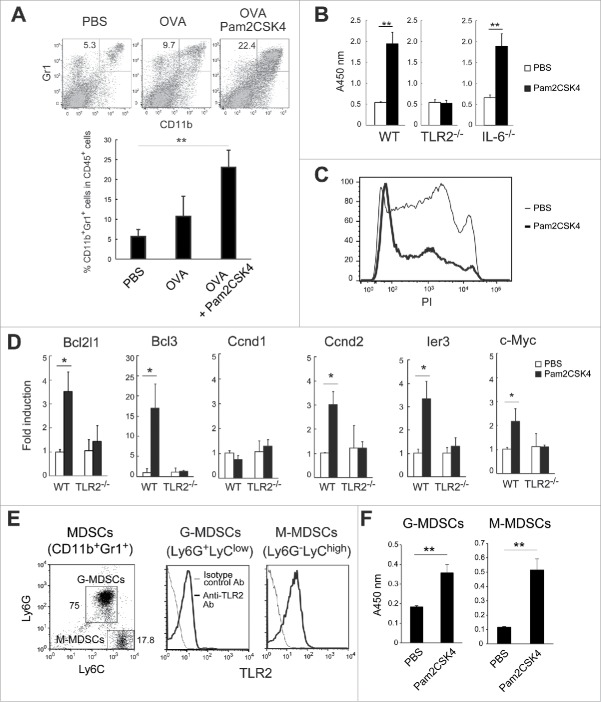
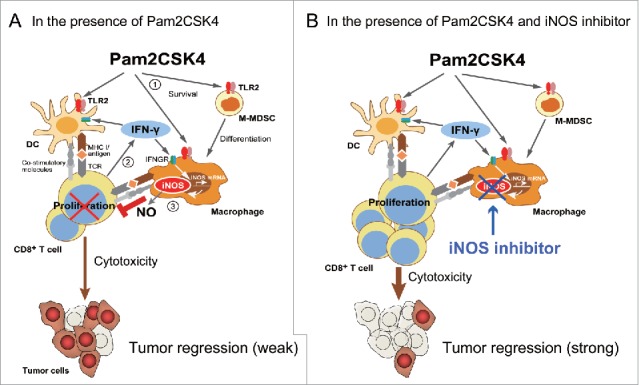
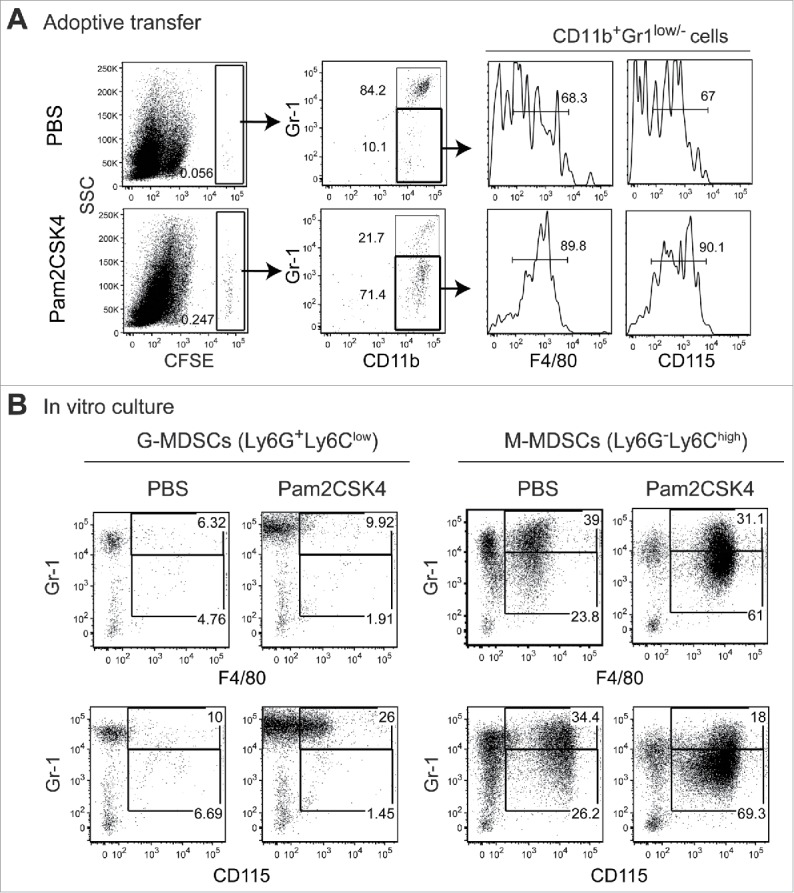
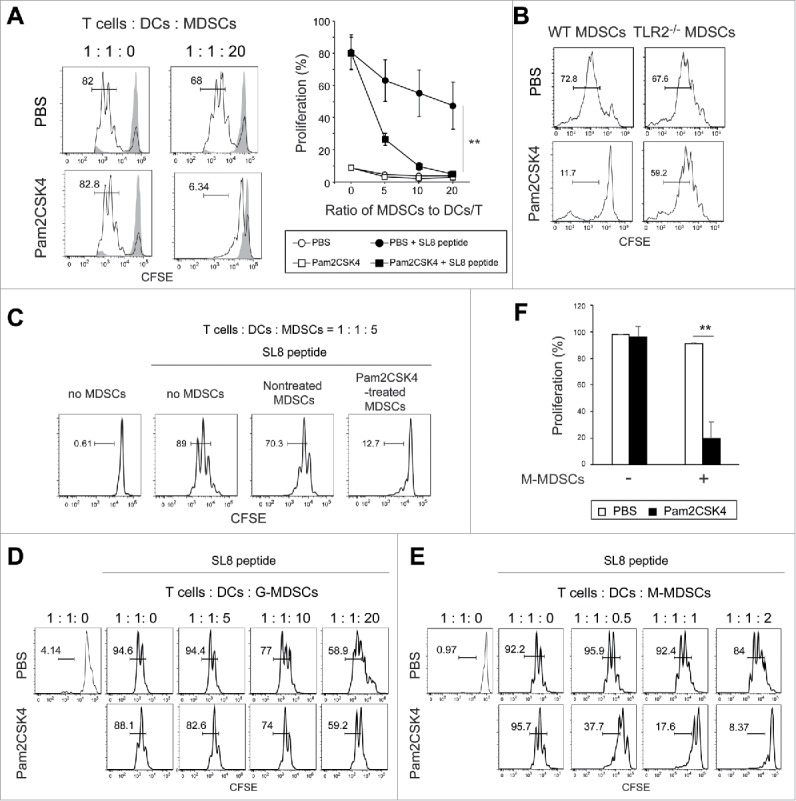
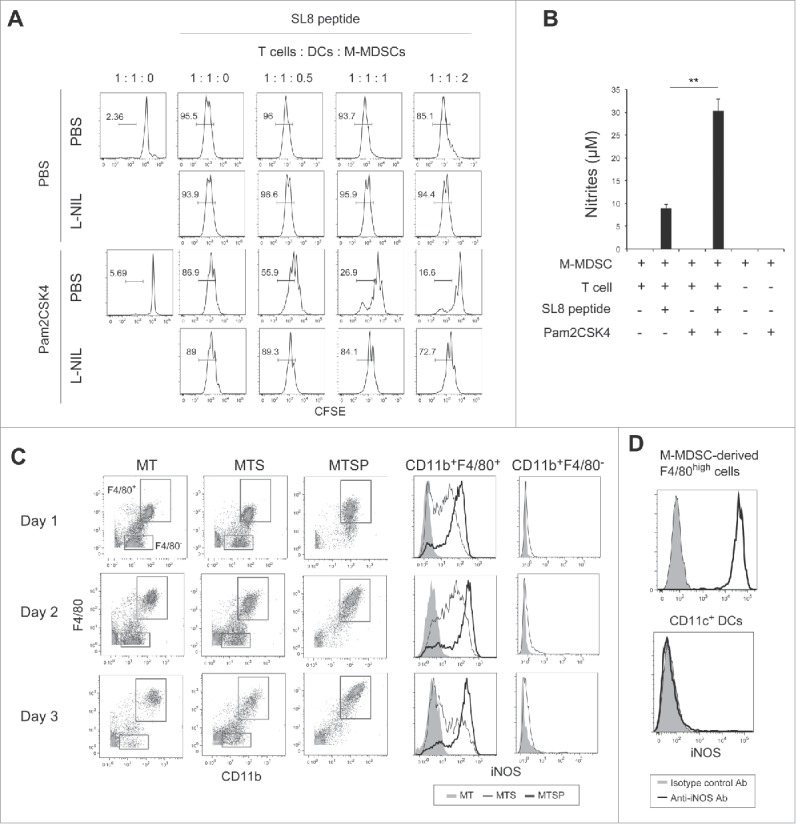
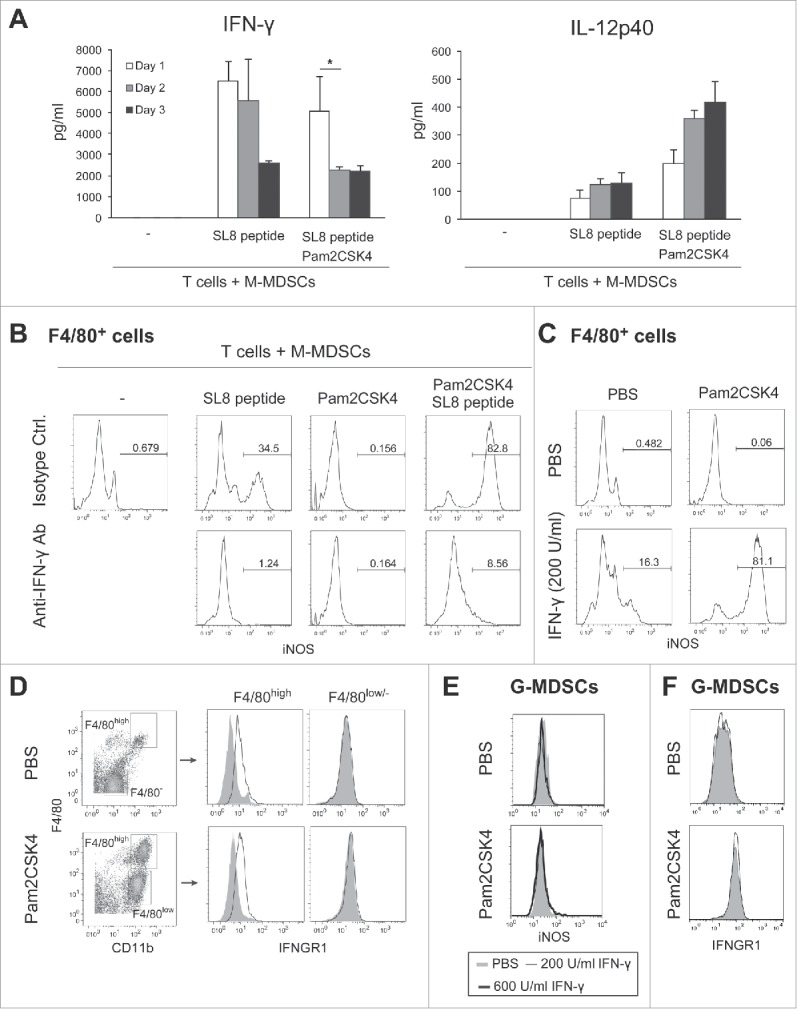
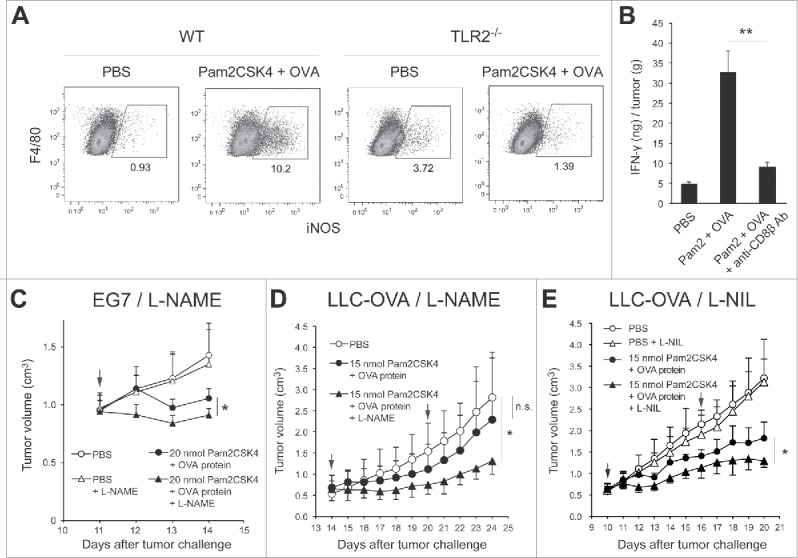
CD11bGr1 myeloid-derived suppressor cells (MDSCs) suppress activation/proliferation of cytotoxic T cells, thereby hindering cancer immunotherapy. MDSCs are increased after adjuvant therapy with toll-like receptor (TLR) 2 ligands, such as Pam2CSK4, in tumor-bearing mice. However, it remains unknown if the activation of TLR2 in MDSCs affects their function and the therapeutic efficacy of TLR2 ligand. Here, we show that TLR2 signaling in CD11bLy6GLy6C monocytic MDSCs (M-MDSCs), but not CD11bLy6GLy6C granulocytic MDSCs (G-MDSCs), enhances their immunosuppressive activity, thereby limiting anti-tumor T cell responses induced by TLR2-activated dendritic cells (DCs). iNOS induction was critical for Pam2CSK4-enhanced T cell suppression by M-MDSCs. iNOS was expressed in M-MDSC-derived macrophages, but not undifferentiated M-MDSCs, in cocultures with CD8 T cells, CD11c DCs, antigen peptide and Pam2CSK4. Pam2CSK4 increased the differentiation frequency of M-MDSCs to macrophages, and iNOS expression required interferon-γ (IFN-γ) production by CD8 T cells that had been transiently stimulated by M-MDSC-derived macrophages in an antigen/TLR2-dependent manner. Although Pam2CSK4 triggered DC maturation and tumor regression via induction of tumor antigen-specific cytotoxic T lymphocyte (CTL) responses in tumor-bearing mice, Pam2CSK4 plus antigen increased the frequency of iNOS macrophages in the tumor. Treatment with iNOS inhibitor enhanced the therapeutic efficacy of Pam2CSK4. Hence, the results suggest that TLR2 ligand and T cell-derived IFN-γ enhance M-MDSC-mediated immunosuppression, which may negatively regulate anti-tumor CTL response.
CD11bGr1髓源性抑制细胞(MDSCs)可抑制细胞毒性T细胞的激活/增殖,从而阻碍癌症免疫治疗。在用Toll样受体(TLR)2配体(如Pam2CSK4)进行辅助治疗后,荷瘤小鼠体内的MDSCs数量会增加。然而,MDSCs中TLR2的激活是否会影响其功能以及TLR2配体的治疗效果仍不清楚。在此,我们发现,CD11bLy6GLy6C单核MDSCs(M-MDSCs)而非CD11bLy6GLy6C粒细胞MDSCs(G-MDSCs)中的TLR2信号增强了它们的免疫抑制活性,从而限制了由TLR2激活的树突状细胞(DCs)诱导的抗肿瘤T细胞反应。诱导型一氧化氮合酶(iNOS)的产生对于Pam2CSK4增强M-MDSCs对T细胞的抑制作用至关重要。在与CD8 T细胞、CD11c DCs、抗原肽和Pam2CSK4共培养时,iNOS在M-MDSC衍生的巨噬细胞中表达,但在未分化的M-MDSCs中不表达。Pam2CSK4增加了M-MDSCs向巨噬细胞的分化频率,并且iNOS的表达需要CD8 T细胞以抗原/TLR2依赖的方式被M-MDSC衍生的巨噬细胞短暂刺激后产生干扰素-γ(IFN-γ)。尽管Pam2CSK4通过在荷瘤小鼠中诱导肿瘤抗原特异性细胞毒性T淋巴细胞(CTL)反应触发DC成熟和肿瘤消退,但Pam2CSK4加抗原增加了肿瘤中iNOS巨噬细胞的频率。用iNOS抑制剂治疗可增强Pam2CSK4的治疗效果。因此,结果表明TLR2配体和T细胞衍生的IFN-γ增强了M-MDSC介导的免疫抑制,这可能会对抗肿瘤CTL反应产生负调节作用。