Lu Miaolong, Chen Wei, Zhuang Wei, Zhan Xianquan
1Key Laboratory of Cancer Proteomics of Chinese Ministry of Health, Xiangya Hospital, Central South University, 87 Xiangya Road, Changsha, 410008 Hunan People's Republic of China.
2Hunan Engineering Laboratory for Structural Biology and Drug Design, Xiangya Hospital, Central South University, 87 Xiangya Road, Changsha, 410008 Hunan People's Republic of China.
EPMA J. 2020 Jan 4;11(1):73-94. doi: 10.1007/s13167-019-00197-8. eCollection 2020 Mar.
Ubiquitination is an important molecular event in lung squamous cell carcinoma (LSCC), which currently is mainly studied in nonsmall cell lung carcinoma cell models but lacking of ubiquitination studies on LSCC tissues. Here, we presented the ubiquitinated protein profiles of LSCC tissues to explore ubiquitination-involved molecular network alterations and identify abnormally ubiquitinated proteins as useful biomarkers for predictive, preventive, and personalized medicine (PPPM) in LSCC.
Anti-ubiquitin antibody-based enrichment coupled with LC-MS/MS was used to identify differentially ubiquitinated proteins (DUPs) between LSCC and control tissues, followed by integrative omics analyses to identify abnormally ubiquitinated protein biomarkers for LSCC.
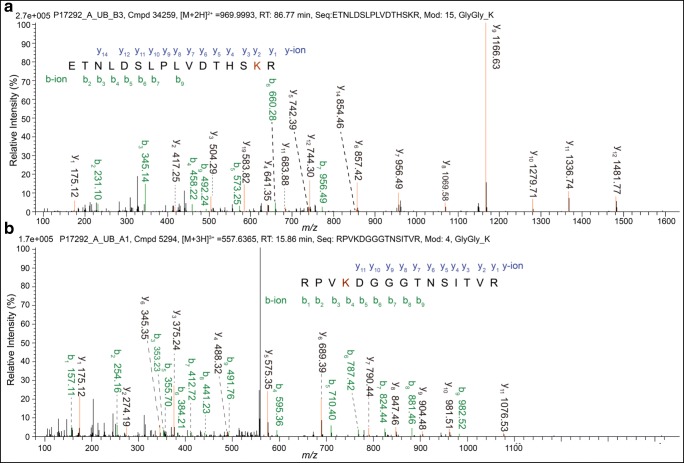
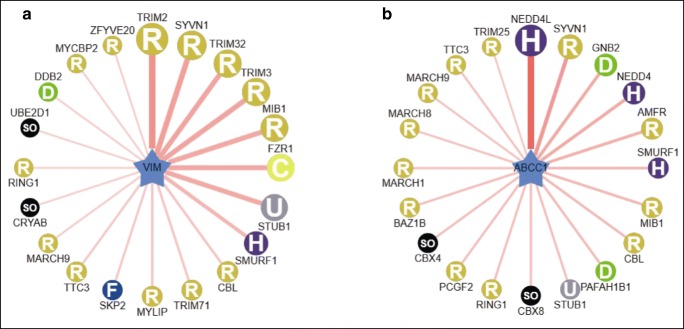
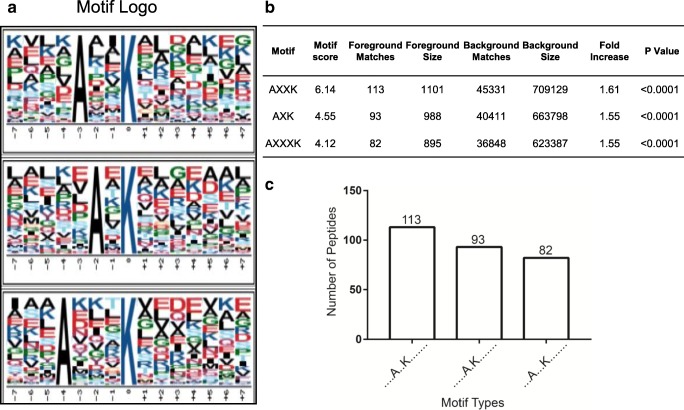
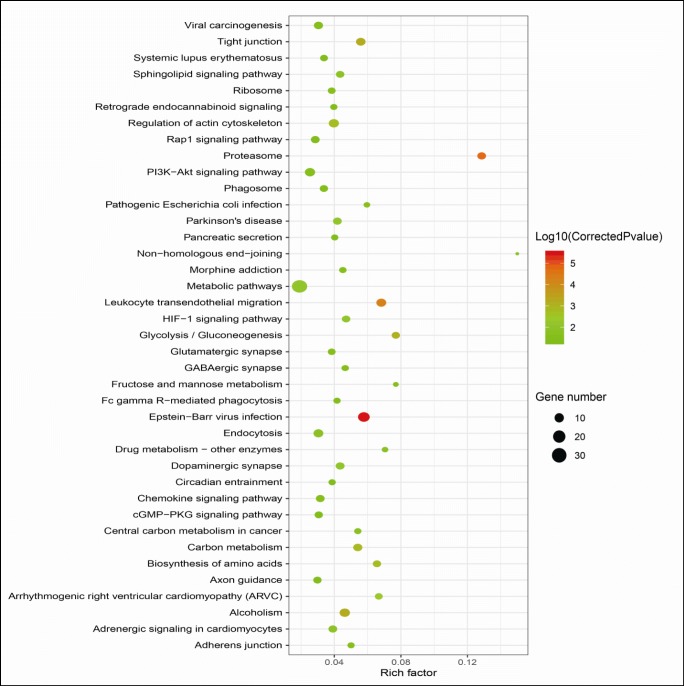
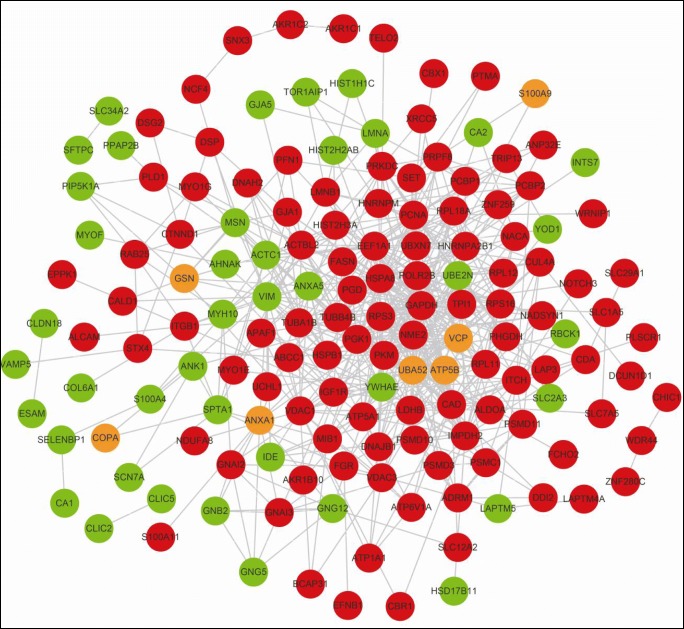
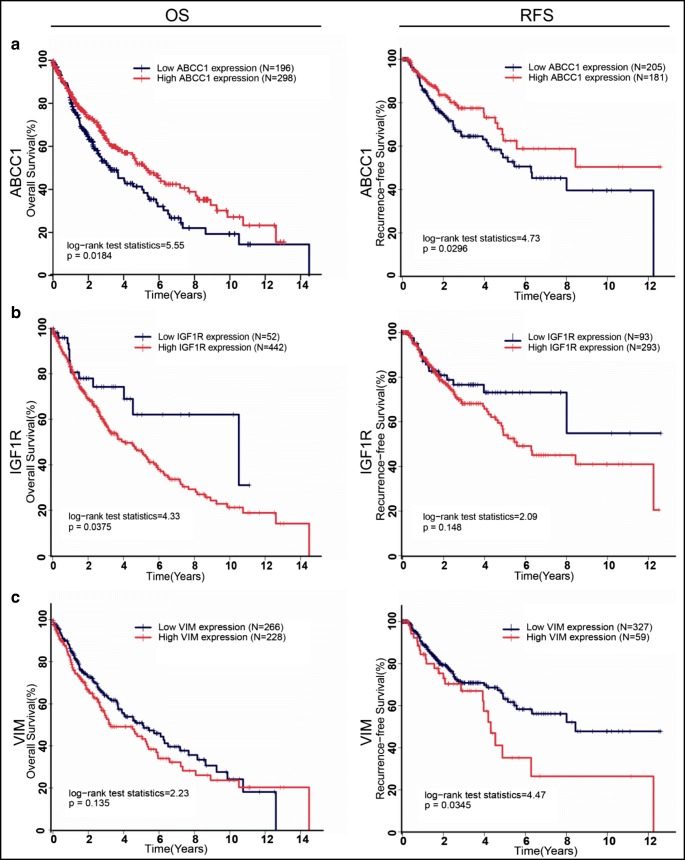
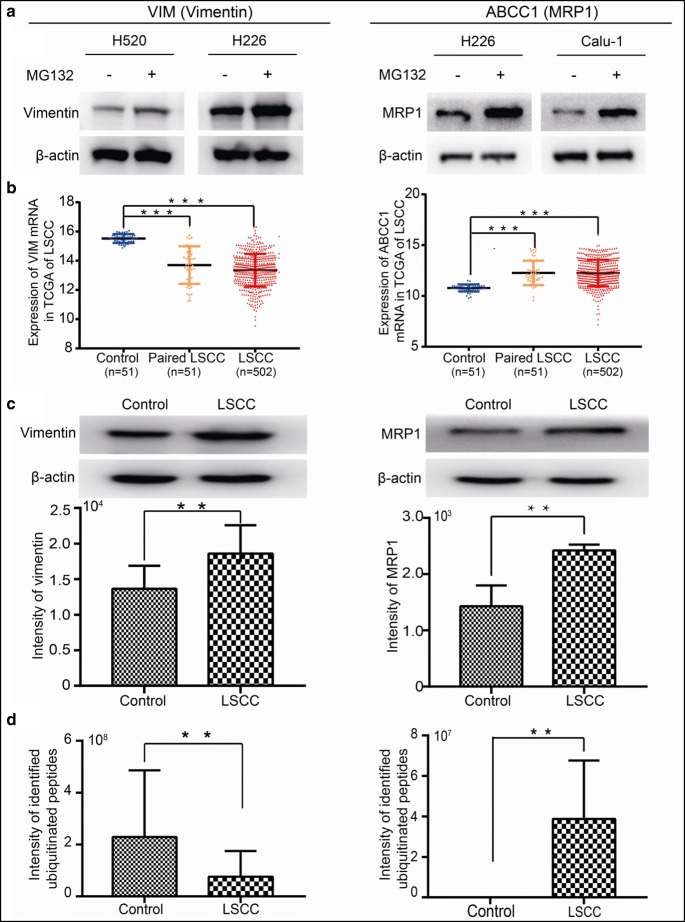
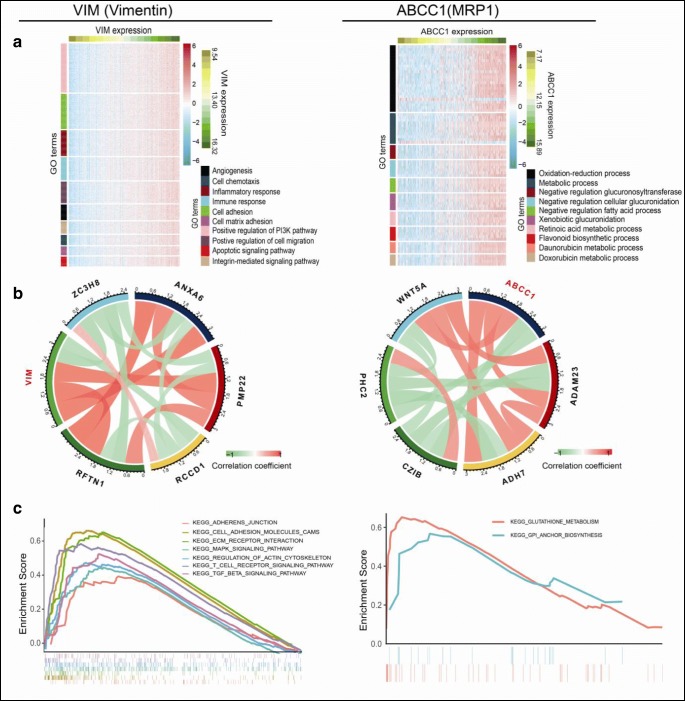
Totally, 400 DUPs with 654 ubiquitination sites were identified,, and motifs A-X (1/2/3)-K* were prone to be ubiquitinated in LSCC tissues. Those DUPs were involved in multiple molecular network systems, including the ubiquitin-proteasome system (UPS), cell metabolism, cell adhesion, and signal transduction. Totally, 44 hub molecules were revealed by protein-protein interaction network analysis, followed by survival analysis in TCGA database (494 LSCC patients and 20,530 genes) to obtain 18 prognosis-related mRNAs, of which the highly expressed mRNAs VIM and IGF1R were correlated with poorer prognosis, while the highly expressed mRNA ABCC1 was correlated with better prognosis. VIM-encoded protein vimentin and ABCC1-encoded protein MRP1 were increased in LSCC, which were all associated with poor prognosis. Proteasome-inhibited experiments demonstrated that vimentin and MRP1 were degraded through UPS. Quantitative ubiquitinomics found ubiquitination level was decreased in vimentin and increased in MRP1 in LSCC. These findings showed that the increased vimentin in LSCC might be derived from its decreased ubiquitination level and that the increased MRP1 in LSCC might be derived from its protein synthesis > degradation. GSEA and co-expression gene analyses revealed that VIM and MRP1 were involved in multiple crucial biological processes and pathways. Further, TRIM2 and NEDD4L were predicted as E3 ligases to regulate ubiquitination of vimentin and MRP1, respectively.
These findings revealed ubiquitinomic variations and molecular network alterations in LSCC, which is in combination with multiomics analysis to identify ubiquitination-related biomarkers for in-depth insight into the molecular mechanism and therapeutic targets and for prediction, diagnosis, and prognostic assessment of LSCC.
泛素化是肺鳞状细胞癌(LSCC)中的一个重要分子事件,目前主要在非小细胞肺癌细胞模型中进行研究,但缺乏对LSCC组织的泛素化研究。在此,我们展示了LSCC组织的泛素化蛋白质谱,以探索泛素化相关的分子网络改变,并鉴定异常泛素化的蛋白质作为LSCC预测、预防和个性化医学(PPPM)的有用生物标志物。
基于抗泛素抗体的富集结合液相色谱-串联质谱(LC-MS/MS)用于鉴定LSCC组织与对照组织之间的差异泛素化蛋白质(DUPs),随后进行综合组学分析以鉴定LSCC的异常泛素化蛋白质生物标志物。
共鉴定出400个具有654个泛素化位点的DUPs,并且基序A-X(1/2/3)-K*在LSCC组织中易于被泛素化。这些DUPs参与多个分子网络系统,包括泛素-蛋白酶体系统(UPS)、细胞代谢、细胞粘附和信号转导。通过蛋白质-蛋白质相互作用网络分析共揭示了44个枢纽分子,随后在TCGA数据库(494例LSCC患者和20,530个基因)中进行生存分析以获得18个与预后相关的mRNA,其中高表达的mRNA VIM和IGF1R与较差的预后相关,而高表达的mRNA ABCC1与较好的预后相关。VIM编码的波形蛋白和ABCC1编码的多药耐药相关蛋白1(MRP1)在LSCC中增加,它们均与不良预后相关。蛋白酶体抑制实验表明波形蛋白和MRP1通过UPS降解。定量泛素组学发现LSCC中波形蛋白的泛素化水平降低,而MRP1的泛素化水平升高。这些发现表明LSCC中波形蛋白的增加可能源于其泛素化水平的降低,而LSCC中MRP1 的增加可能源于其蛋白质合成>降解。基因集富集分析(GSEA)和共表达基因分析表明VIM和MRP1参与多个关键的生物学过程和途径。此外,TRIM2和NEDD4L分别被预测为调节波形蛋白和MRP1泛素化的E3连接酶。
这些发现揭示了LSCC中的泛素组学变化和分子网络改变,结合多组学分析以鉴定与泛素化相关的生物标志物,从而深入了解分子机制和治疗靶点,并用于LSCC的预测、诊断和预后评估。