Villani Marco, Magrì Salvatore, Roli Andrea, Serra Roberto
Department of Physics, Informatics and Mathematics, University of Modena and Reggio Emilia, I-41125 Modena, Italy.
European Centre for Living Technology, 30123 Venice, Italy.
Life (Basel). 2020 Mar 4;10(3):22. doi: 10.3390/life10030022.
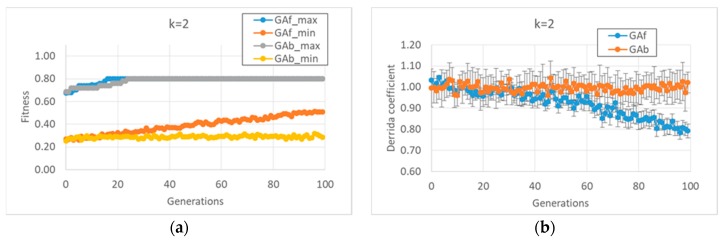
Living beings share several common features at the molecular level, but there are very few large-scale "operating principles" which hold for all (or almost all) organisms. However, biology is subject to a deluge of data, and as such, general concepts such as this would be extremely valuable. One interesting candidate is the "criticality" principle, which claims that biological evolution favors those dynamical regimes that are intermediaries between ordered and disordered states (i.e., "at the edge of chaos"). The reasons why this should be the case and experimental evidence are briefly discussed, observing that gene regulatory networks are indeed often found on, or close to, the critical boundaries. Therefore, assuming that criticality provides an edge, it is important to ascertain whether systems that are critical can further evolve while remaining critical. In order to explore the possibility of achieving such "always-critical" evolution, we resort to simulated evolution, by suitably modifying a genetic algorithm in such a way that the newly-generated individuals are constrained to be critical. It is then shown that these modified genetic algorithms can actually develop critical gene regulatory networks with two interesting (and quite different) features of biological significance, involving, in one case, the average gene activation values and, in the other case, the response to perturbations. These two cases suggest that it is often possible to evolve networks with interesting properties without losing the advantages of criticality. The evolved networks also show some interesting features which are discussed.
生物在分子水平上具有一些共同特征,但适用于所有(或几乎所有)生物体的大规模“运行原理”却非常少。然而,生物学面临着海量数据,因此,这样的一般概念将极具价值。一个有趣的候选概念是“临界性”原理,该原理声称生物进化有利于那些处于有序和无序状态之间的动态机制(即“处于混沌边缘”)。本文简要讨论了为何会如此以及相关的实验证据,发现基因调控网络确实常常处于临界边界上,或者接近临界边界。因此,假设临界性提供了一种优势,那么确定处于临界状态的系统在保持临界的同时是否能够进一步进化就很重要。为了探索实现这种“始终临界”进化的可能性,我们借助模拟进化,通过适当修改遗传算法,使新生成的个体被约束为临界状态。结果表明,这些经过修改的遗传算法实际上能够开发出具有两个具有生物学意义的有趣(且截然不同)特征的临界基因调控网络,一种情况涉及平均基因激活值,另一种情况涉及对扰动的响应。这两种情况表明,通常有可能进化出具有有趣特性的网络,同时又不会失去临界性的优势。进化后的网络还展现出一些有趣的特征,本文对此进行了讨论。