School of Veterinary Science, Massey University, Auckland, New Zealand.
Khesar Gyalpo University of Medical Sciences of Bhutan, Thimphu, Bhutan.
BMC Infect Dis. 2020 Mar 6;20(1):203. doi: 10.1186/s12879-020-4926-y.
Rabies is endemic in southern Bhutan, associated with 1-2 human deaths and high post exposure prophylaxis (PEP) costs annually. Evaluation of clinicians' management of human cases potentially exposed to rabies could contribute to improving PEP prescribing practices to both reduce unnecessary costs associated with PEP and reach the target of zero human deaths due to rabies by 2023.
A cross-sectional survey of 50 clinicians' management of human cases potentially exposed to rabies was conducted in 13 health centers in high-rabies-risk areas of Bhutan during February-March 2016.
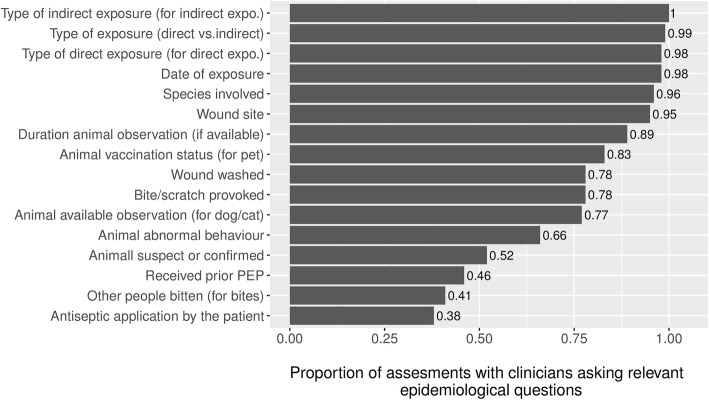
Data were collected on clinicians' management of 273 human cases potentially exposed to rabies. The 50 clinicians comprised health assistants or clinical officers (55%) and medical doctors (45%) with a respective median of 19, 21 and 2 years' experience. There was poor agreement between clinicians' rabies risk assessment compared with an independent assessment for each case based on criteria in the National Rabies Management Guidelines (NRMG). Of the 194 cases for which clinicians recorded a rabies risk category, only 53% were correctly classified when compared with the NRMG. Clinicians were more likely to underestimate the risk of exposure to rabies and appeared to prescribe PEP independently of their risk classification.. Male health assistants performed the most accurate risk assessments while female health assistants performed the least accurate. Clinicians in Basic Health Units performed less accurate risk assessments compared with those in hospitals.
This study highlights important discrepancies between clinicians' management of human cases potentially exposed to rabies and recommendations in the NRMG. In particular, clinicians were not accurately assessing rabies risk in potentially exposed cases and were not basing their PEP treatment on the basis of their risk assessment. This has significant implications for achieving the national goal of eliminating dog-mediated human rabies by 2030 and may result in unnecessary costs associated with PEP. Recommendations to improve clinician's management of human cases potentially exposed to rabies include: reviewing and updating the NRMG, providing clinicians with regular and appropriately targeted training about rabies risk assessment and PEP prescription, and regularly reviewing clinicians' practices.
在不丹南部,狂犬病流行,每年有 1-2 人死亡,且暴露后预防 (PEP) 费用高昂。评估临床医生对可能接触狂犬病的人类病例的管理,可以有助于改善 PEP 处方实践,从而减少与 PEP 相关的不必要费用,并在 2030 年之前实现零狂犬病死亡的目标。
2016 年 2 月至 3 月,在不丹高狂犬病风险地区的 13 个卫生中心对 50 名临床医生对可能接触狂犬病的人类病例的管理情况进行了横断面调查。
共收集了 273 例可能接触狂犬病的人类病例的临床医生管理数据。50 名临床医生包括卫生助理或临床医师(55%)和医生(45%),分别具有 19、21 和 2 年的中位数经验。与根据《国家狂犬病管理指南》(NRMG)中的标准对每个病例进行的独立评估相比,临床医生对狂犬病风险评估的一致性较差。在记录狂犬病风险类别的 194 例病例中,与 NRMG 相比,只有 53%的病例被正确分类。临床医生更倾向于低估接触狂犬病的风险,并且似乎独立于其风险分类来开处方 PEP。男性卫生助理进行的风险评估最准确,而女性卫生助理进行的风险评估最不准确。与医院相比,基础卫生单位的临床医生进行的风险评估准确性较低。
本研究强调了临床医生对可能接触狂犬病的人类病例的管理与 NRMG 建议之间存在重要差异。特别是,临床医生没有准确评估潜在暴露病例的狂犬病风险,也没有根据风险评估来确定 PEP 治疗。这对实现到 2030 年消除犬介导的人类狂犬病的国家目标具有重大影响,并且可能导致与 PEP 相关的不必要费用。改善临床医生对可能接触狂犬病的人类病例的管理的建议包括:审查和更新 NRMG,为临床医生提供有关狂犬病风险评估和 PEP 处方的定期和有针对性的培训,并定期审查临床医生的实践。