Department of Rheumatology & Inflammation Research, Institute of Medicine, Sahlgrenska Academy, Gothenburg University, Box 480, S-405 30, Gothenburg, Sweden.
Unidad de Virología, Inmunidad e Infección, Insituto SELADIS, Facultad de Ciencias Farmacéuticas y Bioquímicas, Universidad Mayor de San Andrés, La Paz, Bolivia.
BMC Infect Dis. 2020 Mar 6;20(1):204. doi: 10.1186/s12879-020-4931-1.
Bolivia has the highest prevalence of cervical cancer in South America and the prevalence of viral sexually transmitted infections (STIs) among people in urban cities is increasing. Little is known about the prevalence of viral STIs in rural communities, which generally have limited access to health care. In order to study the prevalence of viral STIs in rural Bolivia, we recruited women from villages and towns in the Department of La Paz in Bolivia.
Three hundred ninety-four female participants were assessed for IgG-antibodies to herpes simplex virus type 2 (HSV-2), human immunodeficiency virus (HIV) and hepatitis B virus (HBV, anti-HBc), as well as for the presence of HBV surface antigen (HBsAg) in dried blood spots. The prevalence of 12 high-risk types of human papillomavirus (HPV) was assessed by qPCR in dried cervicovaginal cell spots from 376 of these women. χ test was used to compare variables between the populations and binary logistic regression was used to identify risk factors associated with the positivity of the tests.
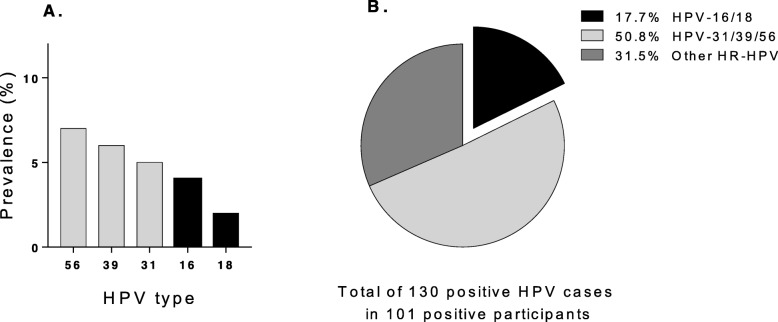
The seroprevalence of HSV-2 was 53% and of HBV 10.3%. HBAg was detected in 15.8% of women with anti-HBV antibodies indicating chronic infection. The frequency of high-risk HPV infection was 27%, with the most prevalent high-risk HPV types being HPV 56, 39 and 31 followed by HPV 16 and 18. Finally, none of the 394 women were seropositive for HIV, and about 64% of the studied population was positive for at least one of the viral infections.
Women in Bolivian rural communities in La Paz show a high prevalence of HBV, HPV and, in particular, HSV-2. In contrast, none of the women were HIV positive, suggesting that the HIV prevalence in this population is low. The pattern of high-risk HPV types differed from many other countries with a predominance of HPV-types not included in the Gardasil vaccine which was officially introduced in Bolivia in April 2017.
玻利维亚是南美洲宫颈癌发病率最高的国家,城市居民中病毒性性传播感染(STIs)的患病率也在不断上升。农村社区的病毒性 STIs 患病率知之甚少,这些社区通常获得医疗保健的机会有限。为了研究玻利维亚农村地区病毒性 STIs 的患病率,我们从玻利维亚拉巴斯省的村庄和城镇招募了女性参与者。
对 394 名女性参与者进行了疱疹病毒 2 型(HSV-2)、人类免疫缺陷病毒(HIV)和乙型肝炎病毒(HBV,抗-HBc)的 IgG 抗体检测,以及在血斑中检测 HBV 表面抗原(HBsAg)。对其中 376 名女性的宫颈阴道细胞干斑进行了 12 种高危型人乳头瘤病毒(HPV)的 qPCR 检测,以评估 HPV 的患病率。采用卡方检验比较两组人群的变量,采用二项逻辑回归分析确定与检测阳性相关的危险因素。
HSV-2 的血清流行率为 53%,HBV 为 10.3%。抗-HBV 抗体阳性的女性中有 15.8%检测到 HBAg,表明存在慢性感染。高危 HPV 感染的频率为 27%,最常见的高危 HPV 类型为 HPV 56、39 和 31,其次是 HPV 16 和 18。最后,394 名女性中均未检测到 HIV 抗体阳性,约 64%的研究人群至少有一种病毒感染阳性。
拉巴斯省玻利维亚农村社区的女性中,HBV、HPV,尤其是 HSV-2 的感染率很高。相比之下,没有女性 HIV 抗体阳性,表明该人群的 HIV 感染率较低。高危 HPV 类型的模式与许多其他国家不同,其中包括在 2017 年 4 月在玻利维亚正式推出的 Gardasil 疫苗中未包含的 HPV 类型。