Shandong Provincial Key Laboratory of Infection & Immunology, Department of Immunology, Shandong University School of Basic Medical Sciences, Jinan, 250012, China.
Department of Pathology, Shandong University School of Basic Medical Sciences, Jinan, 250012, China.
Cell Death Dis. 2020 Mar 6;11(3):174. doi: 10.1038/s41419-020-2368-5.
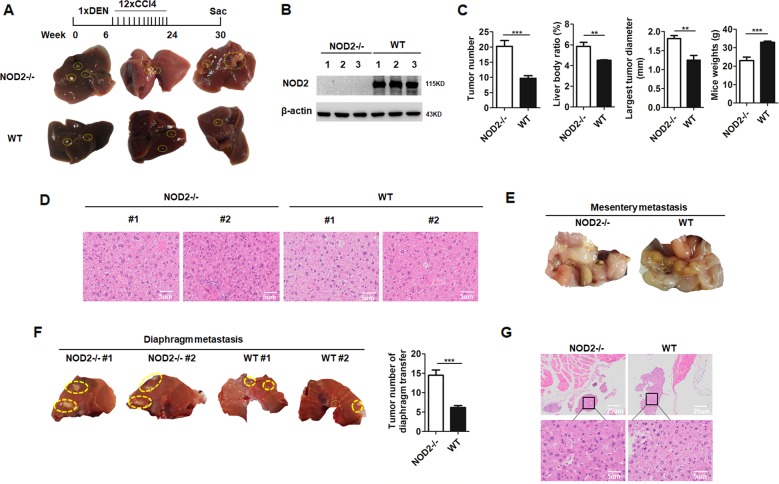
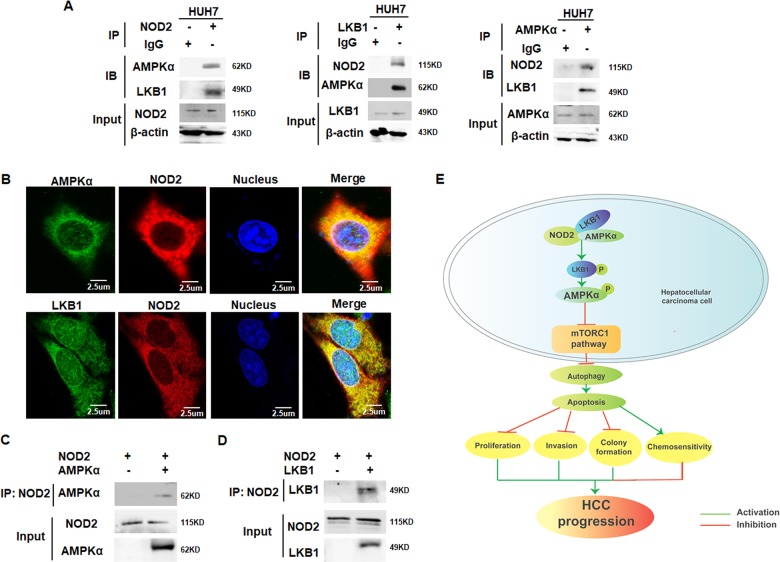
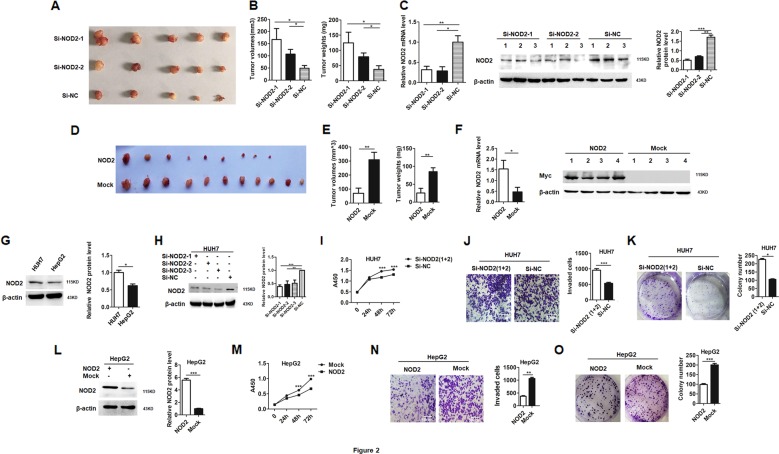
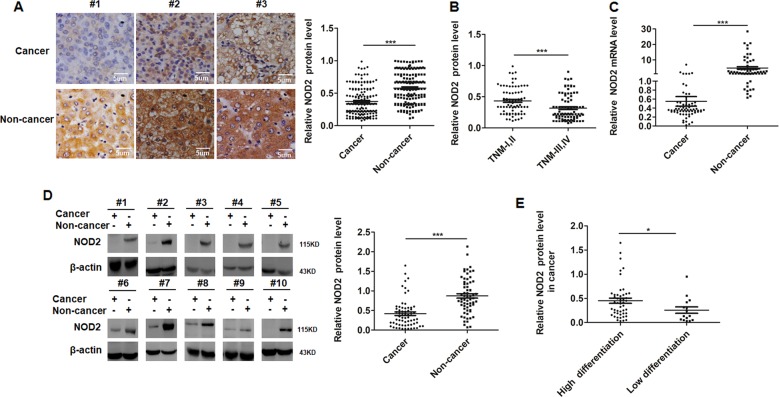
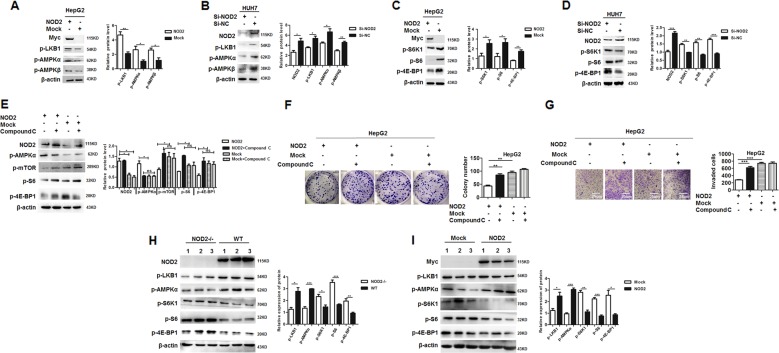
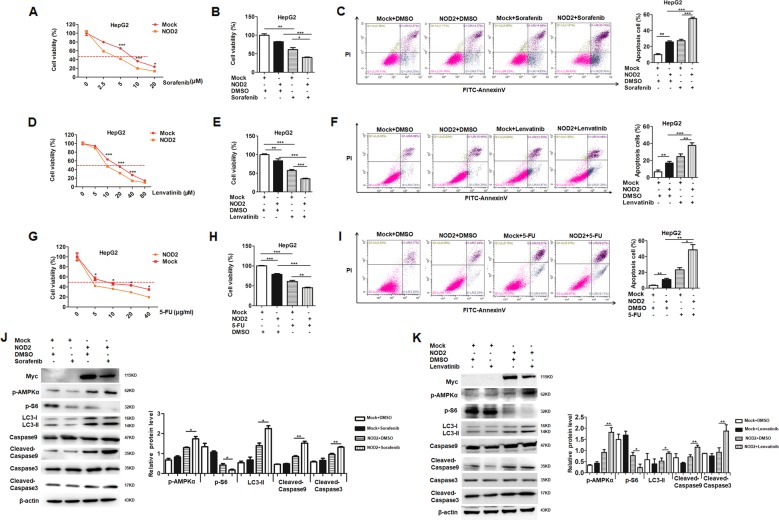
Nucleotide binding oligomerization domain 2 (NOD2) is a recognized innate immune sensor which can initiate potent immune response against pathogens. Many innate immune sensors have been reported to be of great importance in carcinogenesis. However, the role of NOD2 in cancer is not well understood. Here we investigated the role of NOD2 in the development of hepatocellular carcinoma (HCC). We demonstrated that NOD2 deficiency promoted hepatocarcinogenesis in N-nitrosodiethylamine (DEN)/carbon tetrachloride (CCl) induced HCC mice model and xenograft tumor model. In vitro investigation showed that NOD2 acted as a tumor suppressor and inhibited proliferation, colony formation and invasion of HCC cells. Clinical investigation showed that NOD2 expression was completely lost or significantly downregulated in clinical HCC tissues, and loss of NOD2 expression was significantly correlated with advanced disease stages. Further investigation showed that NOD2 exerted its anti-tumor effect through activating adenosine 5'-monophosphate (AMP) -activated protein kinase (AMPK) signaling pathway, and NOD2 significantly enhanced the sensitivity of HCC cells to sorafenib, lenvatinib and 5-FU treatment through activating AMPK pathway induced apoptosis. Moreover, we demonstrated that NOD2 activated AMPK pathway by directly binding with AMPKα-LKB1 complex, which led to autophagy-mediated apoptosis of HCC cells. Altogether, this study showed that NOD2 acted as a tumor suppressor as well as a chemotherapeutic regulator in HCC cells by directly activating AMPK pathway, which indicated a potential therapeutic strategy for HCC treatment by upregulating NOD2-AMPK signaling axis.
核苷酸结合寡聚化结构域 2(NOD2)是一种公认的先天免疫传感器,可针对病原体引发强烈的免疫反应。许多先天免疫传感器已被证实对癌症发生具有重要意义。然而,NOD2 在癌症中的作用尚不清楚。在此,我们研究了 NOD2 在肝细胞癌(HCC)发展中的作用。我们证实,NOD2 缺失可促进 N-亚硝二乙胺(DEN)/四氯化碳(CCl)诱导的 HCC 小鼠模型和异种移植肿瘤模型中的肝癌发生。体外研究表明,NOD2 作为一种肿瘤抑制因子,可抑制 HCC 细胞的增殖、集落形成和侵袭。临床研究表明,NOD2 表达在临床 HCC 组织中完全缺失或显著下调,且 NOD2 表达缺失与疾病进展阶段显著相关。进一步的研究表明,NOD2 通过激活腺苷酸 5'-单磷酸(AMP)激活的蛋白激酶(AMPK)信号通路发挥抗肿瘤作用,且 NOD2 通过激活 AMPK 通路诱导的细胞凋亡,显著增强 HCC 细胞对索拉非尼、仑伐替尼和 5-FU 治疗的敏感性。此外,我们证实 NOD2 通过与 AMPKα-LKB1 复合物直接结合,激活 AMPK 通路,导致 HCC 细胞发生自噬介导的细胞凋亡。综上所述,本研究表明,NOD2 作为一种肿瘤抑制因子以及 HCC 细胞的化疗调节剂,通过直接激活 AMPK 通路发挥作用,这表明通过上调 NOD2-AMPK 信号通路可能为 HCC 治疗提供一种潜在的治疗策略。