National Research Council of Italy, Institute of Biomolecular Chemistry, Bio-Organic Chemistry Unit, Via Campi Flegrei 34, 80078, Pozzuoli (Napoli), Italy.
Univeristy of Naples "Federico II", Department of Biology, Cupa Nuova Cintia 21, 80126, Napoli, Italy.
Sci Rep. 2020 Mar 6;10(1):4204. doi: 10.1038/s41598-020-60993-5.
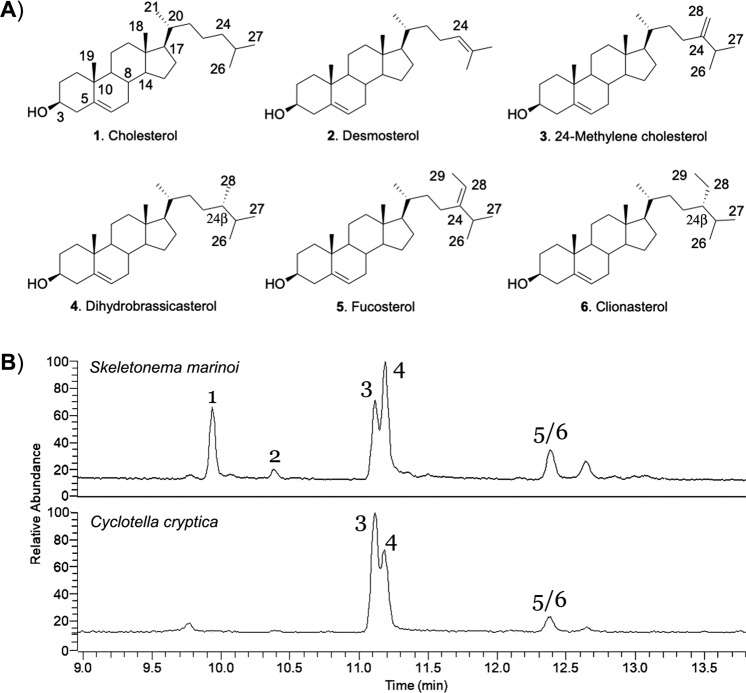
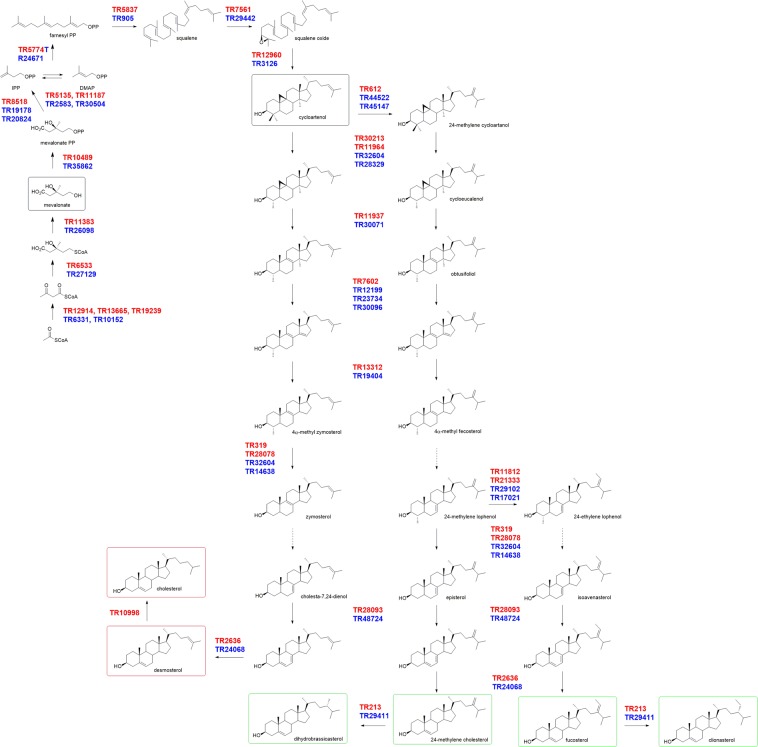
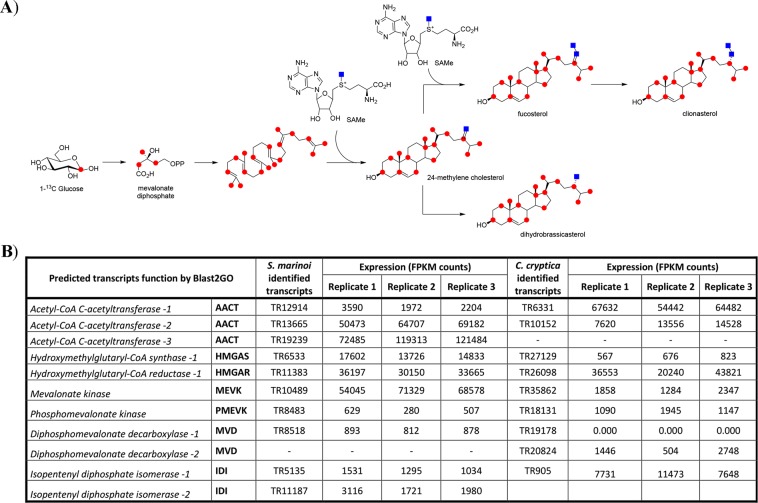
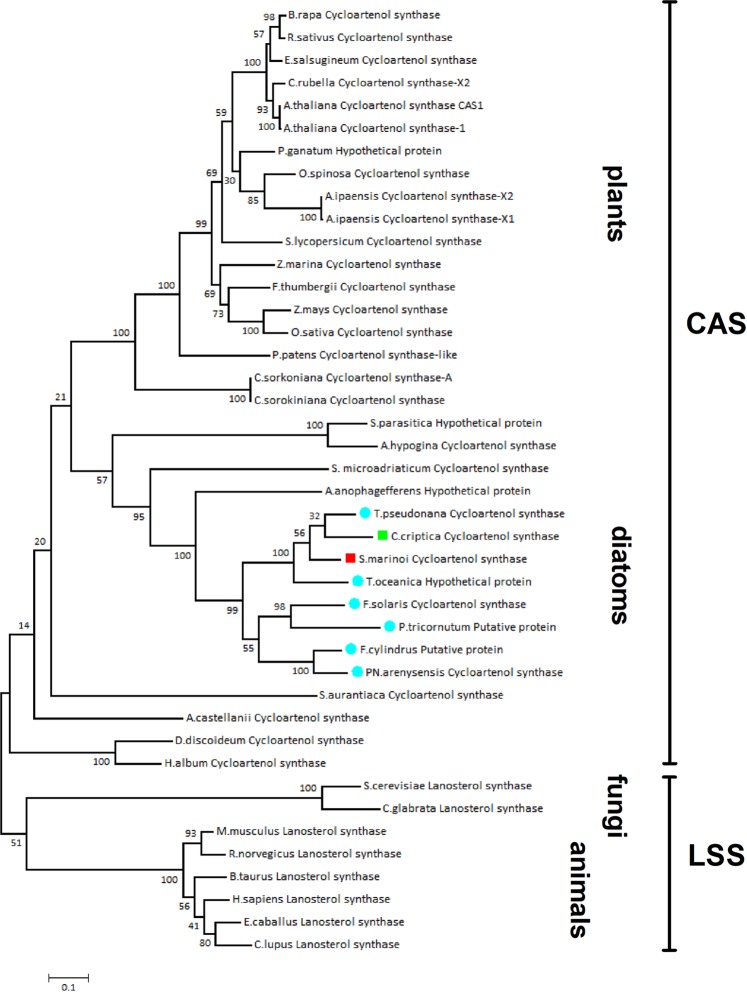
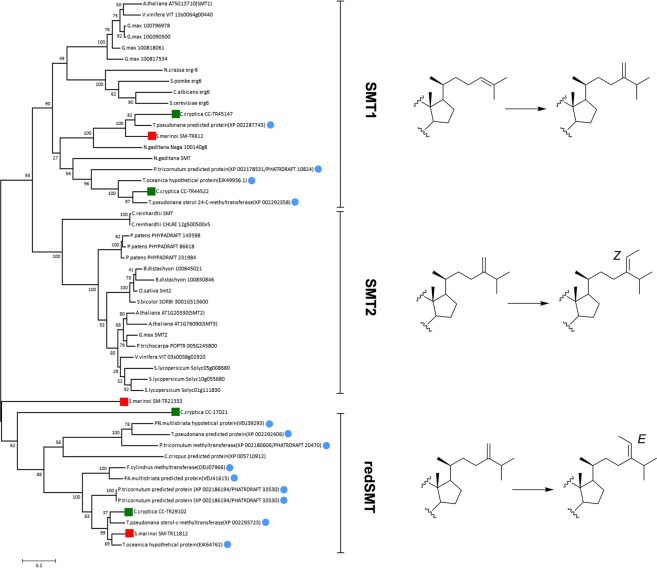
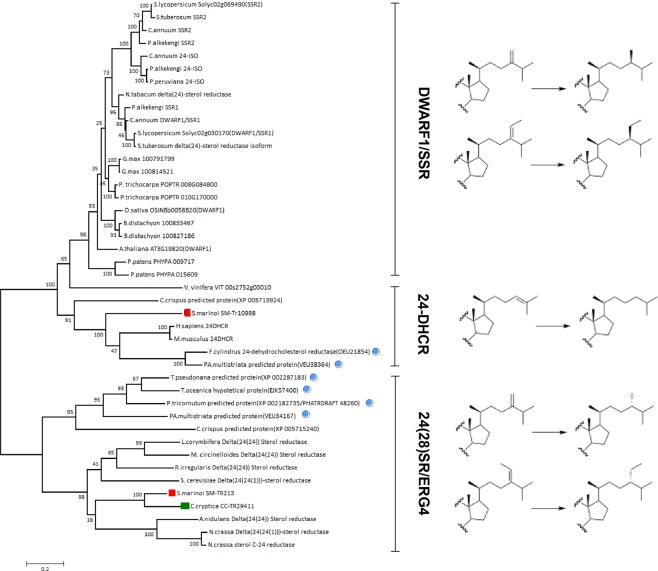
Diatoms are ubiquitous microalgae that have developed remarkable metabolic plasticity and gene diversification. Here we report the first elucidation of the complete biosynthesis of sterols in the lineage. The study has been carried out on the bloom-forming species Skeletonema marinoi and Cyclotella cryptica that synthesise an ensemble of sterols with chemotypes of animals (cholesterol and desmosterol), plants (dihydrobrassicasterol and 24-methylene cholesterol), algae (fucosterol) and marine invertebrates (clionasterol). In both species, sterols derive from mevalonate through cyclization of squalene to cycloartenol by cycloartenol synthase. The pathway anticipates synthesis of cholesterol by enzymes of the phytosterol route in plants, as recently reported in Solanaceae. Major divergences stem from reduction of Δ24(28) and Δ24(25) double bonds which, in diatoms, are apparently dependent on sterol reductases of fungi, algae and animals. Phylogenetic comparison revealed a good level of similarity between the sterol biosynthetic genes of S. marinoi and C. cryptica with those in the genomes of the other diatoms sequenced so far.
硅藻是普遍存在的微藻,它们具有显著的代谢可塑性和基因多样化。在这里,我们首次阐明了该谱系中甾醇的完整生物合成。该研究是在形成水华的物种 S. marinoi 和 C. cryptica 上进行的,它们合成了一组具有动物(胆固醇和 desmosterol)、植物(二氢 Brassicasterol 和 24-亚甲基胆固醇)、藻类(岩藻甾醇)和海洋无脊椎动物(clionasterol)化学型的甾醇。在这两个物种中,甾醇都是通过鲨烯环化酶将鲨烯环化为环阿屯醇,从甲羟戊酸合成而来。该途径预期通过植物中植物甾醇途径的酶合成胆固醇,正如最近在茄科植物中报道的那样。主要的分歧源于 Δ24(28)和 Δ24(25)双键的还原,而在硅藻中,这些双键显然依赖于真菌、藻类和动物的甾醇还原酶。系统发育比较显示,S. marinoi 和 C. cryptica 的甾醇生物合成基因与迄今为止测序的其他硅藻的基因组中的基因具有很好的相似性。