Center for Integrated Spatial Research, Environmental Studies Department, University of California, Santa Cruz, CA, USA.
Yellowstone Center for Resources, Yellowstone National Park, WY, USA.
J Anim Ecol. 2020 Jun;89(6):1511-1519. doi: 10.1111/1365-2656.13200. Epub 2020 Mar 27.
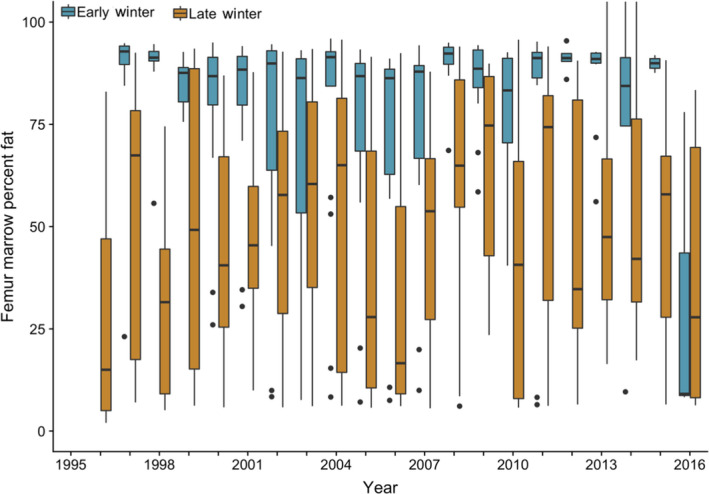
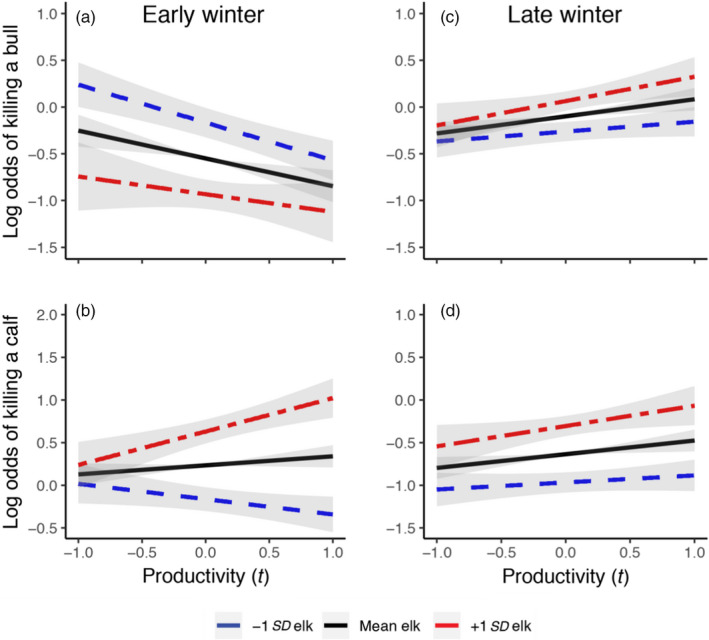
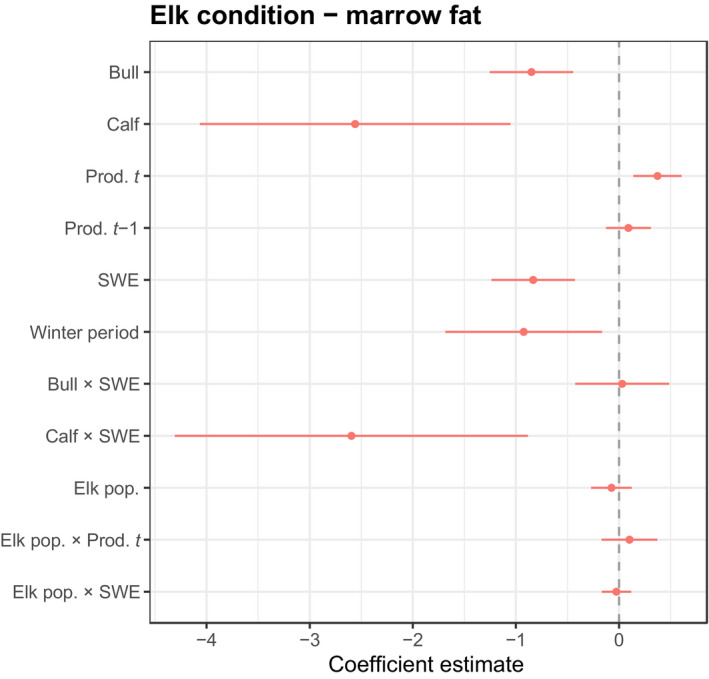
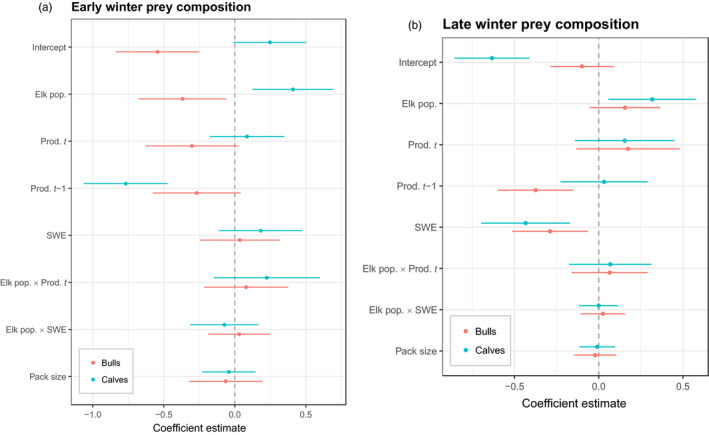
While the functional response of predators is commonly measured, recent work has revealed that the age and sex composition of prey killed is often a better predictor of prey population dynamics because the reproductive value of adult females is usually higher than that of males or juveniles. Climate is often an important mediating factor in determining the composition of predator kills, but we currently lack a mechanistic understanding of how the multiple facets of climate interact with prey abundance and demography to influence the composition of predator kills. Over 20 winters, we monitored 17 wolf packs in Yellowstone National Park and recorded the sex, age and nutritional condition of kills of their dominant prey-elk-in both early and late winter periods when elk are in relatively good and relatively poor condition, respectively. Nutritional condition (as indicated by per cent marrow fat) of wolf-killed elk varied markedly with summer plant productivity, snow water equivalent (SWE) and winter period. Moreover, marrow was poorer for wolf-killed bulls and especially for calves than it was for cows. Wolf prey composition was influenced by a complex set of climatic and endogenous variables. In early winter, poor plant growth in either year t or t - 1, or relatively low elk abundance, increased the odds of wolves killing bulls relative to cows. Calves were most likely to get killed when elk abundance was high and when the forage productivity they experienced in utero was poor. In late winter, low SWE and a relatively large elk population increased the odds of wolves killing calves relative to cows, whereas low SWE and poor vegetation productivity 1 year prior together increased the likelihood of wolves killing a bull instead of a cow. Since climate has a strong influence on whether wolves prey on cows (who, depending on their age, are the key reproductive components of the population) or lower reproductive value of calves and bulls, our results suggest that climate can drive wolf predation to be more or less additive from year to year.
虽然捕食者的功能反应通常是可以测量的,但最近的研究表明,被捕食者杀死的年龄和性别组成往往是预测猎物种群动态的更好指标,因为成年雌性的生殖价值通常高于雄性或幼崽。气候通常是决定捕食者捕杀组成的重要调节因素,但我们目前缺乏对气候的多个方面如何与猎物丰度和种群动态相互作用以影响捕食者捕杀组成的机制性理解。在 20 多个冬季,我们监测了黄石国家公园的 17 个狼群,并记录了它们的主要猎物——麋鹿——在冬季早期和晚期的性别、年龄和营养状况,此时麋鹿的状况分别相对较好和较差。狼杀死的麋鹿的营养状况(以骨髓脂肪百分比表示)与夏季植物生产力、雪水当量(SWE)和冬季时期有明显的差异。此外,狼杀死的公牛,尤其是小牛的骨髓比母牛的差。狼的猎物组成受一系列复杂的气候和内源性变量的影响。在冬季早期,如果当年 t 或 t-1 年植物生长不良,或者麋鹿数量相对较低,那么狼杀死公牛的几率就会增加。当麋鹿数量较高,而它们在子宫内经历的饲料生产力较差时,小牛最有可能被杀死。在冬季晚期,低 SWE 和相对较大的麋鹿种群增加了狼杀死小牛而不是母牛的几率,而低 SWE 和前一年较差的植被生产力一起增加了狼杀死公牛而不是母牛的可能性。由于气候对狼是否捕食母牛(取决于其年龄,是种群的关键繁殖组成部分)或小牛和公牛的较低生殖价值有很大影响,我们的研究结果表明,气候可以使狼的捕食行为在不同年份或多或少地呈累加性。