Di Martino Maria Teresa, Arbitrio Mariamena, Caracciolo Daniele, Scionti Francesca, Tagliaferri Pierosandro, Tassone Pierfrancesco
Department of Experimental and Clinical Medicine, Magna Graecia University, Catanzaro, Italy.
CNR-Institute for Biomedical Research and Innovation, Catanzaro, Italy.
Mol Ther Nucleic Acids. 2020 Jun 5;20:73-85. doi: 10.1016/j.omtn.2020.01.036. Epub 2020 Feb 8.
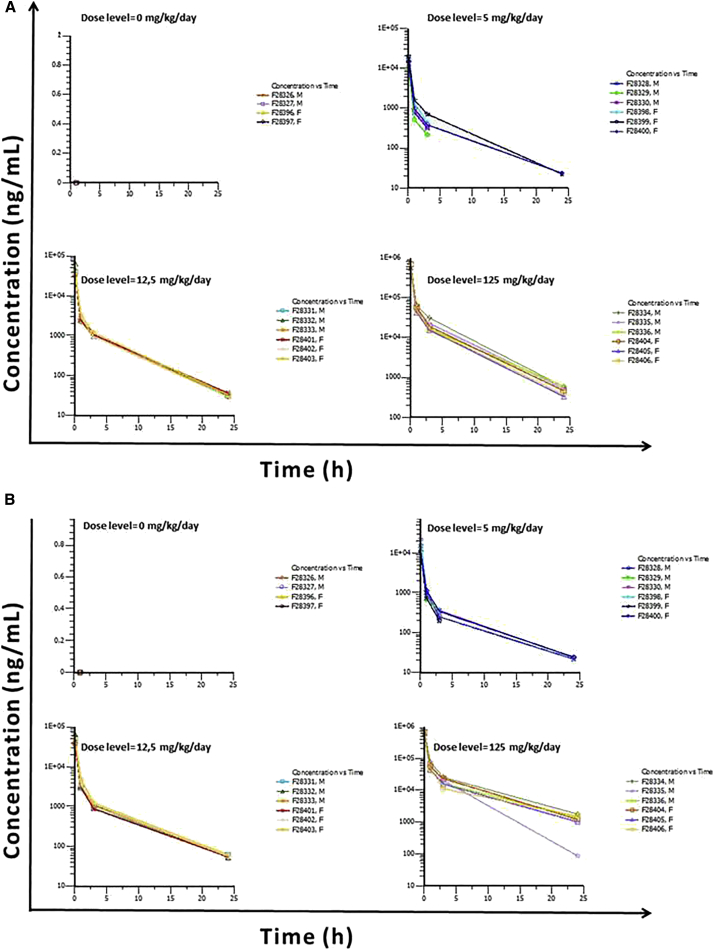
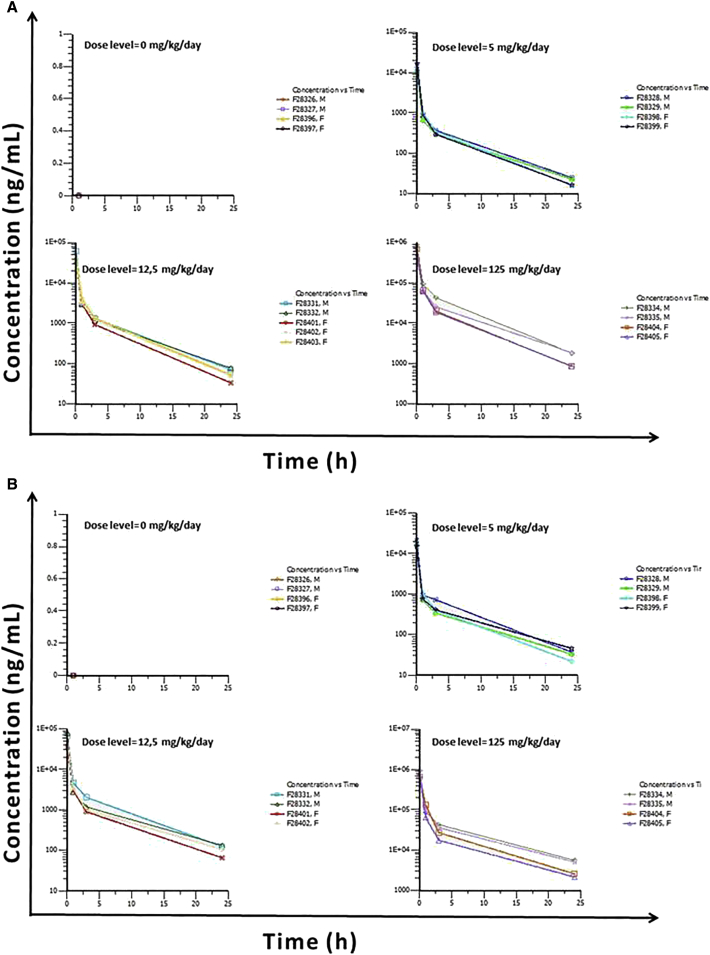
miR-221 is overexpressed in several malignancies where it promotes tumor growth and survival by interfering with gene transcripts, including p27Kip1, PUMA, PTEN, and p57Kip2. We previously demonstrated that a novel 13-mer miR-221 inhibitor (locked nucleic acid [LNA]-i-miR-221) exerts antitumor activity against human cancer with a pilot-favorable pharmacokinetics and safety profile in mice and non-naive monkeys. In this study, we report a non-good laboratory practice (GLP)/GLP dose-finding investigation of LNA-i-miR-221 in Sprague-Dawley rats. The safety of the intravenous dose (125 mg/kg/day) for 4 consecutive days, two treatment cycles, was investigated by a first non-GLP study. The toxicokinetics profile of LNA-i-miR-221 was next explored in a GLP study at three different doses (5, 12.5, and 125 mg/kg/day). Slight changes in blood parameters and histological findings in kidney were observed at the highest dose. These effects were reversible and consistent with an in vivo antisense oligonucleotide (ASO) class effect. The no-observed-adverse-effect level (NOAEL) was established at 5 mg/kg/day. The plasma exposure of LNA-i-miR-221, based on C (estimated concentration at time 0 after bolus intravenous administration) and area under the curve (AUC), suggested no differential sex effect. Slight accumulation occurred between cycles 1 and 2 but was not observed after four consecutive administrations. Taken together, our findings demonstrate a safety profile of LNA-i-miR-221 in Sprague-Dawley rats and provide a reference translational framework and path for the development of other LNA miR inhibitors in phase I clinical study.
miR-221在多种恶性肿瘤中过表达,它通过干扰包括p27Kip1、PUMA、PTEN和p57Kip2在内的基因转录本,促进肿瘤生长和存活。我们之前证明,一种新型的13聚体miR-221抑制剂(锁核酸 [LNA]-i-miR-221)对人类癌症具有抗肿瘤活性,在小鼠和非初治猴中具有良好的药代动力学和安全性。在本研究中,我们报告了LNA-i-miR-221在Sprague-Dawley大鼠中的非良好实验室规范(GLP)/GLP剂量探索研究。通过首次非GLP研究,对连续4天静脉注射剂量(125 mg/kg/天)、两个治疗周期的安全性进行了研究。接下来在GLP研究中,以三种不同剂量(5、12.5和125 mg/kg/天)探索了LNA-i-miR-221的毒代动力学特征。在最高剂量下,观察到血液参数和肾脏组织学结果有轻微变化。这些影响是可逆的,与体内反义寡核苷酸(ASO)类效应一致。未观察到有害作用水平(NOAEL)确定为5 mg/kg/天。基于C(静脉推注给药后0时的估计浓度)和曲线下面积(AUC),LNA-i-miR-221的血浆暴露表明无性别差异效应。在第1周期和第2周期之间有轻微蓄积,但连续四次给药后未观察到。综上所述,我们的研究结果证明了LNA-i-miR-221在Sprague-Dawley大鼠中的安全性,并为I期临床研究中其他LNA miR抑制剂的开发提供了参考性的转化框架和路径。