Department of Experimental and Clinical Medicine (DMSC), Magna Graecia University, Catanzaro, Italy.
Phase 1 and Translational Medical Oncology Unit, AOU Renato Dulbecco, Catanzaro, Italy.
J Hematol Oncol. 2023 Jun 26;16(1):68. doi: 10.1186/s13045-023-01468-8.
We developed a 13-mer locked nucleic acid (LNA) inhibitor of miR-221 (LNA-i-miR-221) with a full phosphorothioate (PS)-modified backbone. This agent downregulated miR-221, demonstrated anti-tumor activity against human xenografts in mice, and favorable toxicokinetics in rats and monkeys. Allometric interspecies scaling allowed us to define the first-in-class LNA-i-miR-221 safe starting dose for the clinical translation.
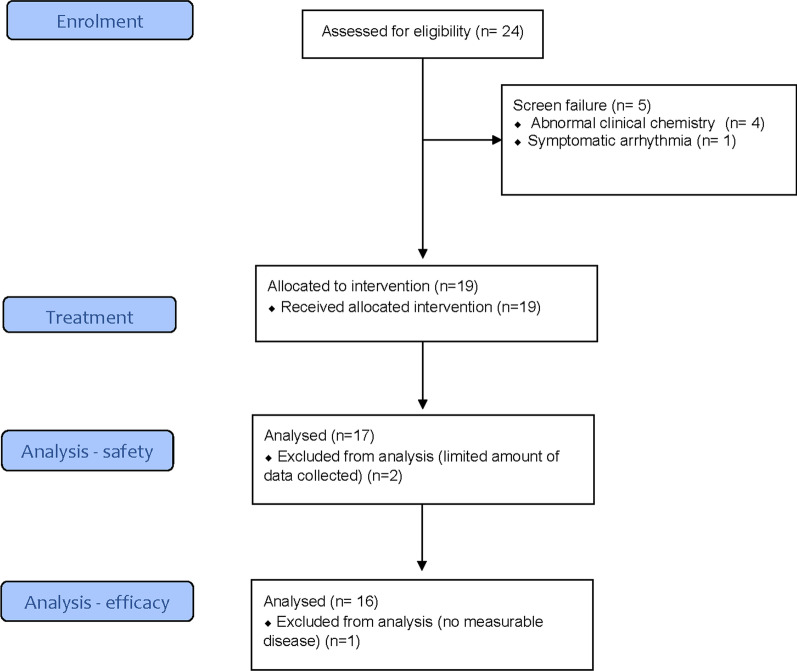
In this first-in-human, open-label, dose-escalation phase 1 trial, we enrolled progressive cancer patients (aged ≥ 18 years) with ECOG 0-2 into 5 cohorts. The treatment cycle was based on a 30-min IV infusion of LNA-i-miR-221 on 4 consecutive days. Three patients within the first cohort were treated with 2 cycles (8 infusions), while 14 patients were treated with a single course (4 infusions); all patients were evaluated for phase 1 primary endpoint. The study was approved by the Ethics Committee and Regulatory Authorities (EudraCT 2017-002615-33).
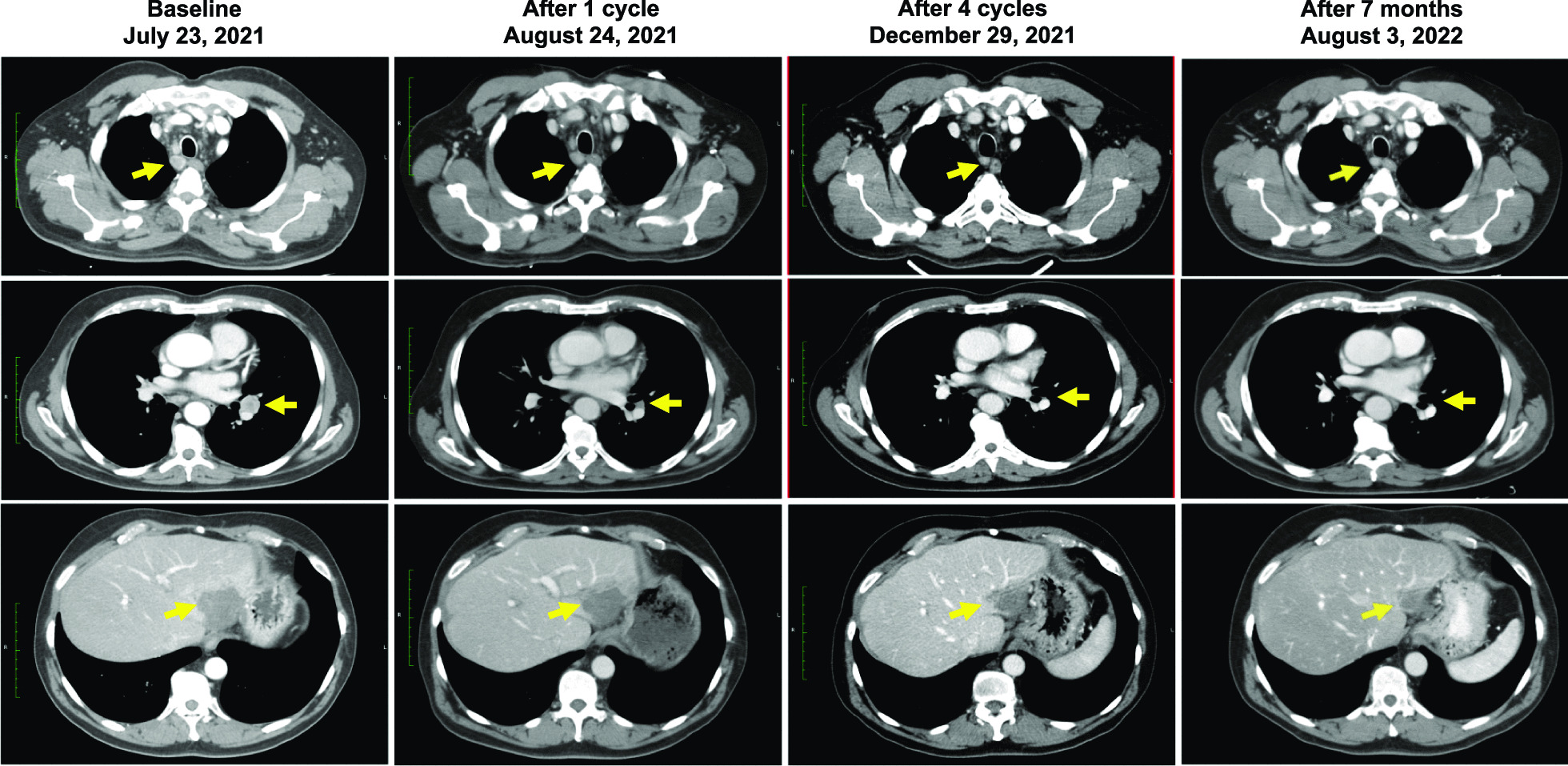
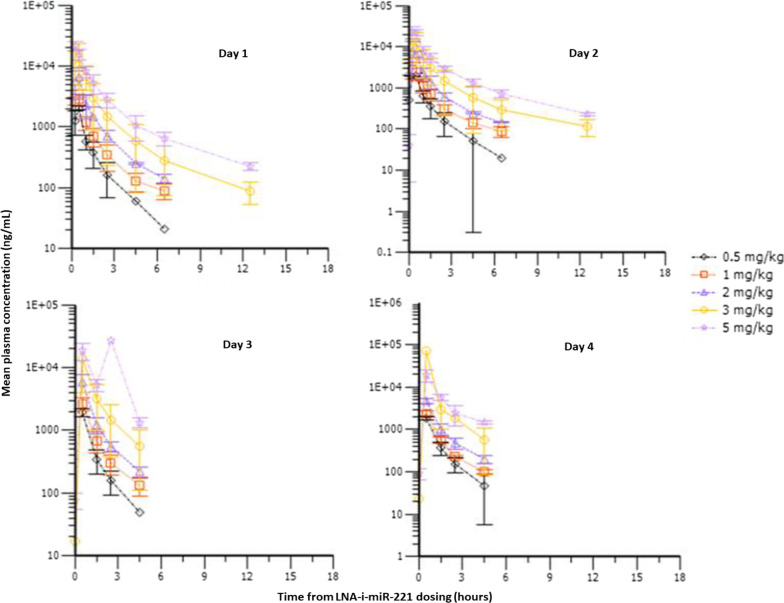
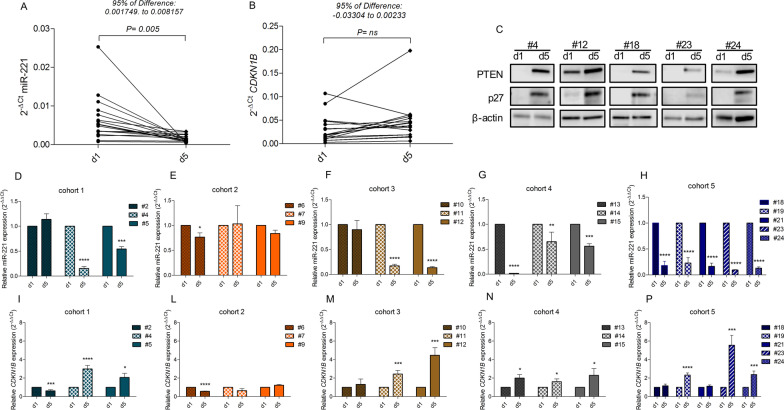
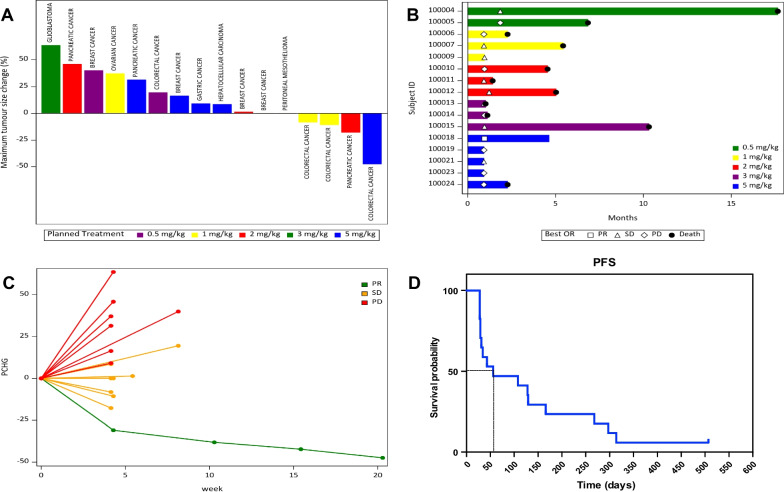
Seventeen patients received the investigational treatment, and 16 were evaluable for response. LNA-i-miR-221 was well tolerated, with no grade 3-4 toxicity, and the MTD was not reached. We recorded stable disease (SD) in 8 (50.0%) patients and partial response (PR) in 1 (6.3%) colorectal cancer case (total SD + PR: 56.3%). Pharmacokinetics indicated non-linear drug concentration increase across the dose range. Pharmacodynamics demonstrated concentration-dependent downregulation of miR-221 and upregulation of its CDKN1B/p27 and PTEN canonical targets. Five mg/kg was defined as the recommended phase II dose.
The excellent safety profile, the promising bio-modulator, and the anti-tumor activity offer the rationale for further clinical investigation of LNA-i-miR-221 (ClinTrials.Gov: NCT04811898).
我们开发了一种全长硫代磷酸酯(PS)修饰的 miR-221 锁核酸(LNA)抑制剂(LNA-i-miR-221)。该药物下调了 miR-221,在小鼠的人异种移植肿瘤中显示出抗肿瘤活性,并在大鼠和猴子中具有良好的药代动力学特性。种间比例缩放允许我们确定用于临床转化的首个 LNA-i-miR-221 安全起始剂量。
在这项首例人体、开放标签、剂量递增的 1 期临床试验中,我们招募了 ECOG 0-2 的进展期癌症患者(年龄≥18 岁)进入 5 个队列。治疗周期基于 4 天连续 30 分钟静脉输注 LNA-i-miR-221。第一个队列中的 3 名患者接受了 2 个周期(8 次输注)的治疗,而 14 名患者接受了单次疗程(4 次输注)的治疗;所有患者均接受了 1 期主要终点评估。该研究获得了伦理委员会和监管机构的批准(EudraCT 2017-002615-33)。
17 名患者接受了研究治疗,16 名患者可评估疗效。LNA-i-miR-221 耐受性良好,无 3-4 级毒性,且未达到最大耐受剂量。我们记录了 8 名(50.0%)患者的疾病稳定(SD)和 1 名(6.3%)结直肠癌患者的部分缓解(PR)(总 SD+PR:56.3%)。药代动力学表明,在剂量范围内,药物浓度呈非线性增加。药效学显示,miR-221 的浓度依赖性下调和其 CDKN1B/p27 和 PTEN 经典靶标的上调。5mg/kg 被定义为推荐的 2 期剂量。
出色的安全性、有前景的生物调节剂以及抗肿瘤活性为进一步研究 LNA-i-miR-221 提供了依据(ClinTrials.Gov:NCT04811898)。