Moriya Takashi, Sato Hitoshi, Takeda Kenichi, Ikezaki Kaori, Katada Ryogo, Shirota Tatsuo
Department of Oral and Maxillofacial Surgery, Division of Oral Oncology, Showa University School of Dentistry, Tokyo, Japan.
Department of Oral and Maxillofacial Surgery, Showa University, School of Dentistry, Tokyo, Japan.
Case Rep Dent. 2020 Feb 21;2020:8691270. doi: 10.1155/2020/8691270. eCollection 2020.
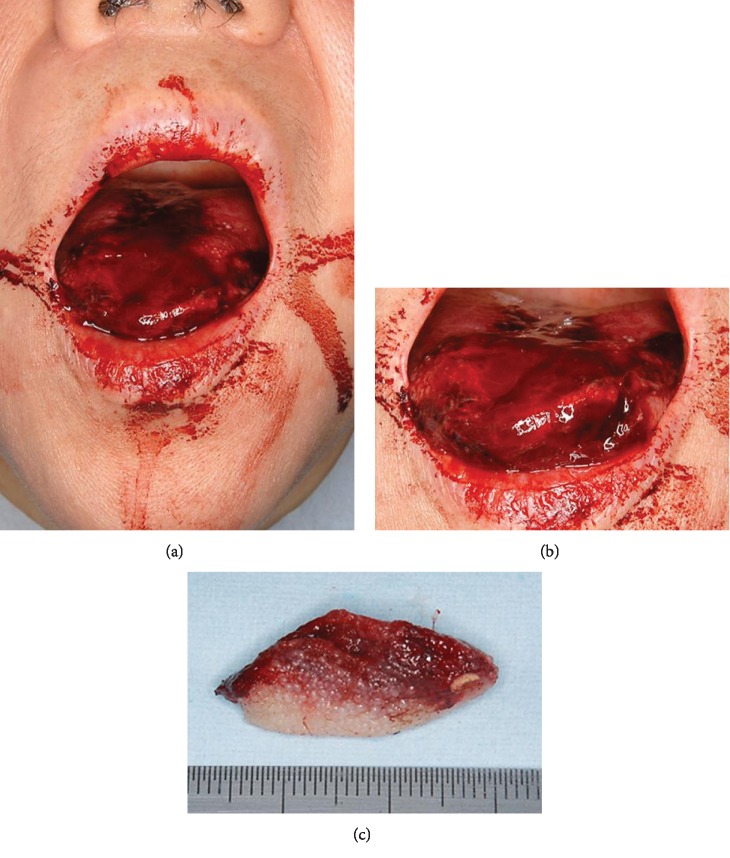
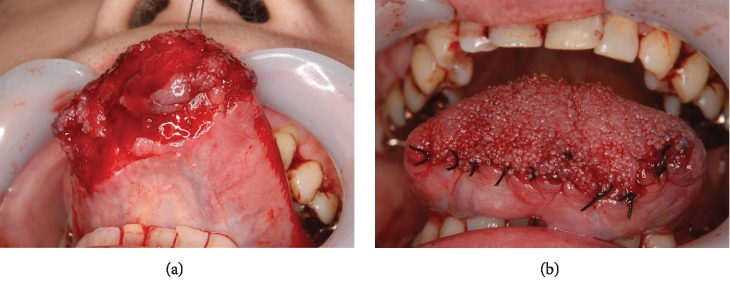
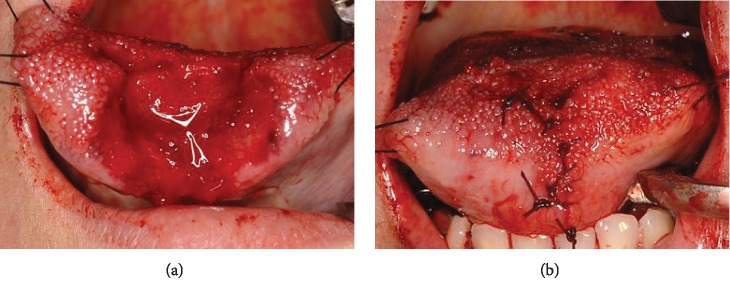
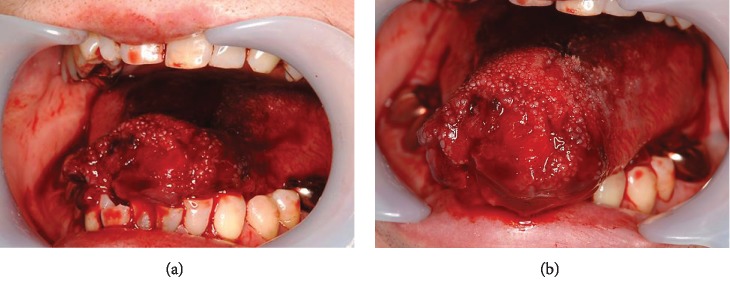
The prevalence of nonsuicidal self-injury (NSSI) in adults is lower than that in adolescents and it is more prevalent in patients with psychiatric disorders. Sleep disturbances such as nightmares are associated with NSSI after accounting for depression; thus, persons with major NSSI sometimes present at medical institutions during the night seeking emergency treatment. Gingival tissues comprise the most frequent target of self-injury of the oral cavity using oral hygiene tools. Most NSSI in the oral cavity is minor because such tools are blunt. Major NSSI such as autoamputation of the tongue is rare. We describe two patients who partially autoamputated the apex of their own tongues using edged tools. Case 1 was a 55-year-old female with depression who had defaulted from psychiatric intervention. She had cut off her tongue using a Japanese kitchen knife and presented with the dry, necrotic amputated portion and blood oozing from the remainder of her tongue. We debrided and sutured the remainder of the tongue without reattaching the amputated portion. Her postoperative course was uneventful, and she was free of adverse events such as functional disability and wound infection. Case 2 was a 69-year-old female with schizophrenia who had defaulted from psychiatric intervention and had cut off her tongue using scissors. The amputated portion of the tongue was lost and the remainder, which was oozing blood, was debrided and sutured. She defaulted on a follow-up appointment. Neither of these patients had suicidal intent. The prevalence of NSSI across all age groups has recently increased, and the risk that self-injury will become normalized has become a concern. Thus, dentists as well as oral and maxillofacial surgeons should be aware of the possibility that patients will present with major NSSI requiring emergency treatment.
成人非自杀性自伤(NSSI)的患病率低于青少年,且在精神疾病患者中更为普遍。在排除抑郁症因素后,诸如噩梦等睡眠障碍与NSSI相关;因此,有严重NSSI的人有时会在夜间前往医疗机构寻求紧急治疗。牙龈组织是使用口腔卫生工具进行口腔自伤最常见的部位。口腔中的大多数NSSI程度较轻,因为此类工具并不锋利。像舌部自切这样的严重NSSI很少见。我们描述了两名使用利器部分自切舌尖的患者。病例1是一名55岁的抑郁症女性,她未接受精神科干预。她用一把日式菜刀切断了自己的舌头,就诊时可见干燥、坏死的断舌部分,舌头其余部分渗血。我们对舌头其余部分进行了清创和缝合,未重新接上断舌部分。她术后恢复顺利,未出现功能障碍和伤口感染等不良事件。病例2是一名69岁的精神分裂症女性,她未接受精神科干预,用剪刀切断了自己的舌头。断舌部分丢失,对渗血的舌头其余部分进行了清创和缝合。她未按预约进行随访。这两名患者均无自杀意图。近年来,各年龄组NSSI的患病率均有所上升,自伤行为常态化的风险已成为一个关注点。因此,牙医以及口腔颌面外科医生应意识到患者可能会出现需要紧急治疗的严重NSSI情况。