Nicholas School of the Environment, Duke University, Durham, North Carolina, United States of America.
State Key Laboratory of Estuarine and Coastal Research, East China Normal University, Shanghai, China.
PLoS One. 2020 Mar 9;15(3):e0229962. doi: 10.1371/journal.pone.0229962. eCollection 2020.
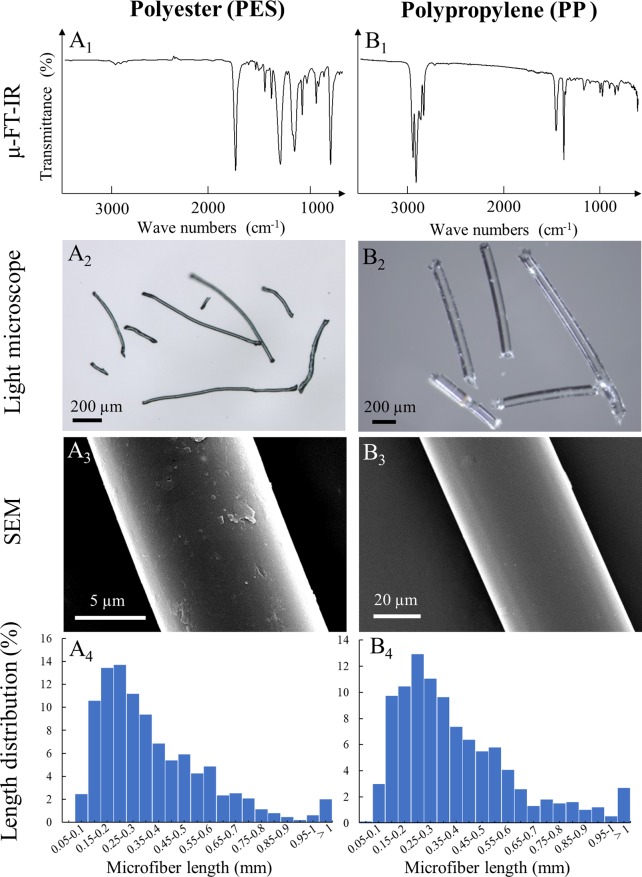
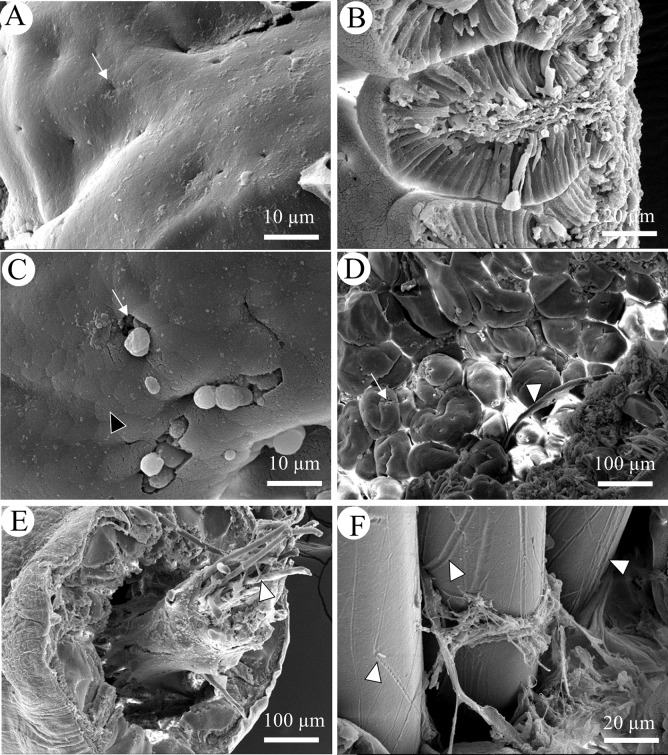
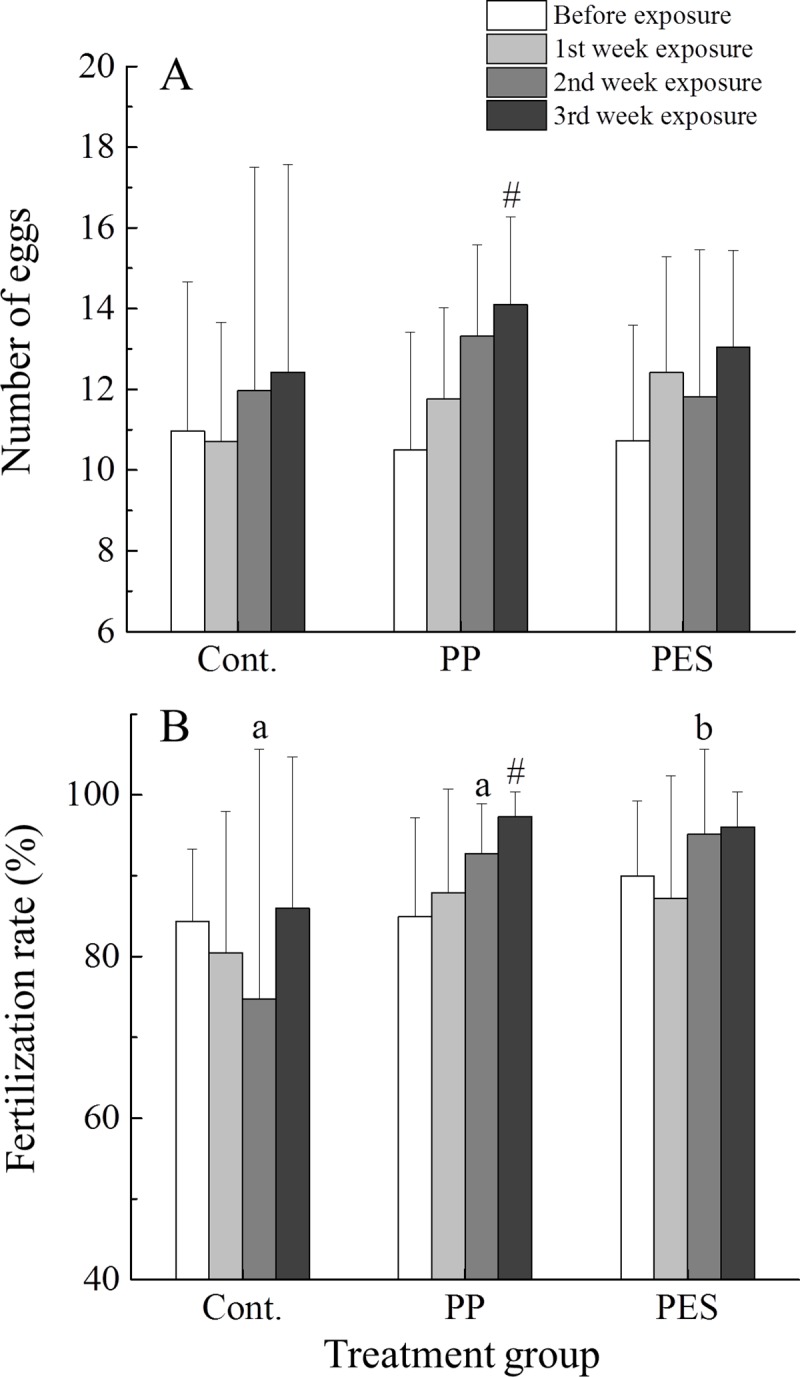
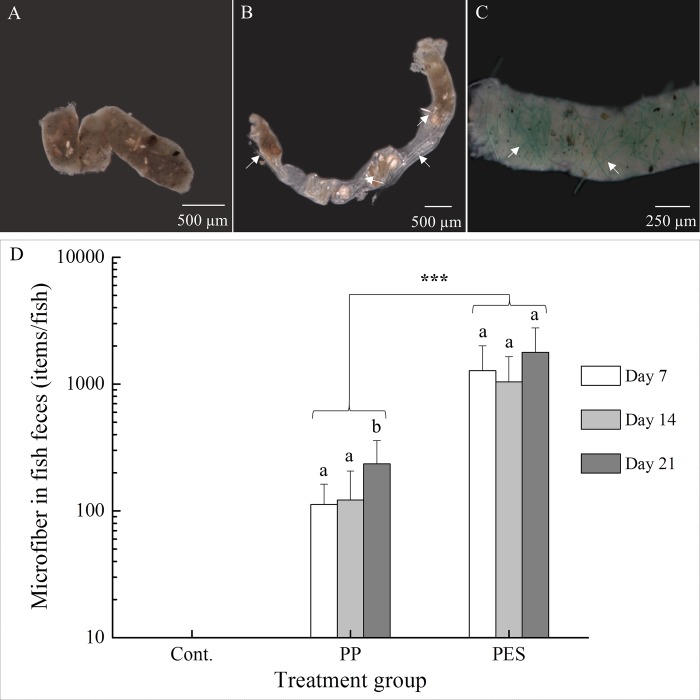
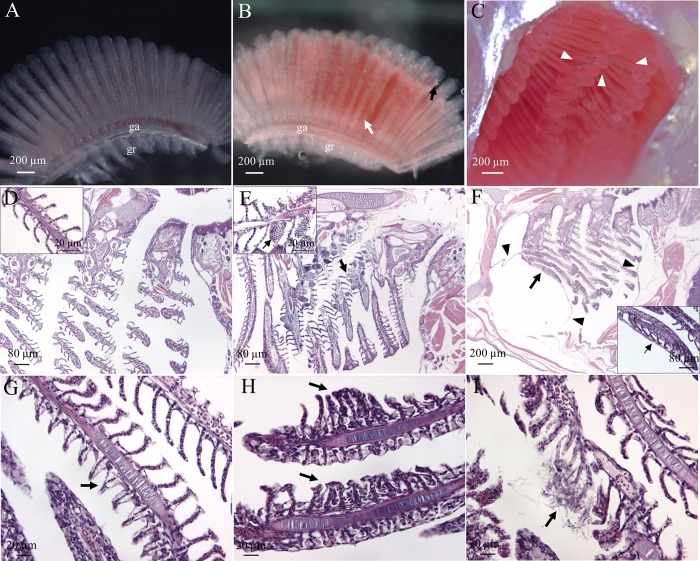
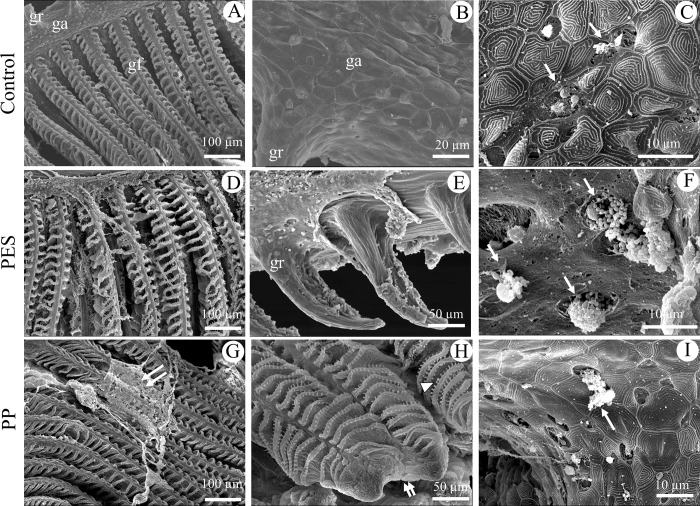
Microplastic fibers (MFs) pollute aquatic habitats globally via sewage release, stormwater runoff, or atmospheric deposition. Of the synthetic MFs, polyester (PES) and polypropylene (PP) are the most common. Field studies show that fish ingest large quantities of MFs. However, few laboratory studies have addressed host responses, particularly at the organ and tissue levels. Adult Japanese medaka (Oryzias latipes), a laboratory model fish, were exposed to aqueous concentrations of PES or PP MFs (10,000 MFs/L) for 21 days. Medaka egested 1,367 ± 819 PES MFs (0.1 ± 0.04 mg) and 157 ± 105 PP MFs (1.4 ± 0.06 mg) per 24 hrs, with PP egestion increasing over time. Exposure did not result in changes in body condition, gonadosomatic- or hepatosomatic indices. PES exposure resulted in no reproductive changes, but females exposed to PP MFs produced more eggs over time. MF exposure did not affect embryonic mortality, development, or hatching. Scanning electron microscopy (SEM) of gills revealed denuding of epithelium on arches, fusion of primary lamellae, and increased mucus. Histologic sections revealed aneurysms in secondary lamellae, epithelial lifting, and swellings of inner opercular membrane that altered morphology of rostral most gill lamellae. SEM and histochemical analyses showed increased mucous cells and secretions on epithelium of foregut; however, overt abrasions with sloughing of cells were absent. For these reasons, increased focus at the tissue and cell levels proved necessary to appreciate toxicity associated with MFs.
微塑料纤维(MFs)通过污水排放、雨水径流或大气沉降等方式在全球范围内污染水生栖息地。在合成 MFs 中,聚酯(PES)和聚丙烯(PP)最为常见。野外研究表明,鱼类会摄入大量的 MFs。然而,很少有实验室研究涉及宿主的反应,特别是在器官和组织水平上。成年日本青鳉(Oryzias latipes),一种实验室模式鱼类,被暴露在 PES 或 PP MFs 的水溶液浓度中(10000 MFs/L)21 天。青鳉每 24 小时排出 1367 ± 819 个 PES MF(0.1 ± 0.04mg)和 157 ± 105 个 PP MF(1.4 ± 0.06mg),随着时间的推移,PP 的排出量增加。暴露没有导致身体状况、性腺体或肝体指数的变化。PES 暴露没有导致生殖变化,但暴露于 PP MFs 的雌性鱼类随着时间的推移产生了更多的卵子。MF 暴露不会影响胚胎死亡率、发育或孵化。鳃的扫描电子显微镜(SEM)显示,拱架上皮细胞脱落,初级鳃瓣融合,黏液增多。组织学切片显示次级鳃瓣的动脉瘤、上皮抬起和内鳃盖膜肿胀,改变了最前端鳃瓣的形态。SEM 和组织化学分析显示,前肠上皮的黏液细胞和分泌物增多;然而,没有明显的磨损和细胞脱落。因此,有必要在组织和细胞水平上更加关注,以了解与 MFs 相关的毒性。