Lee Jie, Lin Jhen-Bin, Wu Meng-Hao, Chang Chih-Long, Jan Ya-Ting, Chen Yu-Jen
Department of Radiation Oncology, MacKay Memorial Hospital, Taipei 104215, Taiwan.
Department of Medicine, MacKay Medical College, Taipei 252005, Taiwan.
Cancers (Basel). 2020 Mar 5;12(3):595. doi: 10.3390/cancers12030595.
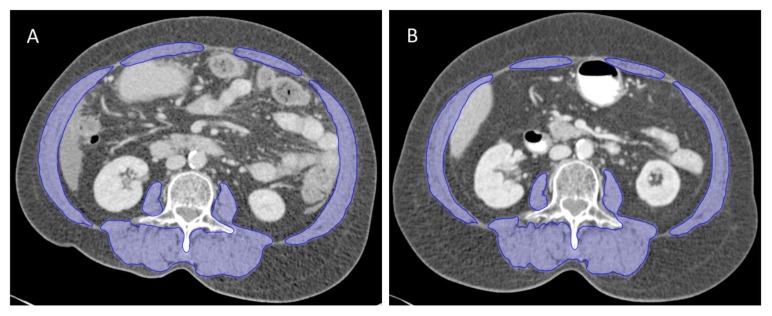
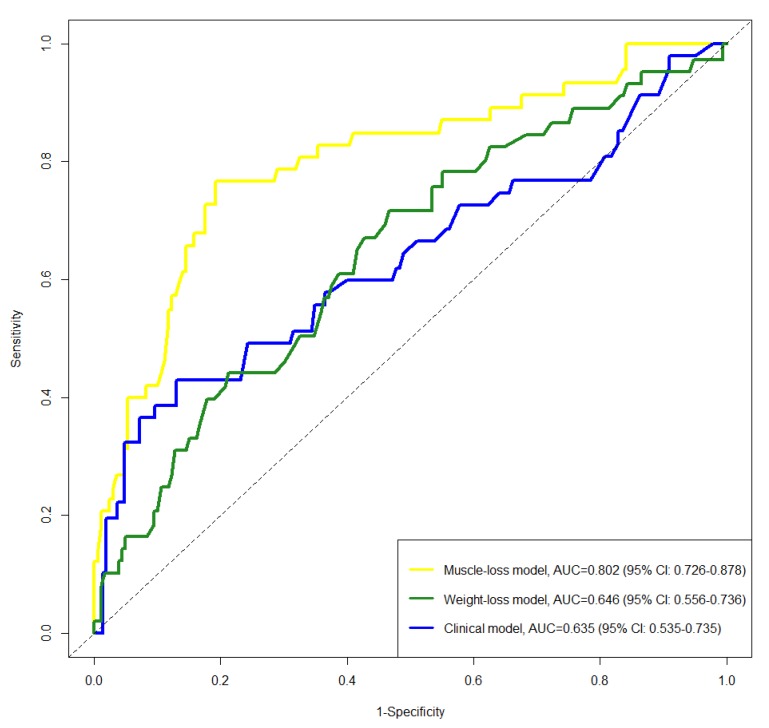
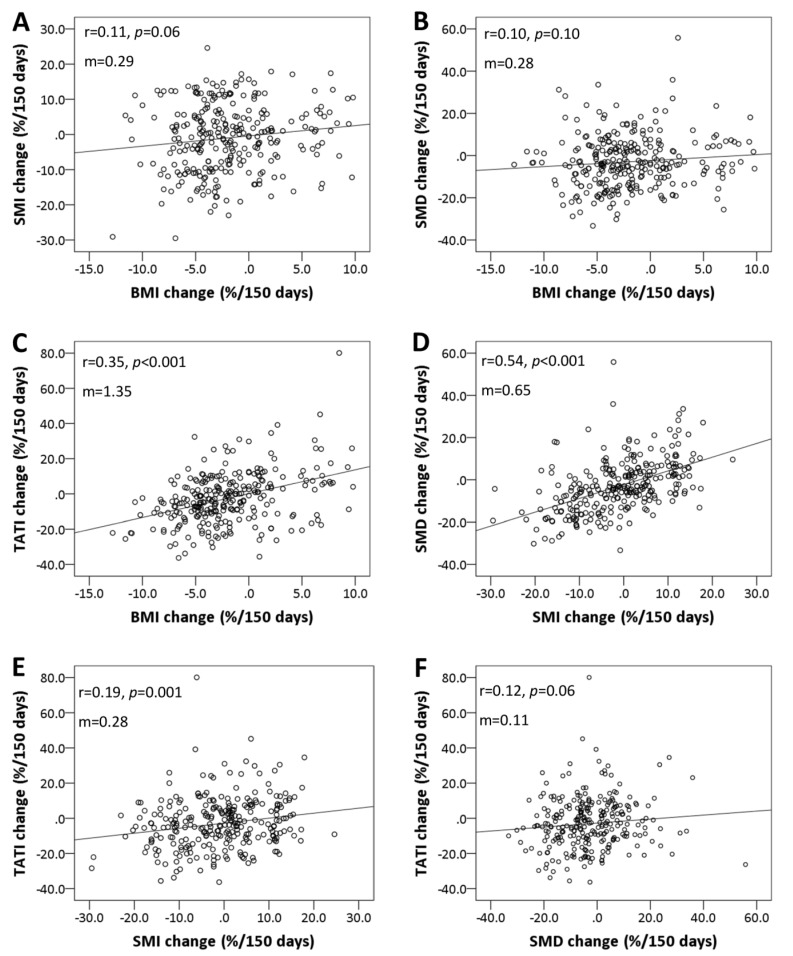
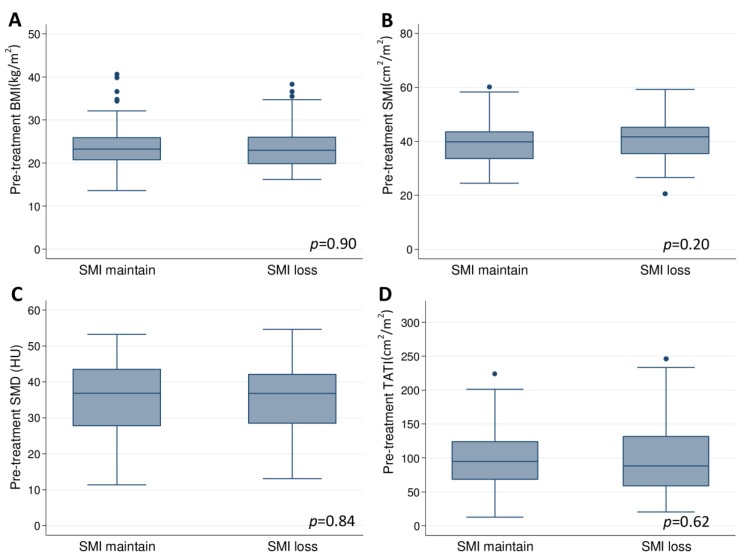
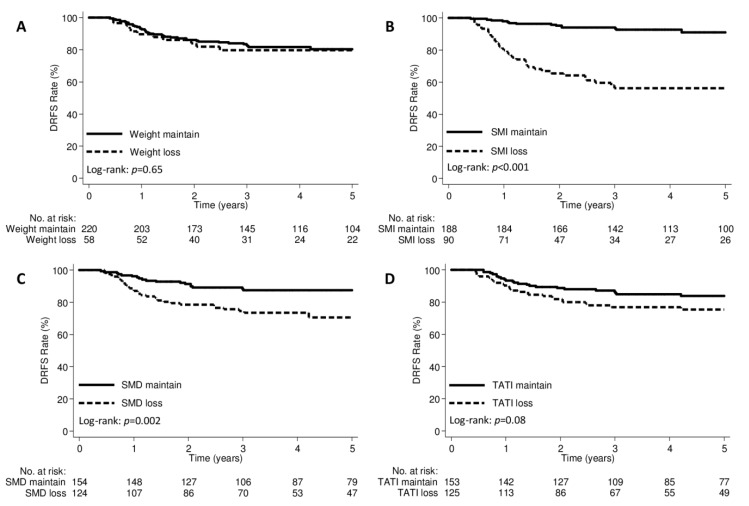
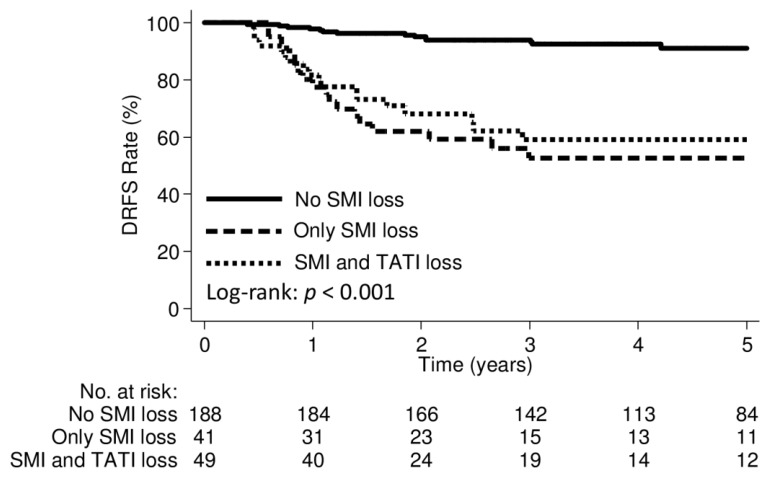
This study aimed to evaluate whether computed tomography (CT)-based muscle measurement predicts distant failure in patients with locally advanced cervical cancer (LACC). Data from 278 patients with LACC who underwent chemoradiation therapy (CCRT) between 2004 and 2017 were analysed. Changes in the skeletal muscle index (SMI), skeletal muscle density, and total adipose tissue index during CCRT were calculated from CT images taken at the baseline and after CCRT. The predictive capability of CT-based muscle measurement for distant failure was evaluated using Cox proportional hazards regression, Harrell's concordance index (C-index), and time-dependent receiver operating characteristic curves. SMI loss ≥ 5% was independently associated with worse distant recurrence-free survival (DRFS) (HR: 6.31, 95% CI: 3.18-12.53; < 0.001). The addition of muscle change to clinical models, including International Federation of Gynaecology and Obstetrics (FIGO) stage, lymph nodes, pathology, and squamous cell carcinoma-antigen, achieved higher C-indices (0.824 vs. 0.756; < 0.001). Models including muscle change had superior C-indices than those including weight change (0.824 vs. 0.758; < 0.001). The area under the curve for predicting 3-year DRFS was the highest for the muscle-loss model (0.802, muscle-loss model; 0.635, clinical model; and 0.646, weight-loss model). Our study demonstrated that muscle loss after CCRT was independently associated with worse DRFS and that integrating muscle loss into models including classical prognostic factors improved the prediction of distant failure.
本研究旨在评估基于计算机断层扫描(CT)的肌肉测量能否预测局部晚期宫颈癌(LACC)患者的远处失败情况。分析了2004年至2017年间接受放化疗(CCRT)的278例LACC患者的数据。根据基线和CCRT后拍摄的CT图像计算CCRT期间骨骼肌指数(SMI)、骨骼肌密度和总脂肪组织指数的变化。使用Cox比例风险回归、Harrell一致性指数(C指数)和时间依赖性受试者工作特征曲线评估基于CT的肌肉测量对远处失败的预测能力。SMI损失≥5%与较差的远处无复发生存期(DRFS)独立相关(HR:6.31,95%CI:3.18 - 12.53;<0.001)。将肌肉变化纳入临床模型,包括国际妇产科联合会(FIGO)分期、淋巴结、病理和鳞状细胞癌抗原,可获得更高的C指数(0.824对0.756;<0.001)。包括肌肉变化的模型比包括体重变化的模型具有更高的C指数(0.824对0.758;<0.001)。肌肉损失模型预测3年DRFS的曲线下面积最高(0.802,肌肉损失模型;0.635,临床模型;0.646,体重减轻模型)。我们的研究表明,CCRT后肌肉损失与较差的DRFS独立相关,并且将肌肉损失纳入包括经典预后因素的模型中可改善对远处失败的预测。