Excellence Center for Cornea and Limbal Stem Cell Transplantation, Department of Ophthalmology, King Chulalongkorn Memorial Hospital, Bangkok, Thailand.
Center of Excellence for Cornea and Stem Cell Transplantation, Faculty of Medicine, Chulalongkorn University, Bangkok, Thailand.
Sci Rep. 2020 Mar 9;10(1):4353. doi: 10.1038/s41598-020-60794-w.
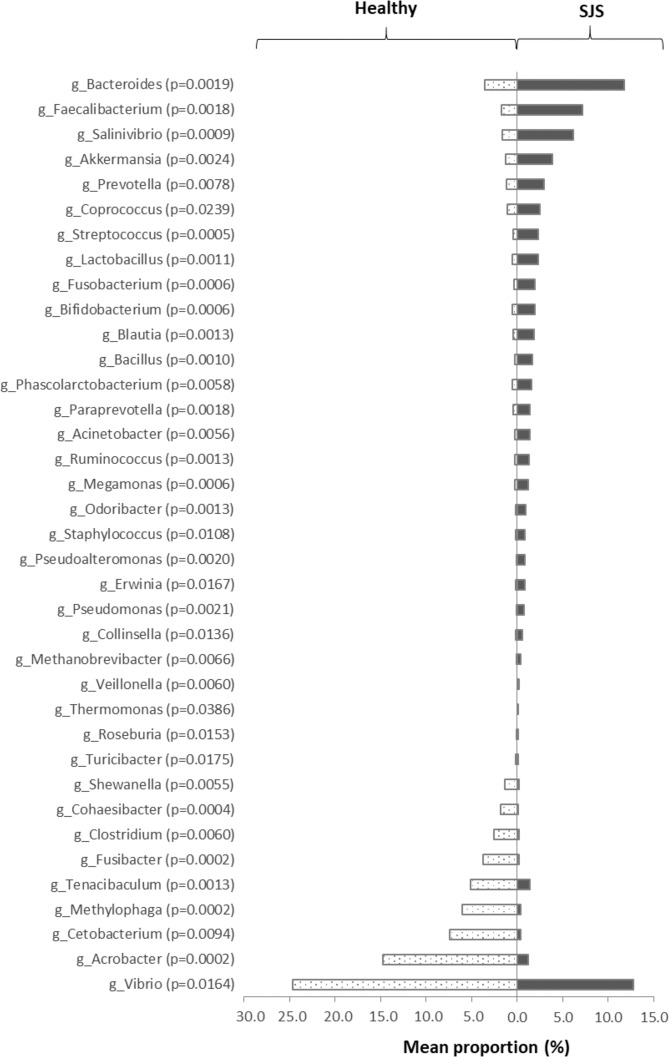
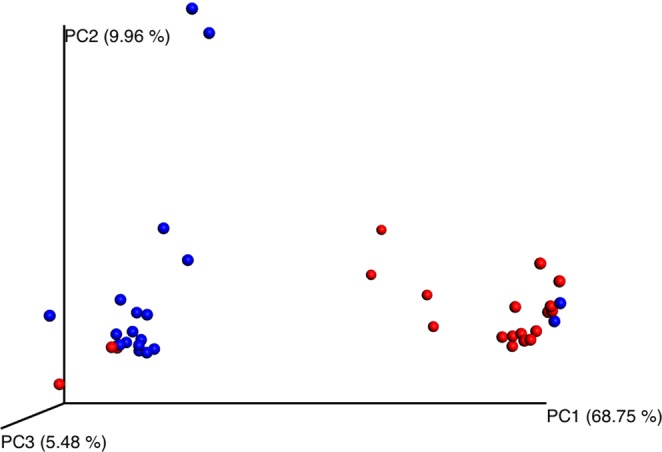
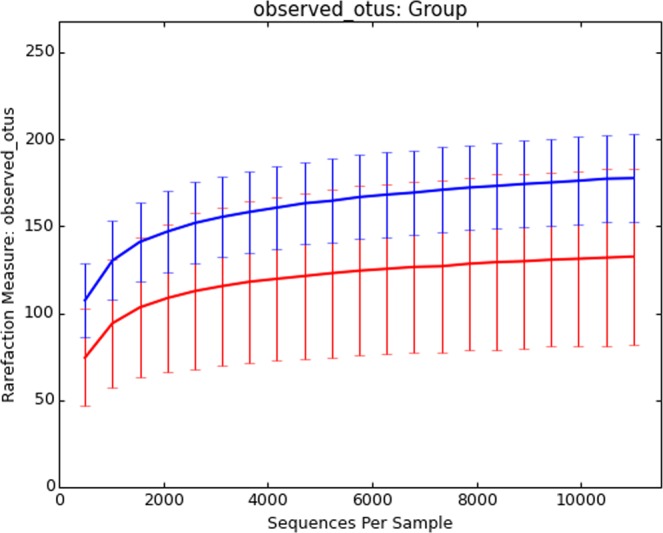
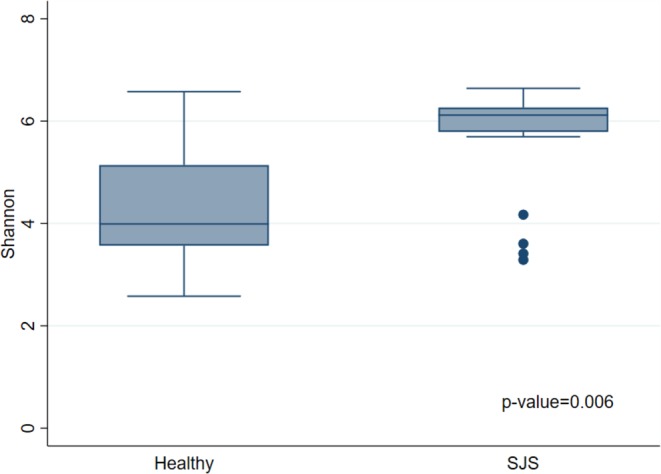
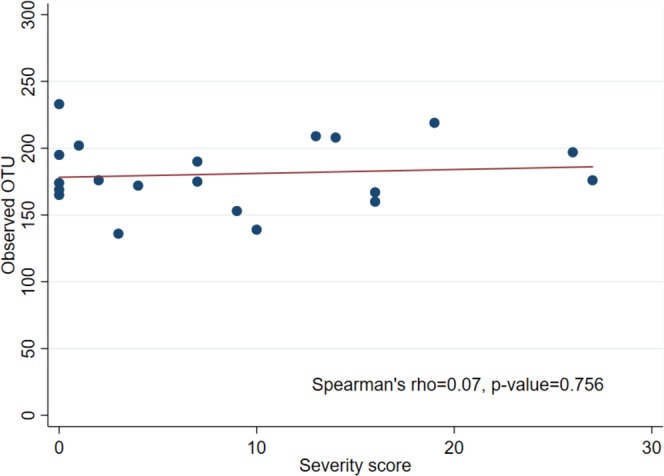
Stevens - Johnson syndrome (SJS) has manifestation through the exfoliation of epidermis and mucosal tissue. Ocular surface is usually affected in acute and chronic stage. The patients are usually suffered from chronic ocular sequelae including symblepharon, limbal stem cell deficiency, etc. Furthermore, ocular microbiome may also be altered in SJS. This is prospective, age and sex matched analytical study which including 20 chronic SJS patients and 20 healthy subjects for specimen collection from inferior conjunctiva for microbiome analysis by conventional cultures and Next-Generation Sequencing (NGS) methods. Significant higher proportion of positive-cultured specimen was demonstrated in SJS group (SJS group 60%, healthy 10%, p-value = 0.001). In addition, NGS which providing high-throughput sequencing has demonstrated the greater diversity of microbial species. The higher proportion of pathogenic microorganisms including Pseudomonas spp., Staphylococcus spp., Streptococcus spp., Acinetobacter spp. was shown in SJS group. Ocular surface in SJS is usually occupied by more diverse microorganisms with increased proportion of pathogenic species. This condition may affect chronic inflammation and opportunistic infections in SJS group. In order to prevent and treat infection in these patients, appropriate antibiotics based on bacterial examination should be considered as the first-line treatment in the SJS patients.
史蒂文斯-约翰逊综合征(SJS)表现为表皮和黏膜组织的脱落。眼表通常在急性期和慢性期受到影响。患者通常患有慢性眼部后遗症,包括睑球粘连、角膜缘干细胞缺乏等。此外,SJS 患者的眼微生物组也可能发生改变。这是一项前瞻性、年龄和性别匹配的分析研究,纳入了 20 例慢性 SJS 患者和 20 例健康对照者,从下结膜采集标本,通过常规培养和下一代测序(NGS)方法进行微生物组分析。SJS 组阳性培养标本的比例明显更高(SJS 组 60%,健康对照组 10%,p 值=0.001)。此外,高通量测序的 NGS 显示微生物种类的多样性更高。SJS 组中显示出更高比例的致病性微生物,包括假单胞菌、葡萄球菌、链球菌、不动杆菌。SJS 组的眼表通常被更多样化的微生物占据,致病性物种的比例增加。这种情况可能会影响 SJS 组的慢性炎症和机会性感染。为了预防和治疗这些患者的感染,应根据细菌检查结果考虑适当的抗生素作为 SJS 患者的一线治疗。