Ayub Mahnoor, Hermiz Mariam, Lange Angela B, Orchard Ian
Department of Biology, University of Toronto Mississauga, Mississauga, ON, Canada.
Front Neurosci. 2020 Feb 21;14:134. doi: 10.3389/fnins.2020.00134. eCollection 2020.
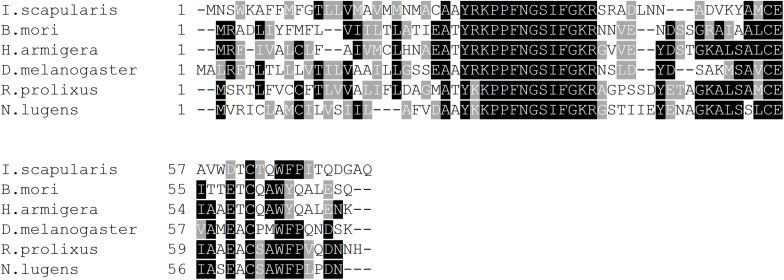
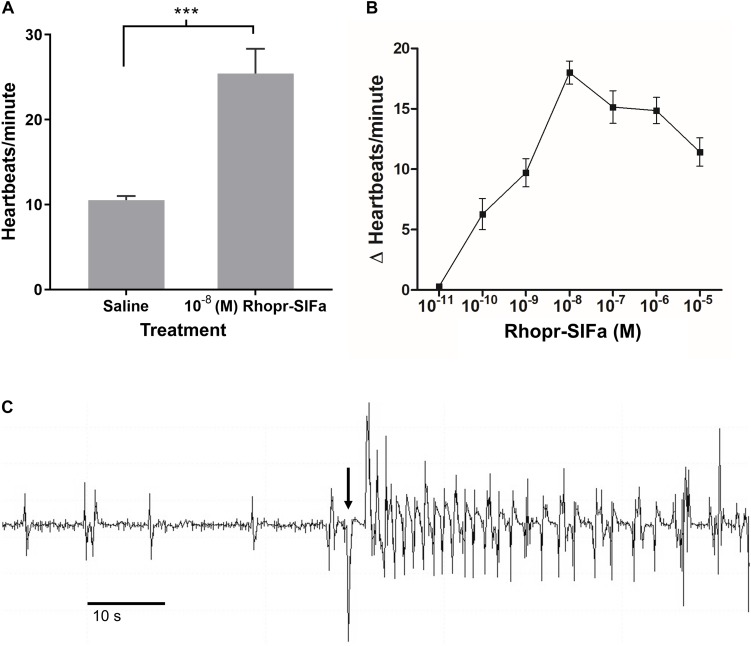
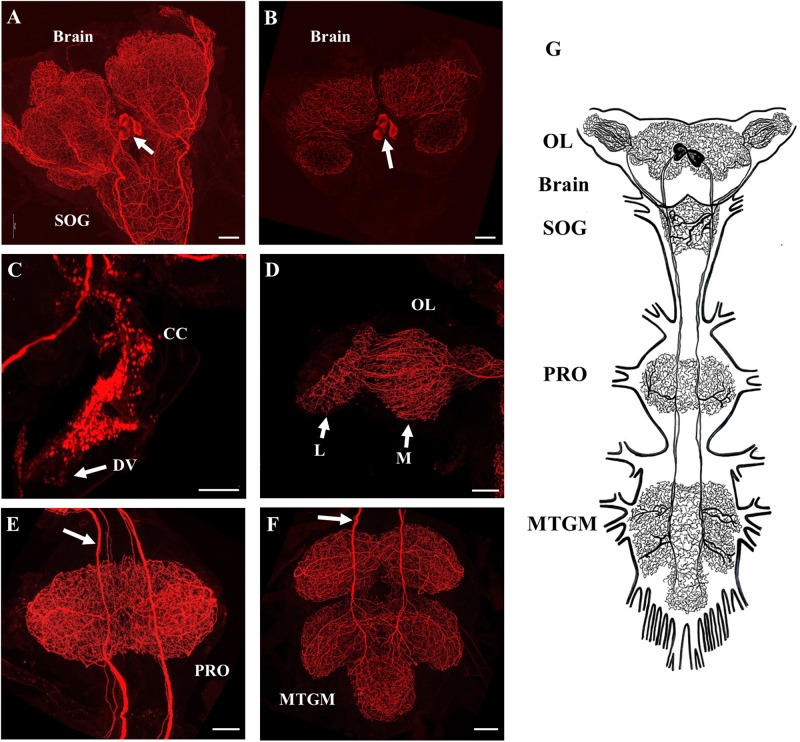
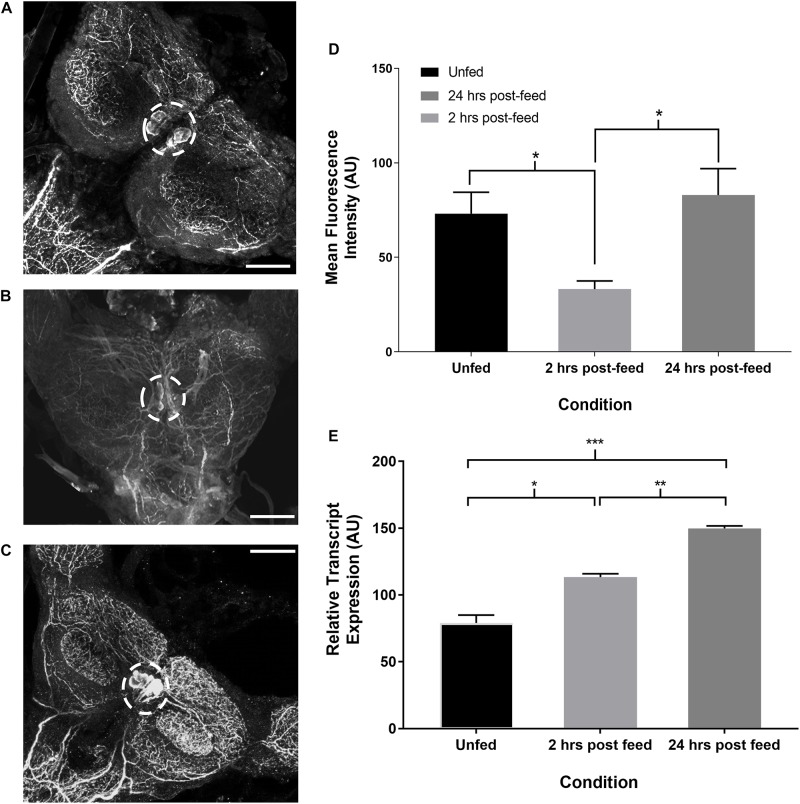
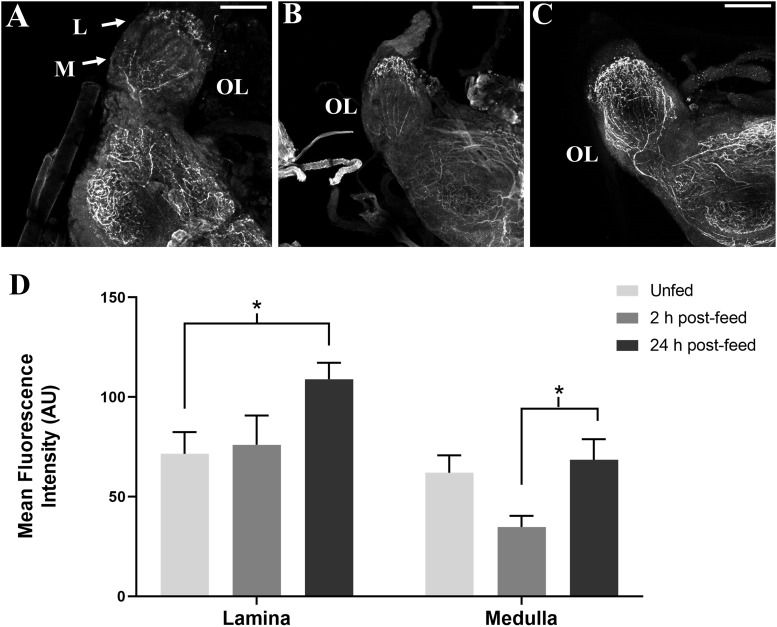
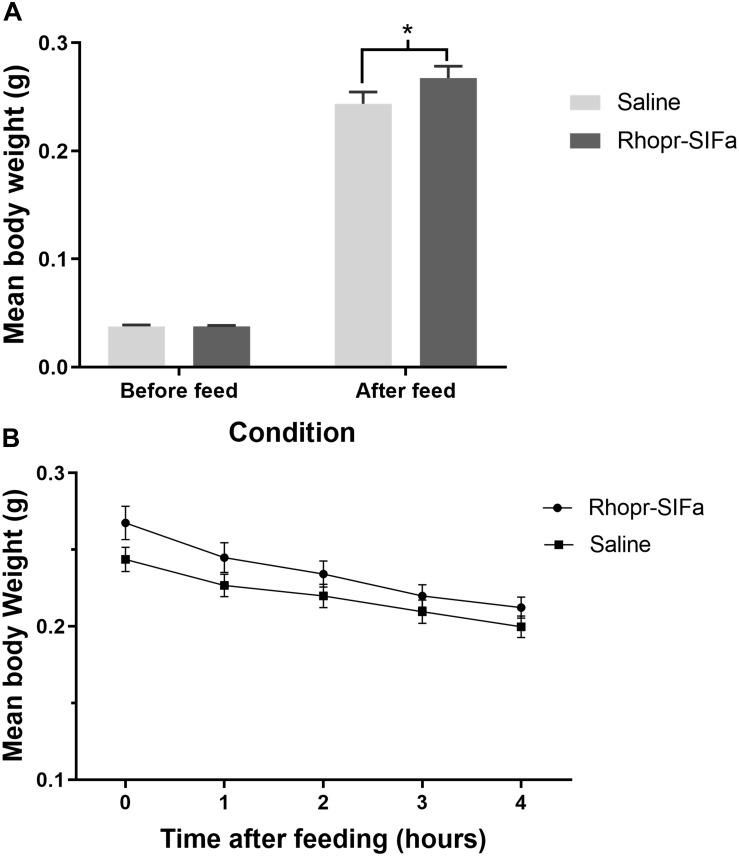
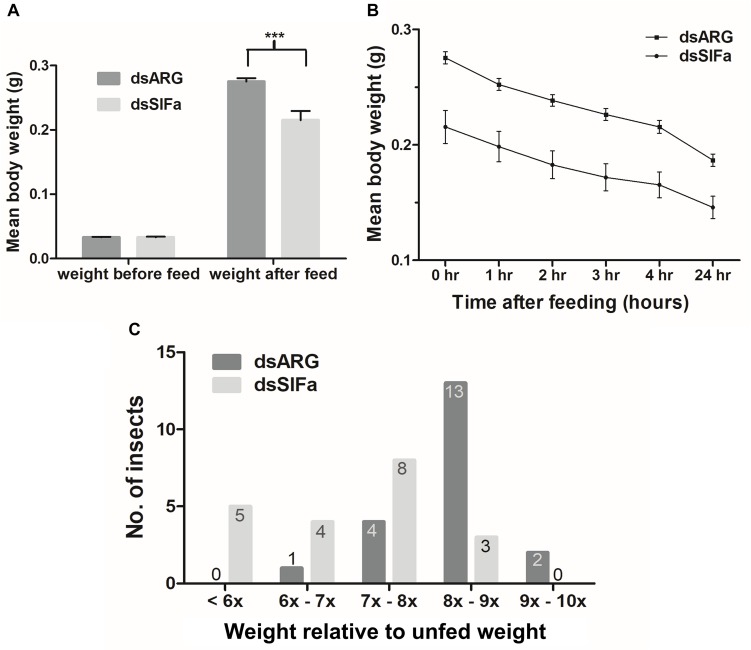
SIFamides are a family of highly conserved neuropeptides in arthropods, and in insects are mainly expressed in four medial neurons in the pars intercerebralis of the brain. Although SIFamide has been shown to influence sexual behavior, feeding, and sleep regulation in holometabolous insects such as , little is known about its role in hemimetabolous insects, including the blood-sucking bug, In this study, we confirm the nucleotide sequence for SIFamide (Rhopr-SIFa) and find characteristic phenotypic expression of SIFamide in four cells of the pars intercerebralis in the brain. In addition to extensive SIFa projections throughout the entire central nervous system, SIFamidergic processes also enter into the corpus cardiacum, and project along the dorsal vessel, suggestive of Rhopr-SIFa acting as a neurohormone. Physiologically, Rhopr-SIFamide induces dose-dependent increases in heartbeat frequency suggesting the presence of peripheral receptors, and thereby indicating Rhopr-SIFa is released to act upon peripheral targets. We also explore the function of Rhopr-SIFa in , specifically in relation to feeding, since is a blood-gorging insect and a vector for Chagas disease. The intensity of SIFamide-like staining in the neurons in the brain is diminished 2 h following feeding, and restocking of those cells is finished 24 h later, indicating Rhopr-SIFa may be released at feeding. The results of temporal qPCR analysis were consistent with the immunohistochemical findings, showing an increase in Rhopr-SIFa transcript expression in the brain 2 h after feeding. We also observed enhanced feeding (size of meal) in insects injected with Rhopr-SIFa whereas insects with RNAi-mediated knockdown of the Rhopr-SIFa transcript consumed a significantly smaller blood meal relative to controls. These data suggest that the four SIFamidergic neurons and associated arborizations may play an important function in the neuronal circuitry controlling feeding, with Rhopr-SIFa acting as a central and peripheral neuromodulator/neurohormone.
SIFamides是节肢动物中一类高度保守的神经肽,在昆虫中主要表达于脑间叶的四个中间神经元。虽然已表明SIFamide会影响全变态昆虫(如 )的性行为、进食和睡眠调节,但对于其在包括吸血臭虫在内的半变态昆虫中的作用却知之甚少。在本研究中,我们确定了SIFamide(Rhopr-SIFa)的核苷酸序列,并在脑间叶的四个细胞中发现了SIFamide的特征性表型表达。除了在整个中枢神经系统中有广泛的SIFa投射外,SIFamidergic神经突起还进入心侧体,并沿背血管投射,提示Rhopr-SIFa作为一种神经激素发挥作用。在生理上,Rhopr-SIFamide会引起心跳频率呈剂量依赖性增加,表明存在外周受体,从而说明Rhopr-SIFa会释放出来作用于外周靶点。我们还探究了Rhopr-SIFa在 中的功能,特别是与进食相关的功能,因为 是一种吸血昆虫且是恰加斯病的传播媒介。进食后2小时,脑中神经元中SIFamide样染色的强度减弱,这些细胞的重新填充在24小时后完成,表明Rhopr-SIFa可能在进食时释放。实时定量PCR分析结果与免疫组织化学结果一致,显示进食后2小时脑中Rhopr-SIFa转录本表达增加。我们还观察到,注射了Rhopr-SIFa的昆虫进食量增加(餐量大小),而RNA干扰介导的Rhopr-SIFa转录本敲低的昆虫相对于对照组摄取的血餐量显著更小。这些数据表明,四个SIFamidergic神经元及相关分支可能在控制 进食的神经回路中发挥重要作用,Rhopr-SIFa作为一种中枢和外周神经调节剂/神经激素。