Wei Tingting, Shu Qi, Ning Jie, Wang Shuaijie, Li Chen, Zhao Liangcai, Zheng Hong, Gao Hongchang
School of Pharmaceutical Sciences, Wenzhou Medical University, Wenzhou, China.
Laboratory Animal Centre, Wenzhou Medical University, Wenzhou, China.
Front Pharmacol. 2020 Feb 21;11:66. doi: 10.3389/fphar.2020.00066. eCollection 2020.
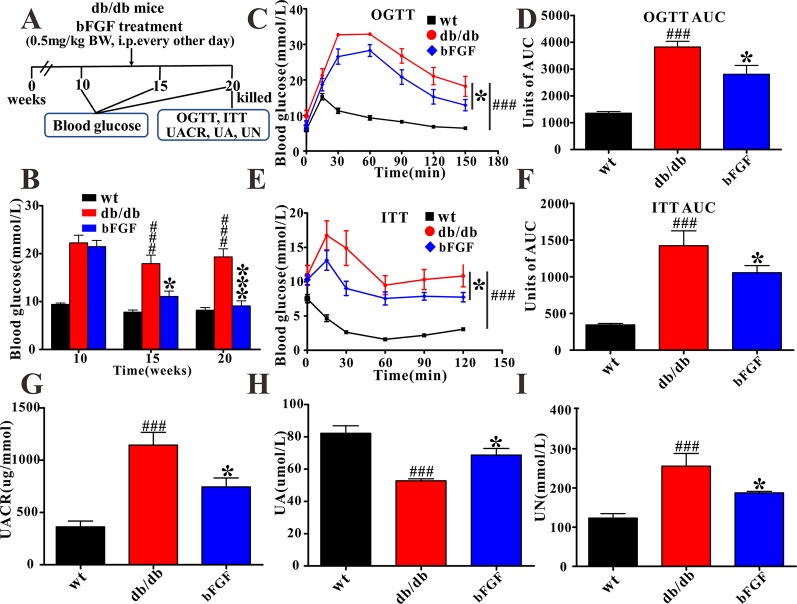
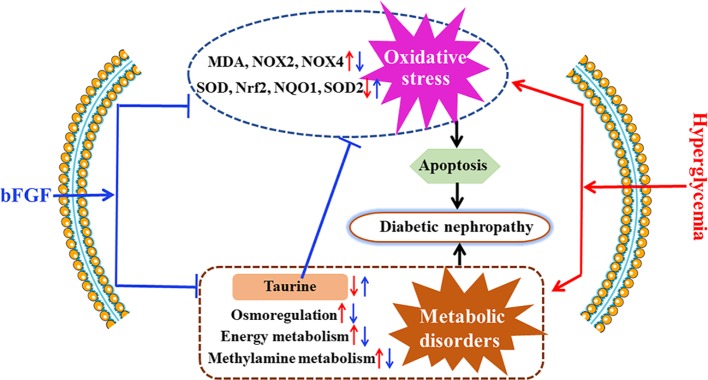
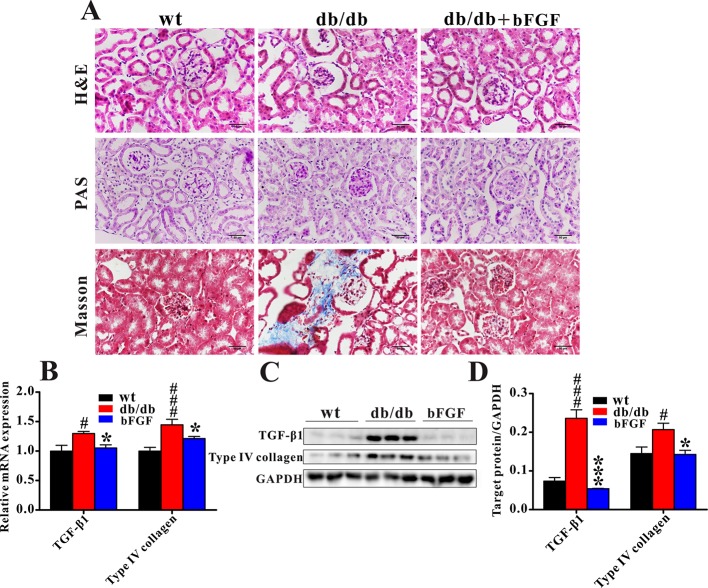
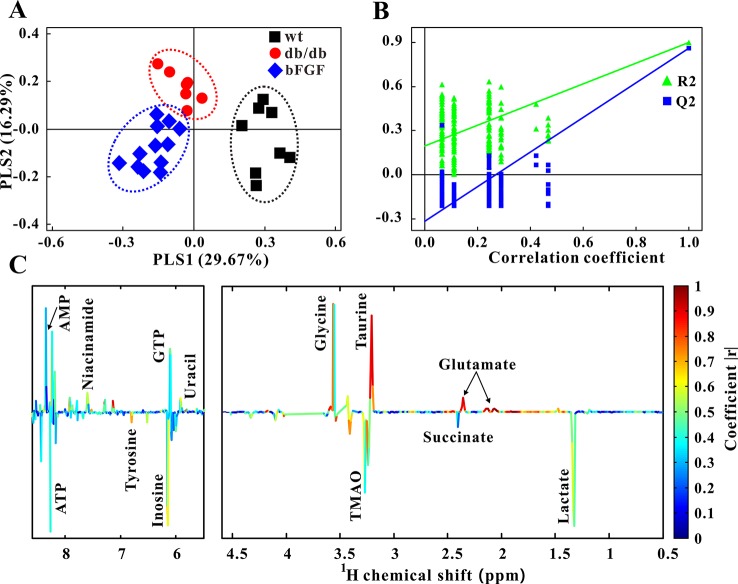
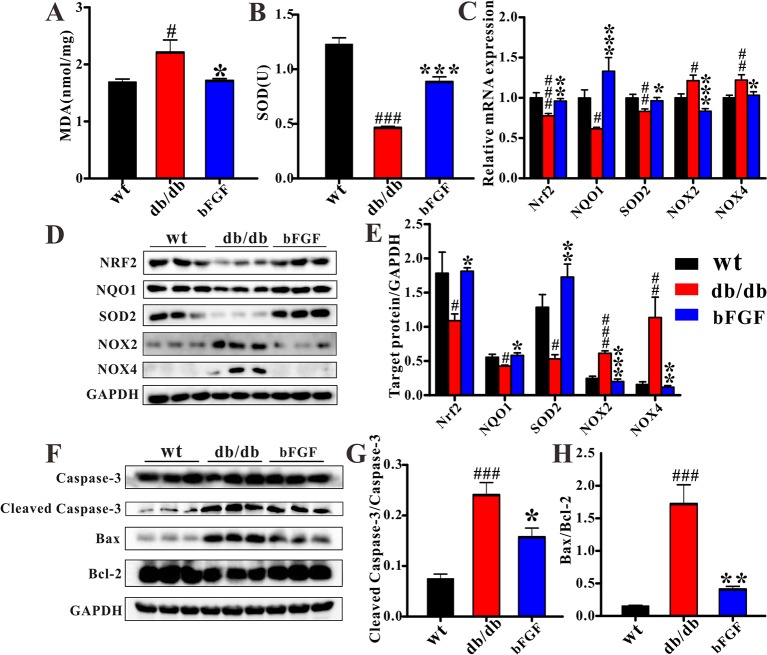
Diabetic nephropathy is a common complication in diabetes, but still lack of effective therapeutic strategies. This study aimed to investigate the therapeutic effect of basic fibroblast growth factor (bFGF) in mice with diabetic nephropathy and explore its possible metabolic mechanisms using a nuclear magnetic resonance-based metabolomic approach. We found that bFGF treatment significantly alleviate urinary albumin to creatinine ratio and renal fibrosis in mice, suggesting a potential renal protective effect. Metabolomics results reveal that bFGF remodeled metabolic phenotypes of the kidney and urine in mice, mainly involving energy metabolism, methylamine metabolism, osmoregulation, and oxidative stress. Furthermore, the results show that bFGF-induced reductions of oxidative stress and apoptosis in mice might be mediated by NOX-ROS-Nrf2 signaling. Therefore, our study suggests that the protective effect of bFGF on diabetic nephropathy could be mediated by remodeling metabolic phenotype and suppressing oxidative stress.
糖尿病肾病是糖尿病常见的并发症,但仍缺乏有效的治疗策略。本研究旨在探讨碱性成纤维细胞生长因子(bFGF)对糖尿病肾病小鼠的治疗效果,并采用基于核磁共振的代谢组学方法探索其可能的代谢机制。我们发现,bFGF治疗可显著降低小鼠尿白蛋白与肌酐比值并减轻肾纤维化,提示其具有潜在的肾脏保护作用。代谢组学结果显示,bFGF重塑了小鼠肾脏和尿液的代谢表型,主要涉及能量代谢、甲胺代谢、渗透调节和氧化应激。此外,结果表明,bFGF诱导的小鼠氧化应激和细胞凋亡减少可能由NOX-ROS-Nrf2信号介导。因此,我们的研究表明,bFGF对糖尿病肾病具有保护作用,其机制可能是通过重塑代谢表型和抑制氧化应激来实现的。