Centre de Recherche de l'Hôpital Maisonneuve-Rosemont, Montréal, QC, Canada.
Département de Médecine, Université de Montréal, Montréal, QC, Canada.
Front Immunol. 2020 Feb 21;11:276. doi: 10.3389/fimmu.2020.00276. eCollection 2020.
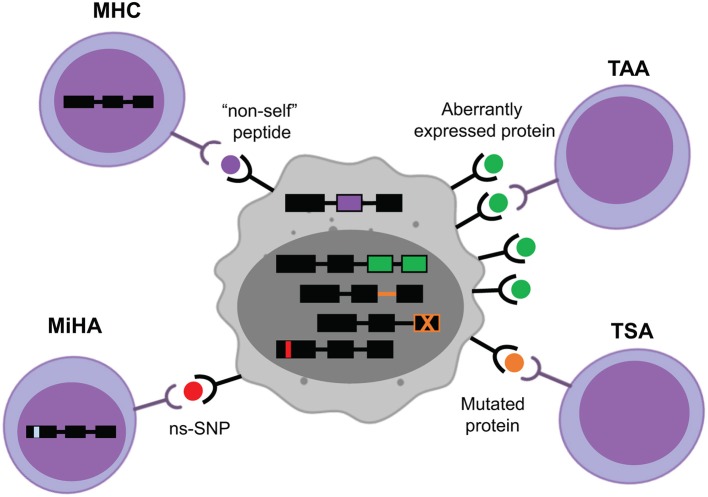
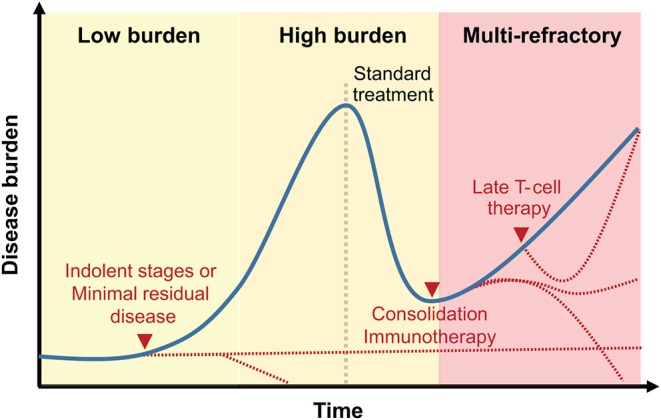
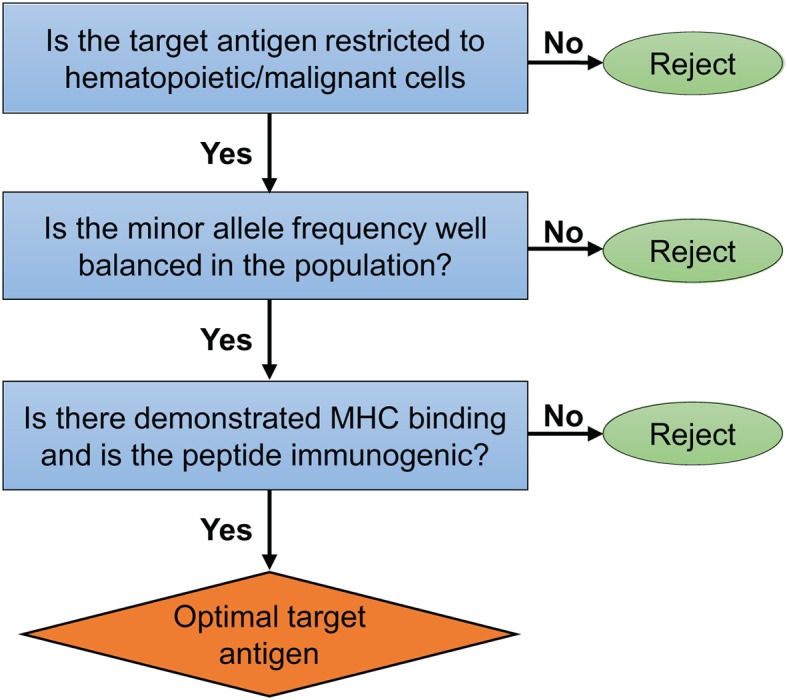
Over the last decades, T-cell immunotherapy has revealed itself as a powerful, and often curative, strategy to treat blood cancers. In hematopoietic cell transplantation, most of the so-called graft-vs.-leukemia (GVL) effect hinges on the recognition of histocompatibility antigens that reflect immunologically relevant genetic variants between donors and recipients. Whether other variants acquired during the neoplastic transformation, or the aberrant expression of gene products can yield antigenic targets of similar relevance as the minor histocompatibility antigens is actively being pursued. Modern genomics and proteomics have enabled the high throughput identification of candidate antigens for immunotherapy in both autologous and allogeneic settings. As such, these major histocompatibility complex-associated tumor-specific (TSA) and tumor-associated antigens (TAA) can allow for the targeting of multiple blood neoplasms, which is a limitation for other immunotherapeutic approaches, such as chimeric antigen receptor (CAR)-modified T cells. We review the current strategies taken to translate these discoveries into T-cell therapies and propose how these could be introduced in clinical practice. Specifically, we discuss the criteria that are used to select the antigens with the greatest therapeutic value and we review the various T-cell manufacturing approaches in place to either expand antigen-specific T cells from the native repertoire or genetically engineer T cells with minor histocompatibility antigen or TSA/TAA-specific recombinant T-cell receptors. Finally, we elaborate on the current and future incorporation of these therapeutic T-cell products into the treatment of hematological malignancies.
在过去的几十年中,T 细胞免疫疗法已被证明是一种强大的、常常是治愈性的策略,可用于治疗血液癌症。在造血细胞移植中,所谓的移植物抗白血病(GVL)效应主要取决于对组织相容性抗原的识别,这些抗原反映了供体和受者之间免疫相关的遗传变异。其他在肿瘤转化过程中获得的变异,或基因产物的异常表达是否能产生与次要组织相容性抗原具有类似相关性的抗原靶标,这一点正在积极研究中。现代基因组学和蛋白质组学使我们能够在自体和同种异体环境中高通量鉴定用于免疫治疗的候选抗原。因此,这些主要组织相容性复合体相关的肿瘤特异性(TSA)和肿瘤相关抗原(TAA)可用于靶向多种血液肿瘤,这是其他免疫治疗方法(如嵌合抗原受体(CAR)修饰的 T 细胞)的一个局限性。我们回顾了将这些发现转化为 T 细胞疗法所采取的当前策略,并提出了如何将其引入临床实践。具体来说,我们讨论了用于选择具有最大治疗价值的抗原的标准,并回顾了现有的各种 T 细胞制造方法,这些方法要么从天然库中扩增抗原特异性 T 细胞,要么对 T 细胞进行基因工程改造,使其带有微小组织相容性抗原或 TSA/TAA 特异性重组 T 细胞受体。最后,我们详细阐述了这些治疗性 T 细胞产品目前和未来在血液恶性肿瘤治疗中的应用。