Casperson Shanon L, Hall Clint, Roemmich James N
USDA, Agricultural Research Service, Grand Forks Human Nutrition Research Center, 2420 2nd Ave. North, Grand Forks, ND 58203-9034 USA.
BMC Nutr. 2017 Jul 21;3:49. doi: 10.1186/s40795-017-0170-2. eCollection 2017.
The macronutrient composition of the diet may play a more important role in maintaining a healthy body weight and preventing obesity than previously thought. The primary goal of this research was to determine the extent to which the simple addition of a small serving of a sugar-sweetened beverage (SSB) to meals with different macronutrient compositions impacts appetite, energy metabolism and substrate oxidation.
Appetite, energy metabolism and substrate oxidation were measured in 27 healthy weight adults (age = 23 ± 5 y; BMI = 23 ± 2 kg/m) on two occasions in a room calorimeter after consuming a SSB or a non-nutritive-sweetened beverage (NNSB) with a standard (15%E) or high- (30%E) protein meal. Meal carbohydrate (CHO) content was adjusted to maintain equivalent calories for both study visits. All meals were composed of the same foods and provided 17 g of fat and 500 non-beverage calories. Study visits were separated by at least 1 week and menstruating females were studied during the luteal phase (Days 15-20). The effects of sex, protein level and beverage type and their interactions on satiety, appetite for foods with specific taste profiles, diet-induced thermogenesis (DIT) and rates of substrate oxidation were assessed using a 3-way Repeated Measures Analysis of Variance.
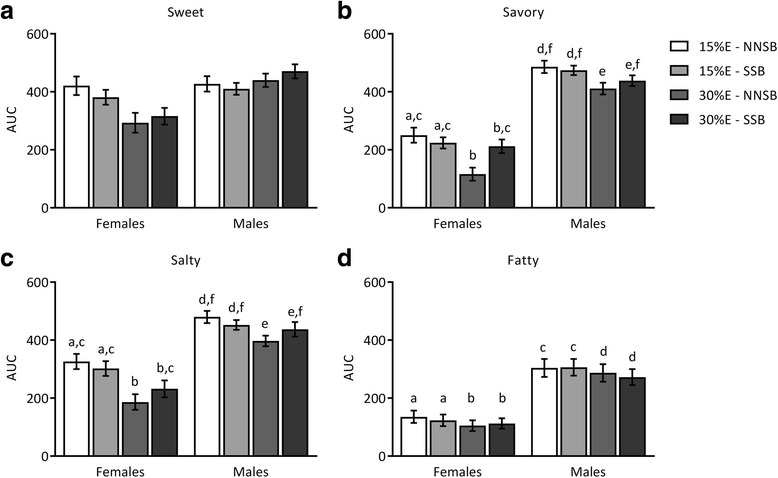
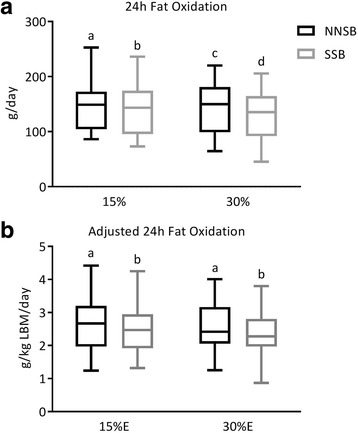
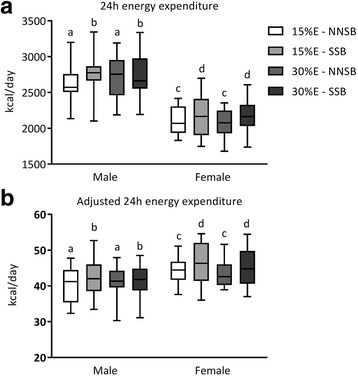
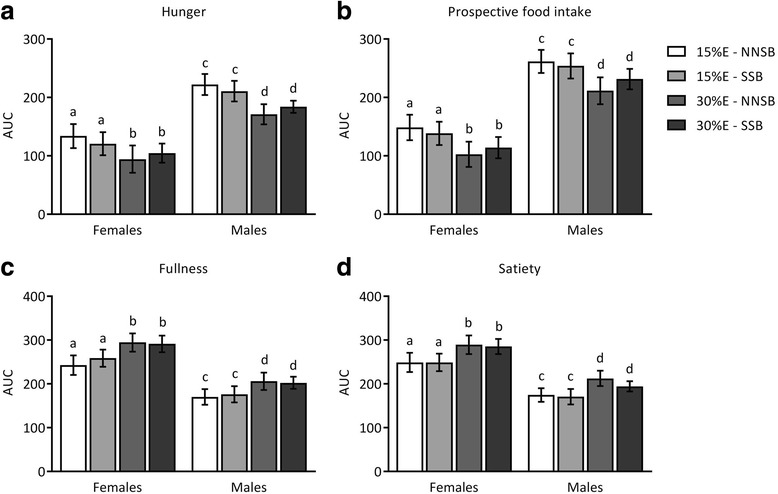
Increasing dietary protein decreased hunger and increased satiety. Males were hungrier and less satisfied with the meals than females. Increasing dietary protein also decreased the desire to eat something savory, salty and fatty and the males had a greater appetite for food with these taste profiles. Interestingly, there was no effect of sex, dietary protein or beverage type on the desire to eat something sweet. The inclusion of a SSB markedly suppressed DIT (2.42% ± 5.91%) and fat oxidation (9.87 ± 11.09 g).
Appetite sensations, food preferences, energy expenditure and substrate oxidation are significantly altered in response to changes in meal macronutrient composition produced by modifications in the protein content of a meal and consumption of a SSB. Most notably, consumption of a SSB during a meal markedly reduces energy efficiency and fat oxidation independent of macronutrient composition.
ClinicalTrials.gov: NCT02211599, registered August 05, 2014.
饮食中的宏量营养素组成在维持健康体重和预防肥胖方面可能比之前认为的发挥更重要的作用。本研究的主要目的是确定在不同宏量营养素组成的餐食中简单添加一小份含糖饮料(SSB)对食欲、能量代谢和底物氧化的影响程度。
在室内热量计中,对27名健康体重成年人(年龄 = 23 ± 5岁;BMI = 23 ± 2 kg/m²)进行了两次测量,他们分别在食用了一份SSB或一份非营养甜味饮料(NNSB)后,搭配标准(15%能量)或高(30%能量)蛋白质餐。调整餐食中的碳水化合物(CHO)含量,以使两次研究访问的热量相等。所有餐食均由相同食物组成,含有17克脂肪和500千卡非饮料热量。研究访问间隔至少1周,处于黄体期(第15 - 20天)的经期女性参与研究。使用三因素重复测量方差分析评估性别、蛋白质水平、饮料类型及其相互作用对饱腹感、对特定口味食物的食欲、饮食诱导产热(DIT)和底物氧化率的影响。
增加膳食蛋白质可降低饥饿感并增强饱腹感。男性比女性更饥饿且对餐食的满意度更低。增加膳食蛋白质还会降低对咸味、咸味和油腻食物的进食欲望,且男性对具有这些口味的食物食欲更强。有趣的是,性别、膳食蛋白质或饮料类型对吃甜食的欲望没有影响。添加SSB显著抑制了DIT(2.42% ± 5.91%)和脂肪氧化(9.87 ± 11.09克)。
食欲感觉、食物偏好、能量消耗和底物氧化会因餐食宏量营养素组成的变化(通过改变餐食蛋白质含量和饮用SSB)而发生显著改变。最值得注意的是,用餐时饮用SSB会显著降低能量效率和脂肪氧化,且与宏量营养素组成无关。
ClinicalTrials.gov:NCT02211599,于2014年8月5日注册。