Alomari Mahmoud A, Khabour Omar F, Alawneh Khaldoon, Alzoubi Karem H, Maikano Abubakar B
Department of Physical Education, Qatar University, Doha, Qatar.
Division of Physical Therapy, Department of Rehabilitation Sciences, Jordan University of Science and Technology, Irbid, Jordan.
Heliyon. 2020 Mar 3;6(3):e03490. doi: 10.1016/j.heliyon.2020.e03490. eCollection 2020 Mar.
Brain derived neurotrophic factor (BDNF) is essential for cognitive function. It is also found in non-neuronal tissues with various regulatory actions, including metabolic. Physical fitness (PF) is associated with improved synthesis and secretion of BDNF and reduced obesity. However, the importance of PF for the relationship of BDNF with obesity has not been investigated. This study aims at examining the relationship of PF with BDNF and obesity in 174 young (age = 25.30 ± 9.2 years) healthy adults.
Serum BDNF was evaluated using ELISA while obesity was determined using body weight (BW), BMI, and waist circumference (WC). Six minute walk distance (6MWD) test was used to estimate PF.
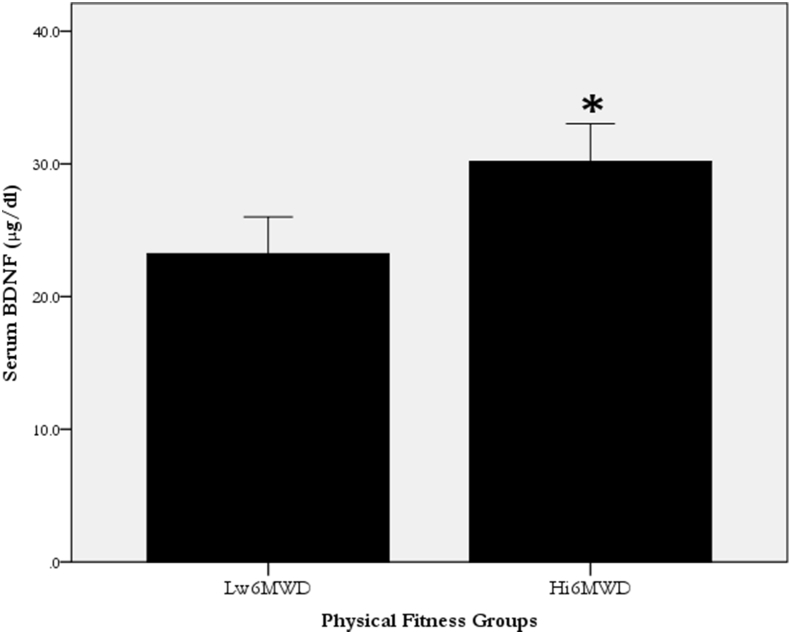
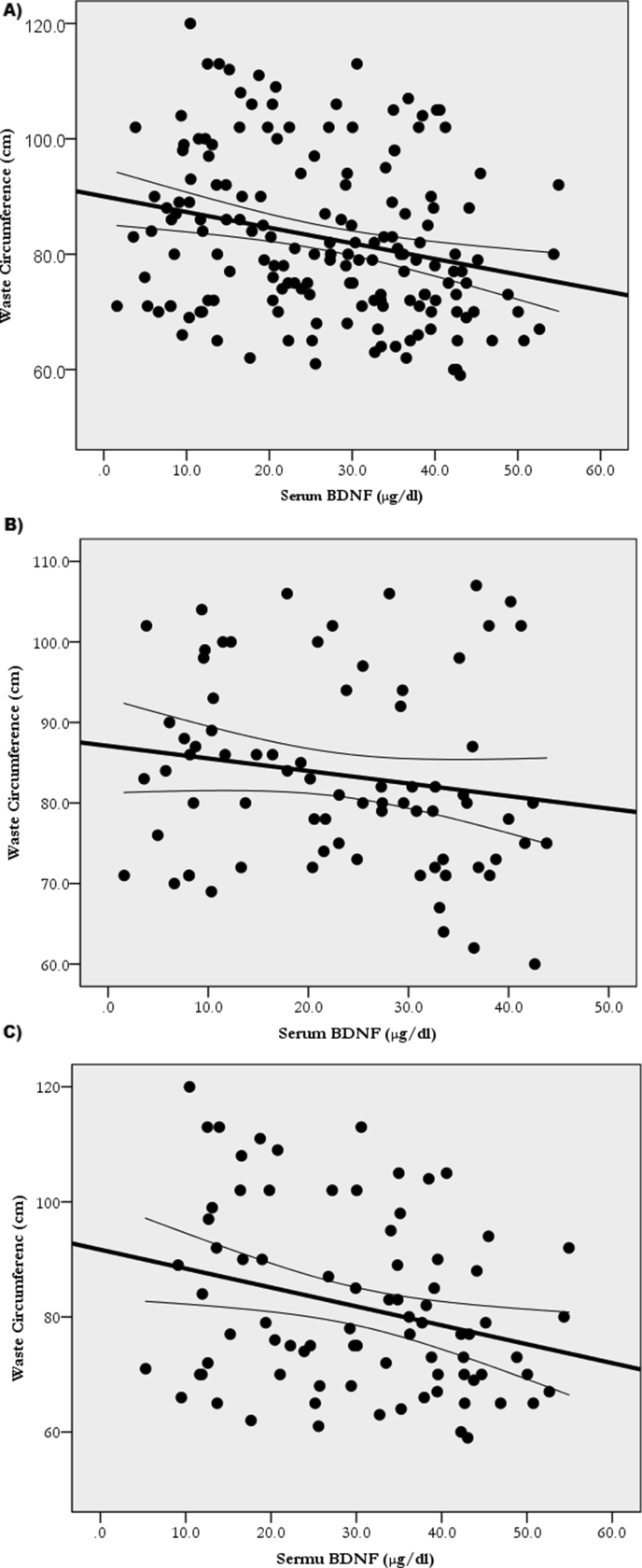
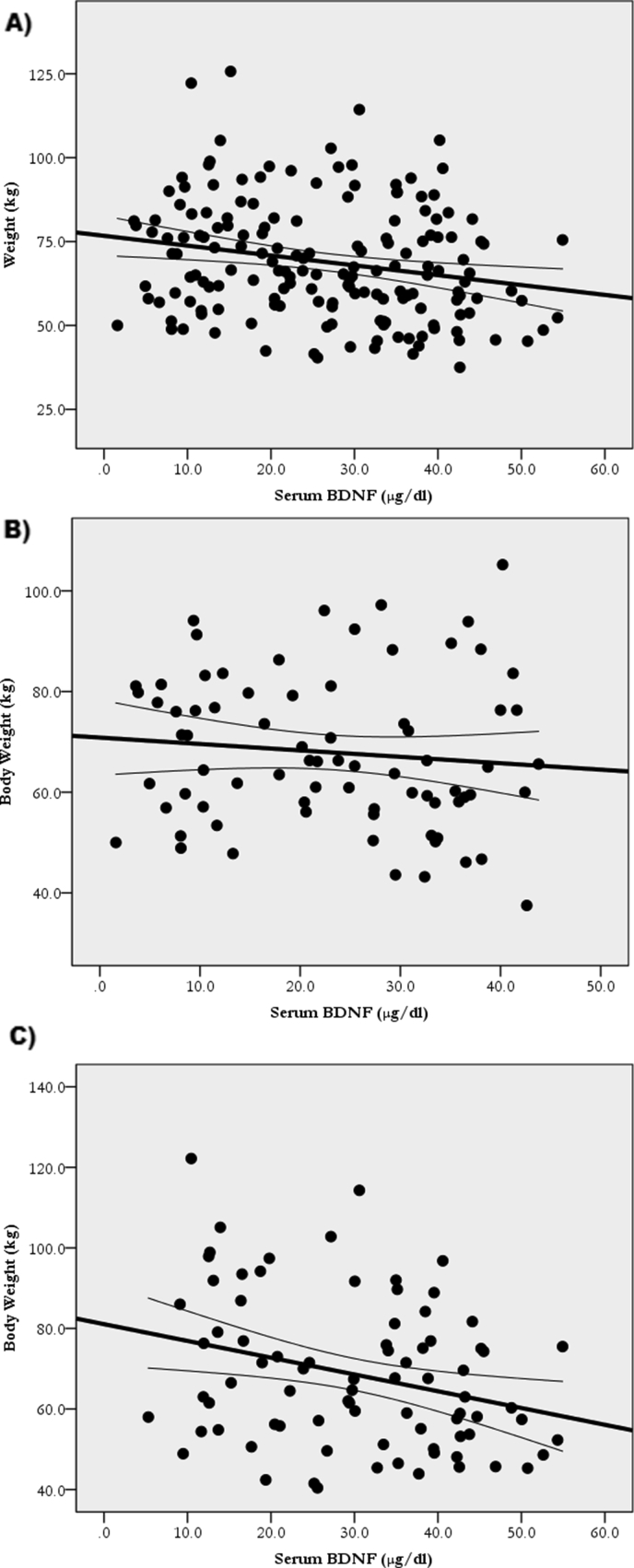
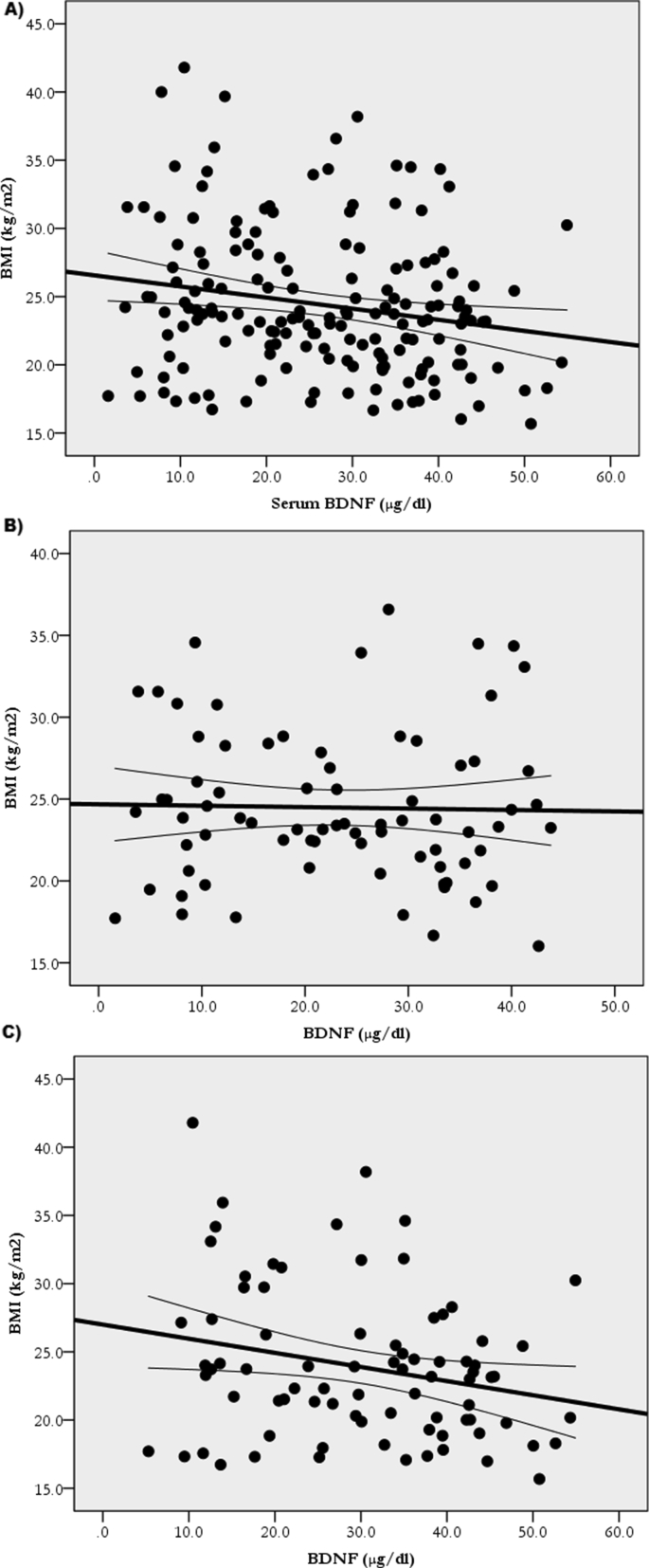
Serum BDNF was greater ( = 0.000) in the participants with high (Hi6MWD) versus low (Lw6MWD) PF group. Additionally, 6MWD explained 6.8% of serum BDNF. Obesity measures were greater ( < 0.05) in the participants with low versus high BDNF. In regression analyses, serum BDNF explained 4.7% of BW ( = 0.004), 3.8% of BMI ( = 0.011), and 6.2% of WC ( = 0.001). However, when the participants were divided into Hi6MWD and Lw6MWD, BDNF explained 8.2% of BW ( = 0.009), 6.0% of BMI ( = 0.03), and 7.0% of WC ( = 0.013), only in the Hi6MWD, but not in the Lw6MWD ( > 0.05) groups.
The finding confirms the relationship of BDNF with obesity. Additionally, it further suggests the importance of PF level to this relationship among young adults. Future studies are needed to confirm these findings.
脑源性神经营养因子(BDNF)对认知功能至关重要。它也存在于非神经组织中,具有多种调节作用,包括代谢方面。体能(PF)与BDNF的合成和分泌增加以及肥胖的减轻有关。然而,PF对BDNF与肥胖关系的重要性尚未得到研究。本研究旨在探讨174名年轻(年龄 = 25.30 ± 9.2岁)健康成年人中PF与BDNF及肥胖之间的关系。
采用酶联免疫吸附测定法(ELISA)评估血清BDNF,同时使用体重(BW)、体重指数(BMI)和腰围(WC)来确定肥胖情况。使用六分钟步行距离(6MWD)测试来评估PF。
高PF组(Hi6MWD)参与者的血清BDNF水平高于低PF组(Lw6MWD)(P = 0.000)。此外,6MWD可解释血清BDNF的6.8%。低BDNF参与者的肥胖指标高于高BDNF参与者(P < 0.05)。在回归分析中,血清BDNF可解释BW的4.7%(P = 0.004)、BMI的3.8%(P = 0.011)和WC的6.2%(P = 0.001)。然而,当将参与者分为Hi6MWD组和Lw6MWD组时,BDNF仅在Hi6MWD组中可解释BW的8.2%(P = 0.009)、BMI的6.0%(P = 0.03)和WC的7.0%(P = 0.013),而在Lw6MWD组中则无此作用(P > 0.05)。
该发现证实了BDNF与肥胖之间的关系。此外,它进一步表明了PF水平在年轻成年人这种关系中的重要性。未来需要进一步研究来证实这些发现。