State Key Laboratory of Oral Diseases, National Clinical Research Center for Oral Diseases, West China Hospital of Stomatology, Sichuan University, Sichuan, China.
School of Stomatology, Kunming Medical University, Kunming, China.
Cell Prolif. 2020 Apr;53(4):e12755. doi: 10.1111/cpr.12755. Epub 2020 Mar 10.
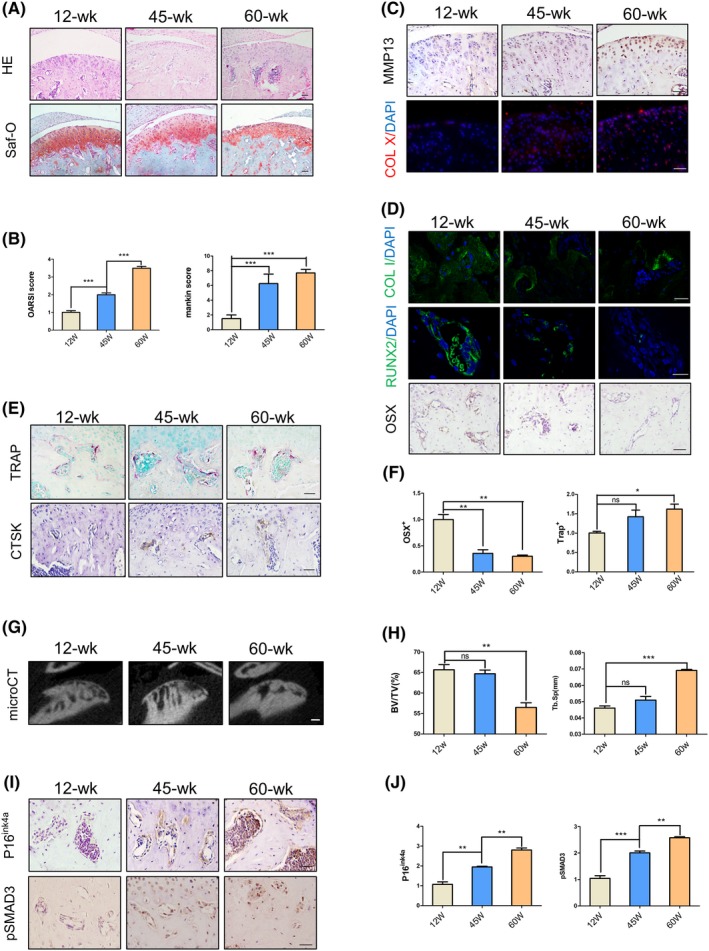
Ageing could be a contributing factor to the progression of temporomandibular joint osteoarthritis (TMJ OA), whereas its pathogenesis and potential therapeutic strategy have not been comprehensively investigated.
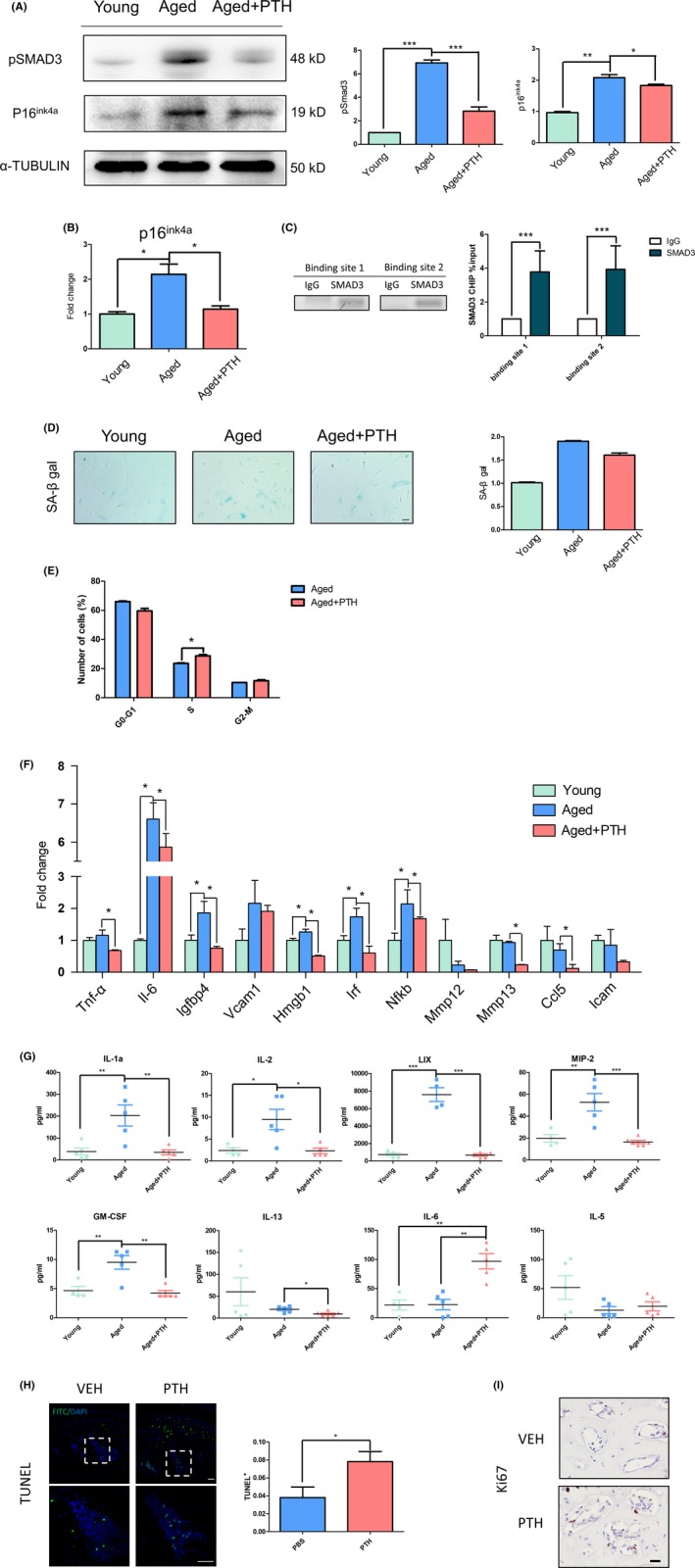
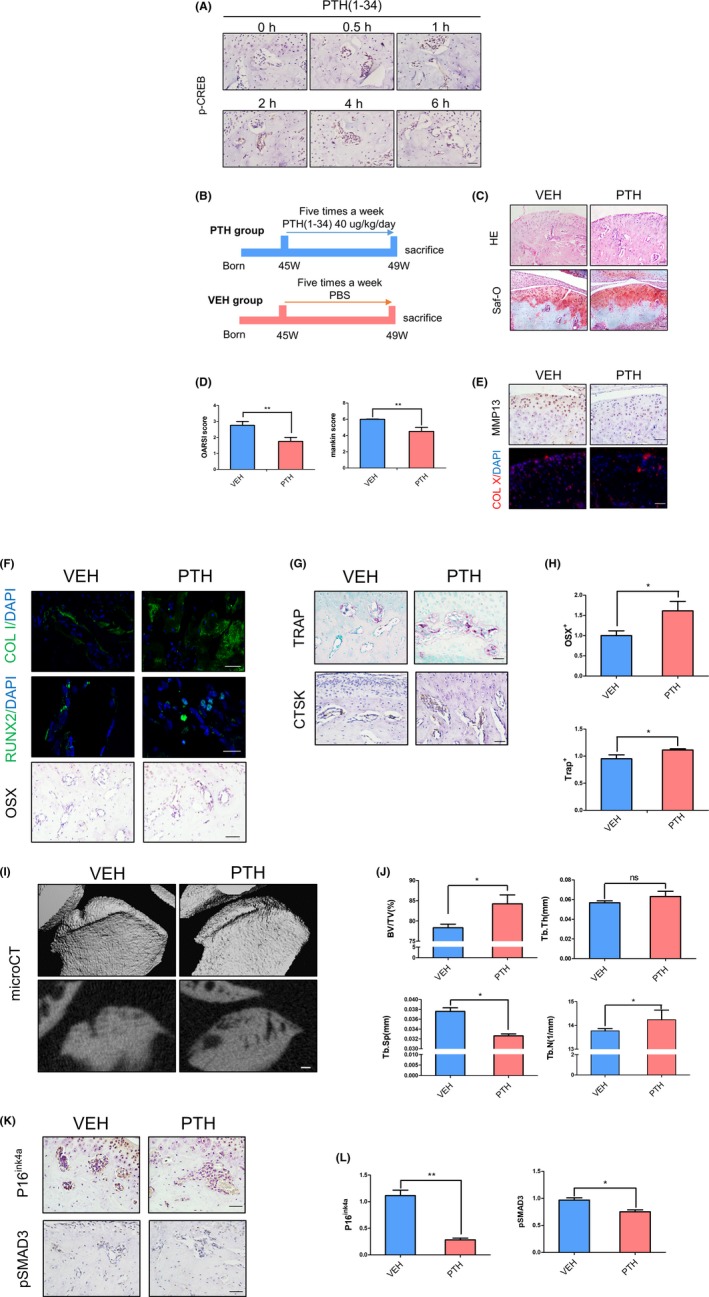
We generated ageing mouse models (45-week and 60-week; 12-week mice as control) and intermittently injected 45-week mice with parathyroid hormone (PTH(1-34)) or vehicle for 4 weeks. Cartilage and subchondral bone of TMJ were analysed by microCT, histological and immunostaining. Western blot, qRT-PCR, ChIP, ELISA and immunohistochemical analysis were utilized to examination the mechanism of PTH(1-34)'s function.
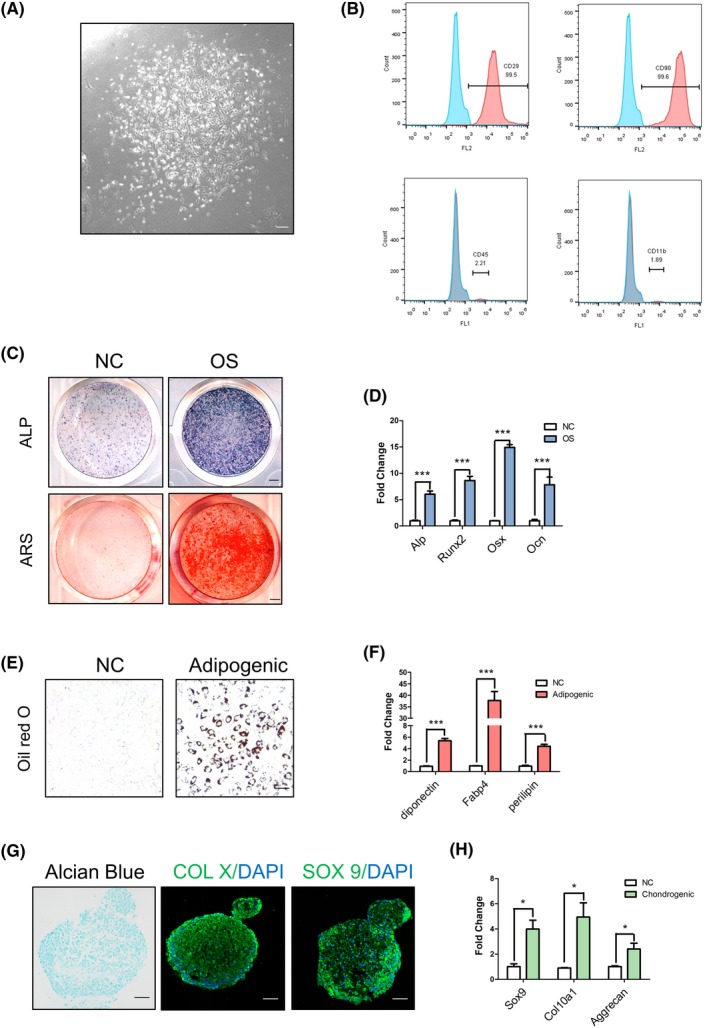
We showed apparent OA-like phenotypes in ageing mice. PTH treatment could ameliorate the degenerative changes and improve bone microarchitecture in the subchondral bone by activating bone remodelling. Moreover, PTH inhibited phosphorylation level of Smad3, which can combine with p16 gene promoter region, resulting in reduced senescent cells accumulation and increased cellular proliferation of marrow mesenchymal stem cells (MSCs). ELISA also showed relieved levels of specific senescent-associated secretory phenotype (SASP) in ageing mice after PTH treatment.
In summary, PTH may reduce the accumulation of senescent cells in subchondral bone by inhibiting p16 and improve bone marrow microenvironment to active bone remodelling process, indicating PTH administration could be a potential preventative and therapeutic treatment for age-related TMJ OA.
衰老可能是颞下颌关节骨关节炎(TMJ OA)进展的一个促成因素,但其发病机制和潜在的治疗策略尚未得到全面研究。
我们构建了衰老小鼠模型(45 周和 60 周;12 周小鼠作为对照),并间歇性地给 45 周龄的小鼠注射甲状旁腺激素(PTH(1-34))或载体 4 周。通过 microCT、组织学和免疫染色分析 TMJ 的软骨和软骨下骨。利用 Western blot、qRT-PCR、ChIP、ELISA 和免疫组织化学分析来研究 PTH(1-34)功能的机制。
我们在衰老小鼠中显示出明显的 OA 样表型。PTH 治疗可通过激活骨重塑来改善软骨下骨的退行性变化和改善骨微结构。此外,PTH 抑制了 Smad3 的磷酸化水平,该磷酸化水平可以与 p16 基因启动子区域结合,从而减少衰老细胞的积累并增加骨髓间充质干细胞(MSCs)的细胞增殖。ELISA 还显示,PTH 治疗后衰老小鼠中特定的衰老相关分泌表型(SASP)水平得到缓解。
综上所述,PTH 可能通过抑制 p16 减少软骨下骨中衰老细胞的积累,并改善骨髓微环境以激活骨重塑过程,表明 PTH 给药可能是治疗与年龄相关的 TMJ OA 的一种潜在预防和治疗方法。