Department of Emergency Surgery, Union Hospital, Tongji Medical College, Huazhong University of Science and Technology, Wuhan, China.
Department of Medical Genetics, Basic School of Tongji Medical College, Huazhong University of Science and Technology, Wuhan, China.
Hepatology. 2020 Dec;72(6):2134-2148. doi: 10.1002/hep.31221. Epub 2020 Sep 2.
Hepatic ischemia-reperfusion (IR) injury is a major complication of liver transplantation, resection, and hemorrhagic shock. Hypoxia is a key pathological event associated with IR injury. MicroRNA-210 (miR-210) has been characterized as a micromanager of hypoxia pathway. However, its function and mechanism in hepatic IR injury is unknown.
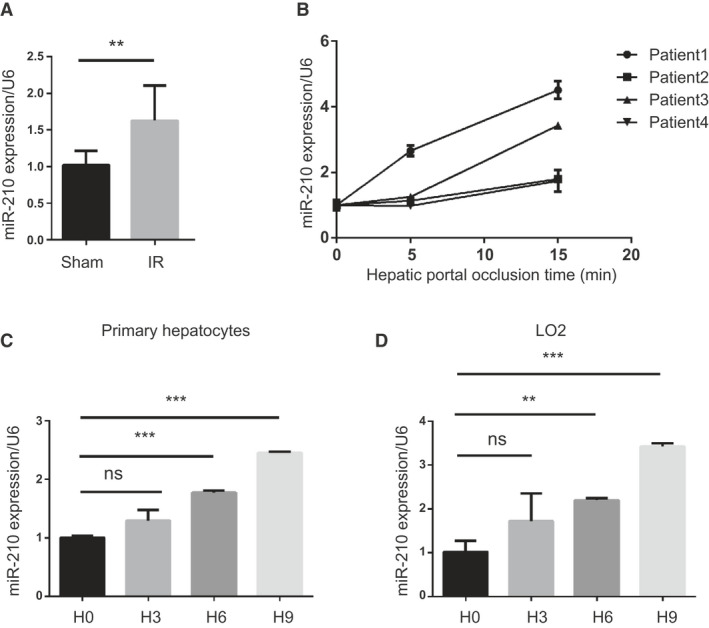
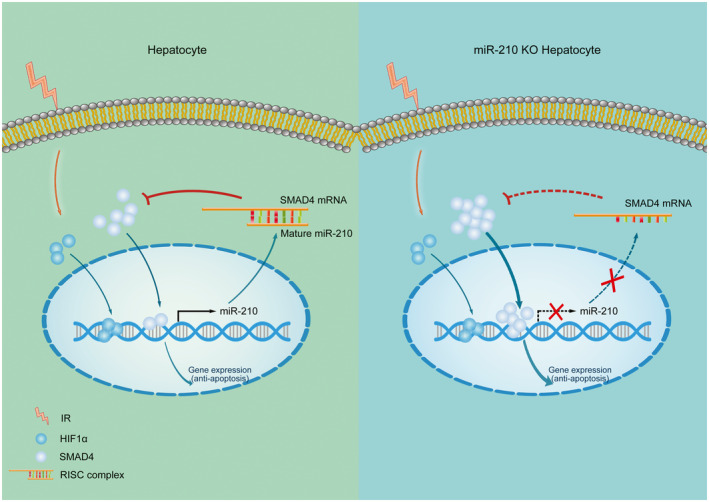
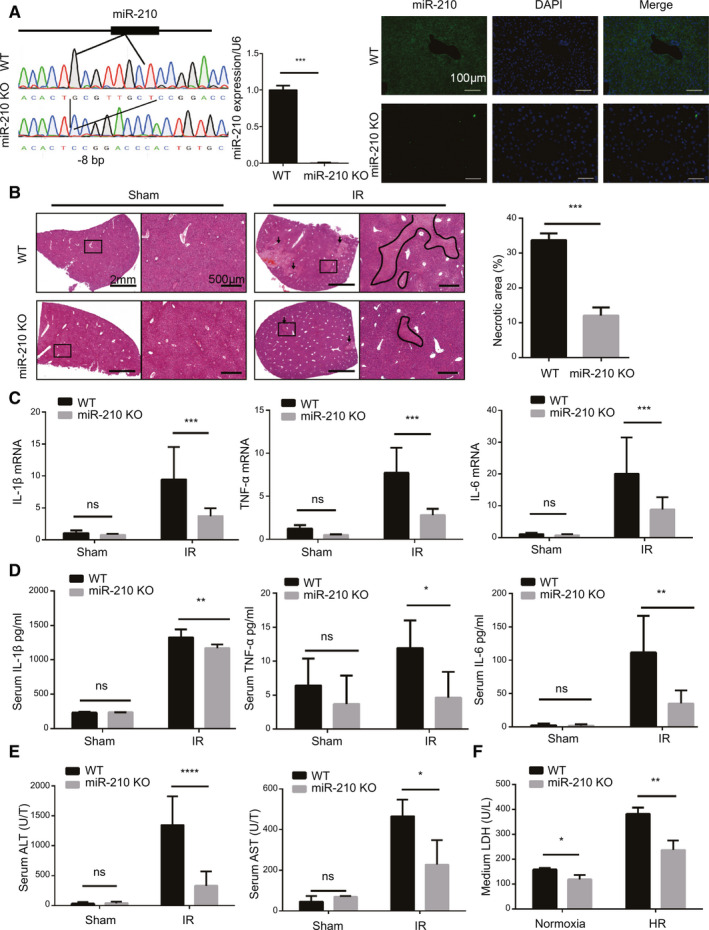
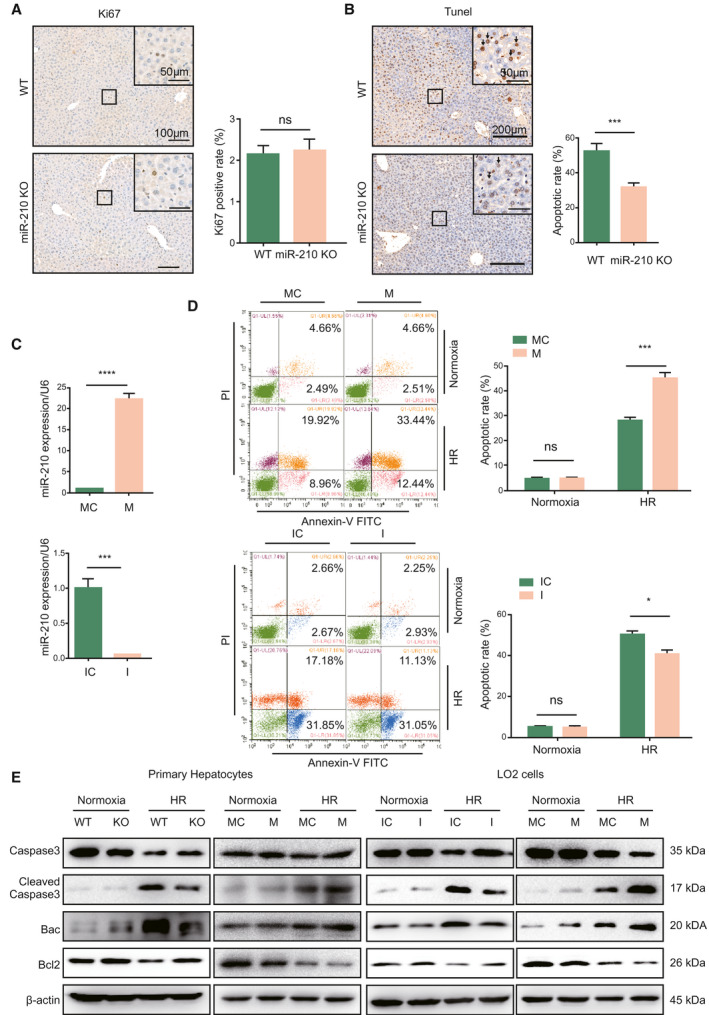
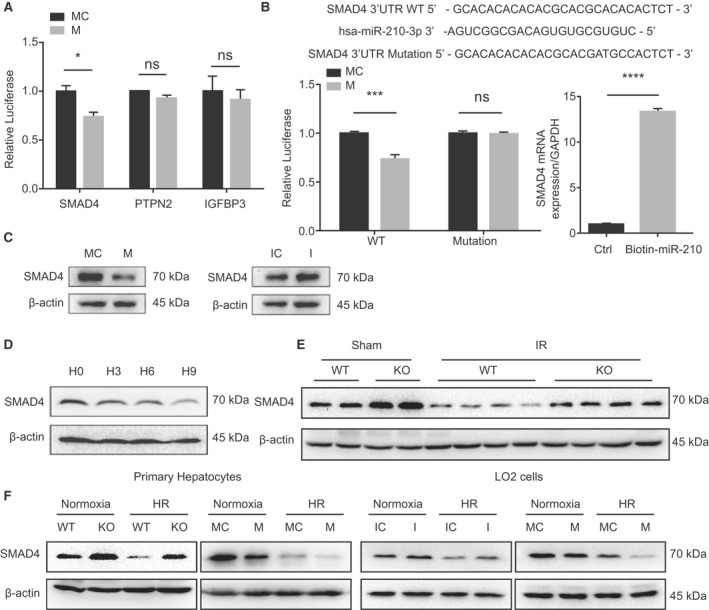
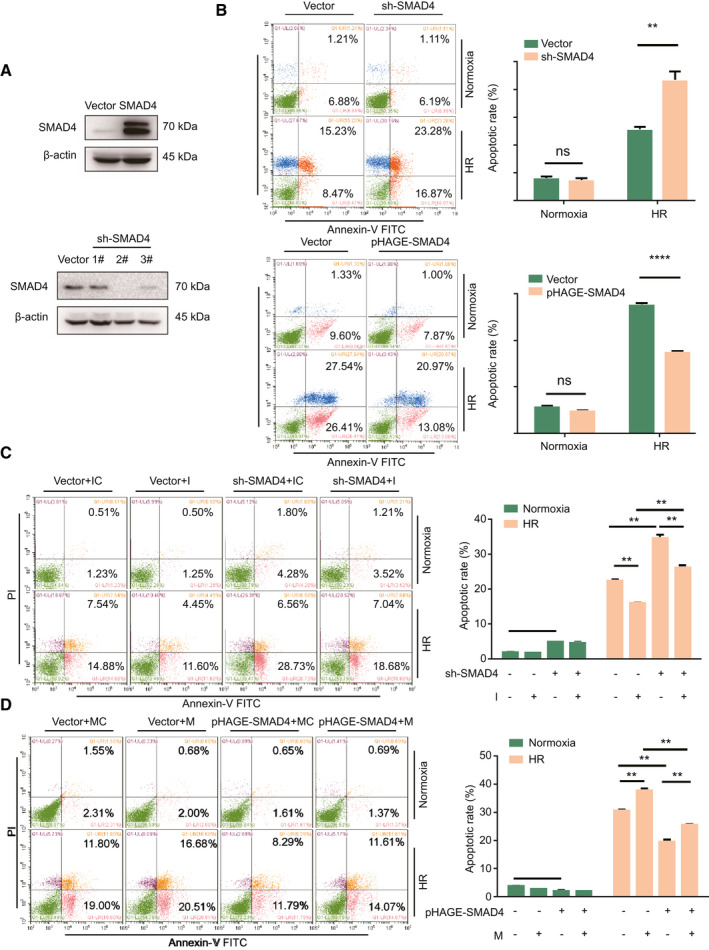
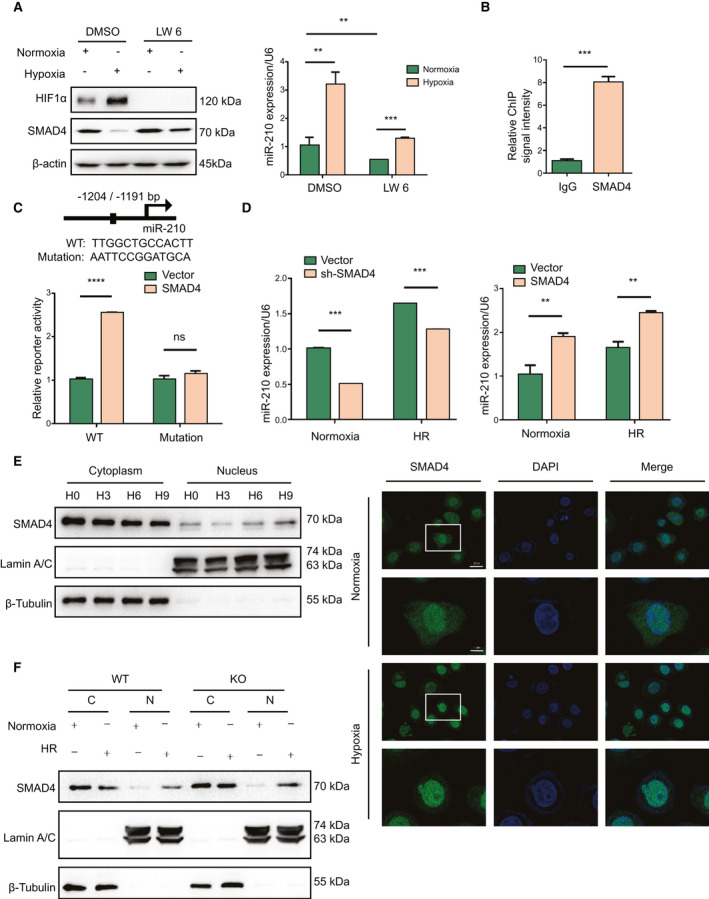
In this study, we found miR-210 was induced in liver tissues from patients subjected to IR-related surgeries. In a murine model of hepatic IR, the level of miR-210 was increased in hepatocytes but not in nonparenchymal cells. miR-210 deficiency remarkably alleviated liver injury, cell inflammatory responses, and cell death in a mouse hepatic IR model. In vitro, inhibition of miR-210 decreased hypoxia/reoxygenation (HR)-induced cell apoptosis of primary hepatocytes and LO2 cells, whereas overexpression of miR-210 increased cells apoptosis during HR. Mechanistically, miR-210 directly suppressed mothers against decapentaplegic homolog 4 (SMAD4) expression under normoxia and hypoxia condition by directly binding to the 3' UTR of SMAD4. The pro-apoptotic effect of miR-210 was alleviated by SMAD4, whereas short hairpin SMAD4 abrogated the anti-apoptotic role of miR-210 inhibition in primary hepatocytes. Further studies demonstrated that hypoxia-induced SMAD4 transported into nucleus, in which SMAD4 directly bound to the promoter of miR-210 and transcriptionally induced miR-210, thus forming a negative feedback loop with miR-210.
Our study implicates a crucial role of miR-210-SMAD4 interaction in hepatic IR-induced cell death and provides a promising therapeutic approach for liver IR injury.
肝脏缺血再灌注(IR)损伤是肝移植、肝切除和失血性休克的主要并发症。缺氧是与 IR 损伤相关的关键病理事件。微小 RNA-210(miR-210)已被确定为缺氧途径的微小管理者。然而,其在肝 IR 损伤中的功能和机制尚不清楚。
在本研究中,我们发现 miR-210 在经历 IR 相关手术的患者的肝组织中被诱导。在小鼠肝脏 IR 模型中,miR-210 的水平在肝细胞中增加,但在非实质细胞中不增加。在小鼠肝脏 IR 模型中,miR-210 缺陷显著减轻肝损伤、细胞炎症反应和细胞死亡。在体外,抑制 miR-210 减少了原代肝细胞和 LO2 细胞在低氧/复氧(HR)诱导的细胞凋亡,而 miR-210 的过表达增加了细胞在 HR 期间的凋亡。在机制上,miR-210 在常氧和低氧条件下通过直接结合 SMAD4 的 3'UTR 直接抑制母亲抗 Decapentaplegic 同源物 4(SMAD4)的表达。SMAD4 减轻了 miR-210 的促凋亡作用,而短发夹 SMAD4 消除了 miR-210 抑制在原代肝细胞中的抗凋亡作用。进一步的研究表明,缺氧诱导的 SMAD4 转运到细胞核中,其中 SMAD4 直接结合 miR-210 的启动子,并转录诱导 miR-210,从而与 miR-210 形成负反馈环。
我们的研究表明,miR-210-SMAD4 相互作用在肝 IR 诱导的细胞死亡中起关键作用,并为肝 IR 损伤提供了一种有前途的治疗方法。