Mahiroglu Muhammed Bedir, Kahramanoglu Erkut, Ay Mustafa, Kuru Leyla, Agrali Omer Birkan
Department of Periodontology, Faculty of Dentistry, Marmara University, Istanbul 34854, Turkey.
Department of Prosthodontics, Faculty of Dentistry, Marmara University, Istanbul 34854, Turkey.
Healthcare (Basel). 2020 Mar 7;8(1):55. doi: 10.3390/healthcare8010055.
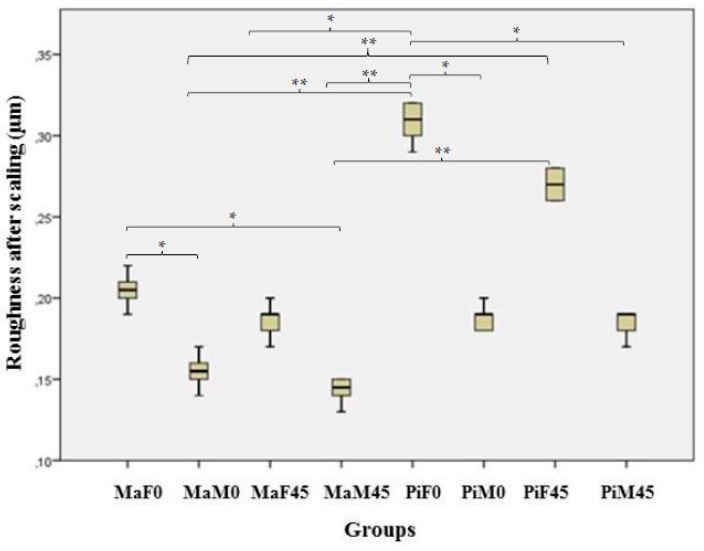
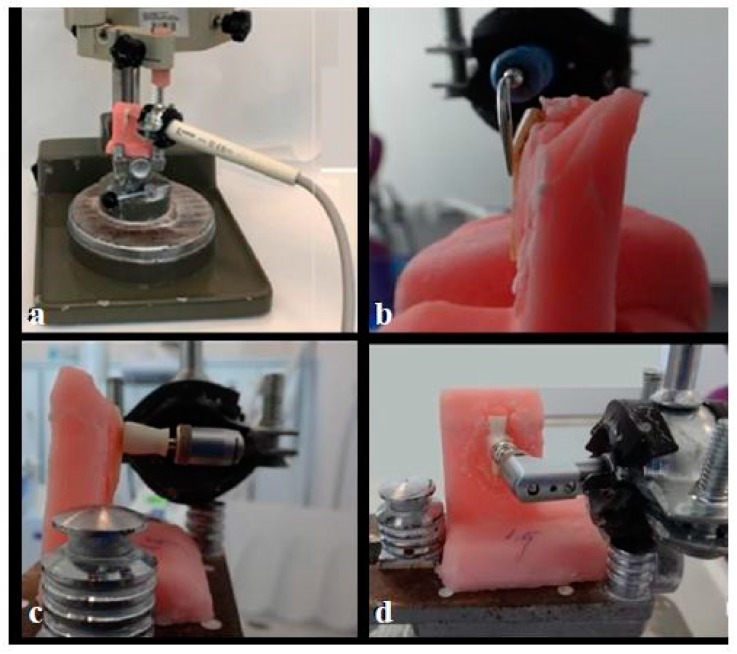
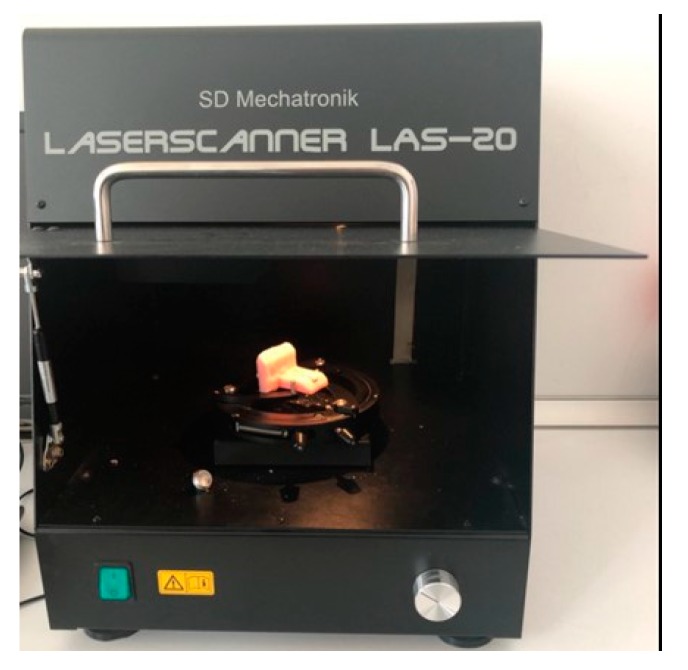
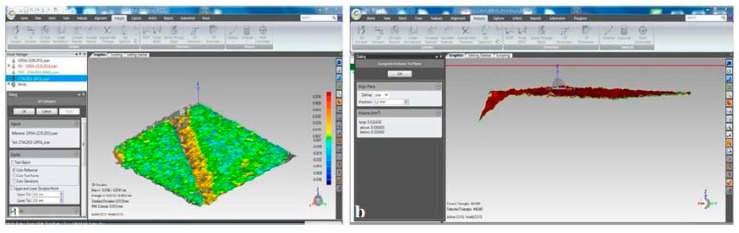
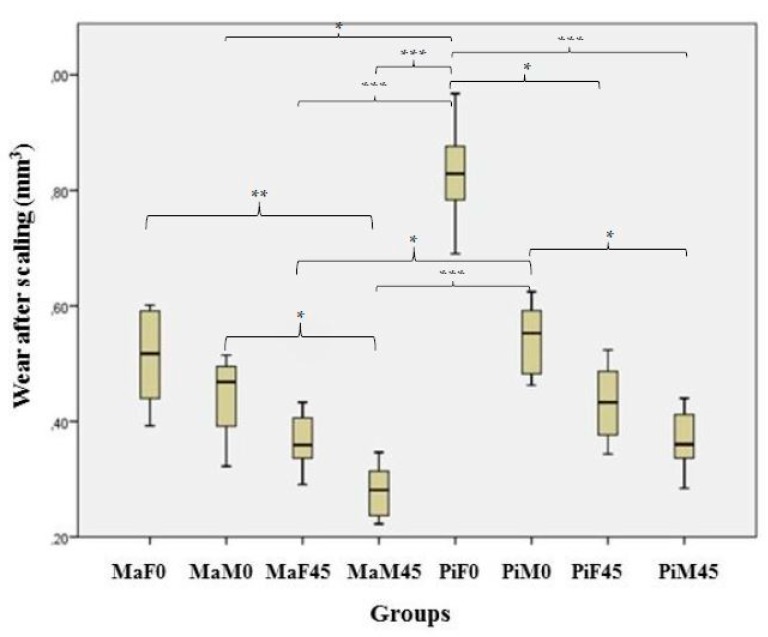
The aim of the present study was to compare the root surface wear and roughness, resulted from the professional dental hygiene instruments, including ultrasonic dental scalers, rubber prophy cups, and nylon bristle brushes, on the extracted human mandibular incisor teeth. Teeth (n = 80) were randomly assigned into eight groups according to the applied scaler type (Ma = Magnetostrictive, Pi = Piezoelectric), degree of power (M = Medium, F = Full), and angulation (0° and 45°). In the second stage, the specimens (n = 40) were further divided into two groups according to the applied polishing device (nylon bristle brush or rubber prophy cup). Laser scanner and contact profilometer devices were used for the surface analysis. Both ultrasonic instruments tested in our study produced rougher surfaces when full power was used at a 0° angle ( < 0.01). The highest wear (0.82 ± 0.07 mm) and roughness values (0.30 ± 0.01 µm) were detected in the PiF0 group. Polishing performed with a rubber prophy cup resulted in almost twice the wear as well as a smoother surface when compared to polishing performed with a nylon bristle brush ( < 0.001). Variations in the application parameters of ultrasonic scalers and the type of polishing instrument might lead to significantly different root-surface characteristics.
本研究的目的是比较专业口腔卫生器械,包括超声洁牙器、橡胶抛光杯和尼龙刷毛牙刷,对拔除的人下颌切牙牙根表面造成的磨损和粗糙度。根据所使用的洁牙器类型(Ma = 磁致伸缩式,Pi = 压电式)、功率大小(M = 中等,F = 全功率)和角度(0°和45°),将80颗牙齿随机分为八组。在第二阶段,根据所使用的抛光器械(尼龙刷毛牙刷或橡胶抛光杯),将40个样本进一步分为两组。使用激光扫描仪和接触式轮廓仪进行表面分析。在本研究中测试的两种超声器械,当以0°角使用全功率时,都会产生更粗糙的表面(P < 0.01)。在PiF0组中检测到最高的磨损量(0.82±0.07毫米)和粗糙度值(0.30±0.01微米)。与使用尼龙刷毛牙刷进行抛光相比,使用橡胶抛光杯进行抛光导致的磨损几乎是其两倍,且表面更光滑(P < 0.001)。超声洁牙器应用参数的变化以及抛光器械的类型可能会导致牙根表面特征存在显著差异。